Zubeida Mustafa
Age
84
Nation
Pakistani
favorite Personal Life
Basic Information
Family & Relationships
Education
Lifestyle
person_book Biography
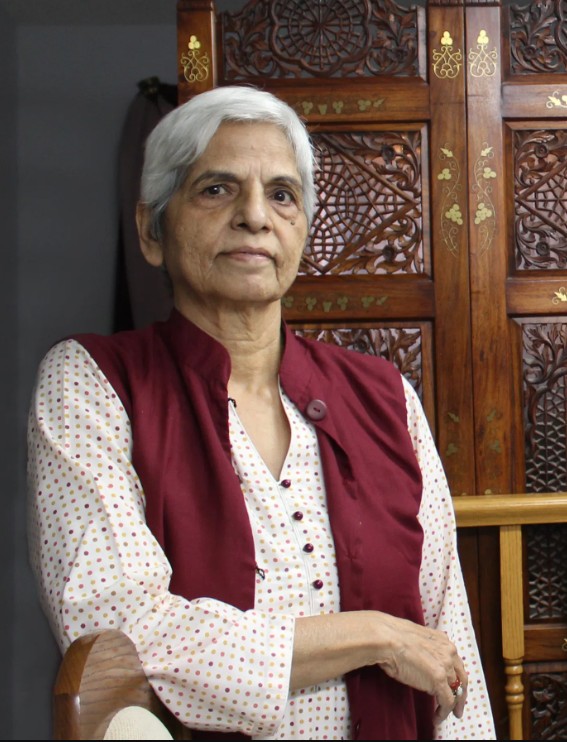
Some Lesser Known Facts About Zubeida Mustafa
-
Her father, Syed Mufid Hasan, worked in the railways during British rule. He studied at Roorkee Engineering College and obtained a job in the Great Indian Peninsula Railway (GIPR) because of his good academic background.
-
His job required him to move to different places. When Zubeida Mustafa was born, he was posted in Bhusawal, a city in Bombay (now Mumbai).
-
Her family was originally from Jaunpur, Uttar Pradesh, and they spoke Urdu at home.
-
Her maternal grandfather was an engineer who worked for the government and helped build the Sukkur Barrage, a barrage on the River Indus in the Sindh province of Pakistan.
-
According to Zubeida Mustafa, her mother, Khair-un-Nisa Hasan, studied at home.
-
Zubeida’s father wanted her mother to learn English because he worked for the government and met English people at events. Her mother learned English quickly.
-
Zubeida Mustafa grew up in an apartment in Mafatlal Park, Bombay.
-
When she was four years old, she started going to school. At home, she and her sisters were taught the Quran and Islamiat.
-
In 1947, many partition committees were set up to divide British India’s assets between India and Pakistan, and her father was appointed as a member of the Railways’ Partition Subcommittee.
-
Her family moved from Bombay to Delhi before partition. Her two elder sisters were sent to live with their grandparents in Karachi so they could keep studying.
-
She and her younger brother stayed with their parents.
-
After Partition, government workers had to choose which country they wanted to live in, and her father chose Pakistan and was posted to Lahore.
-
In August 1947, the family took a train to Lahore, where the government created refugee camps where local people helped new arrivals.
- In Lahore, Zubeida Mustafa started studying at Queen Mary’s College.
-
In 1949, her father got transferred to Karachi, and a few months later, he was shifted to Chittagong (now Chattogram), East Bengal, as chief engineer for building the Chittagong Port.
-
While her father worked in Chittagong, her mother stayed in Karachi with the children.
-
After the school year ended, the family moved to Chittagong, where she joined St. Scholastica’s High School.
-
In 1952, her father was transferred again to Karachi, and she began studying at St. Joseph’s College in Karachi.
-
After completing her graduation, Zubeida Mustafa started working in 1962 as a Research Officer at the Pakistan Institute of International Affairs (PIIA) in Karachi. She worked there until 1969.
-
Her research papers were published in Pakistan Horizon, the PIIA’s journal.
- After her first child was born, she got a scholarship to study at the London School of Economics (LSE). She and her husband went to the UK to study.
-
Their child stayed with her mother-in-law in East Bengal. Zubeida Mustafa missed her child very much and could not continue the course, and returned home after 6 months.
-
However, her husband stayed in the UK to finish his studies. After he completed the course, the whole family moved to Karachi.
- In July 1975, Zubeida Mustafa started working as an assistant editor at the Dawn newspaper, Pakistan’s leading English-language newspaper in Karachi.
-
She was the only woman in a senior position at the paper at that time and became the first woman writer in Pakistan’s mainstream media.
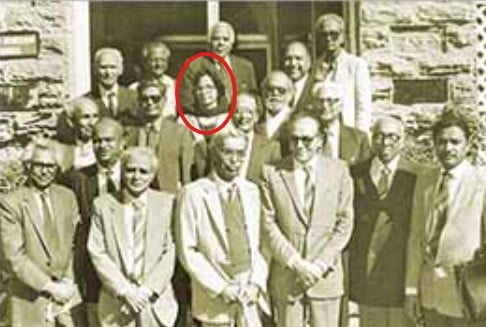
Zubeida Mustafa posing with Dawn’s editorial board in the 1970s
-
During her period at Dawn, she focused on women’s issues, but she also wrote about education, health, population, and human rights.
-
Zubeida Mustafa used her experience as a woman to write firm editorials, which spoke about world peace and asked for fairness in society.
- As a female journalist, the problems women face in Pakistan affected her personally.
- Ahmed Ali Khan, a former editor at Dawn, was her mentor who taught her how to explain big issues in simple words, to see problems from the common people’s view, and to always be fair in writing.
- In the early 1980s, Zubeida Mustafa took charge of the ‘One World Supplement,’ which Dawn published with 15 top newspapers from around the world.
-
These newspapers included Le Monde (Paris), Asahi Shimbun (Tokyo), La Stampa (Rome), The Indian Express (New Delhi), and Jornal do Brasil (Rio de Janeiro).
-
She also started and edited many special pages and magazines in Dawn, such as Health Page, Book Page, Education Page, CareerWise, Encounter, Karachi Notebook, and Books & Authors, the first book magazine by any newspaper in Pakistan.
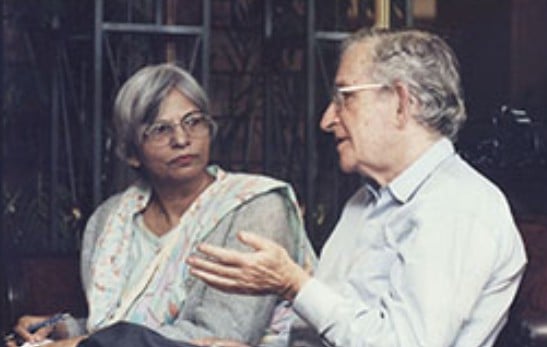
Zubeida Mustafa with Noam Chomsky in 2001
-
In 2009, Zubeida Mustafa retired after working as a journalist for 33 years. She left the job because of health problems.
-
In 2012, during a media interview, she said that it was important for women to make the most of the chances they got.
-
She believed that education was the only key to solving Pakistan’s problems, especially in helping people understand health awareness.
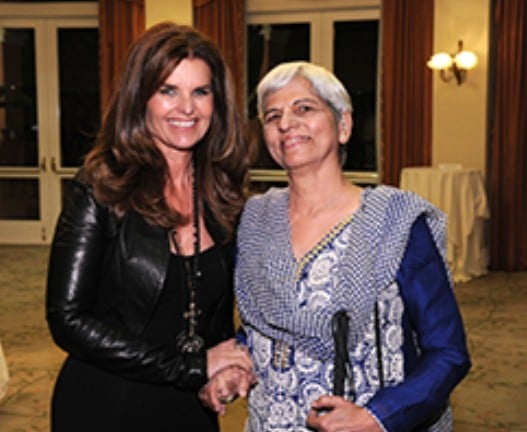
Zubeida Mustafa with Maria Shriver in LA in 2012
-
In another interview, Zubeida Mustafa said that Pakistani political leaders (past and present) were selfish, corrupt, and not knowledgeable. She said,
A bunch of power-hungry leaders who are not statesmen by any yardstick. They are selfish, corrupt and ignorant. They have no strategy to resolve the current crisis nor do they want to”.
- In 2012, she was struggling with health issues, including weak eyesight.
-
In 2013, Dawn Media Group started an award in her name, titled Zubeida Mustafa Award for Journalistic Excellence.
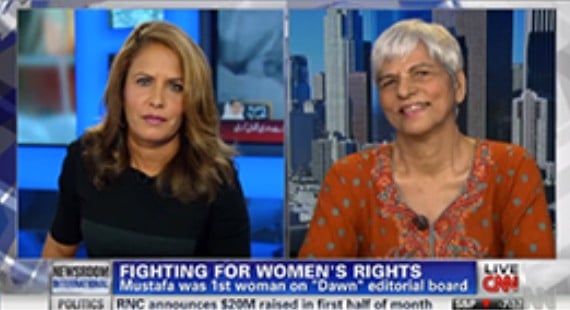
Zubeida Mustafa during a live conversation on CNN with Suzanne Malveaux
-
In 2020, she was writing columns as a freelance journalist.
- She had published several books, including My DAWN Years: Exploring Social Issues (2008), Transfer of Power (PIIA, Karachi), The Kashmir Question (PIIA, Karachi), The South Asian Century (Dawn and OUP), Tyranny of Language in Education: The Problem and its Solution (2011), and Reforming School Education in Pakistan & the Language Dilemma (2021).
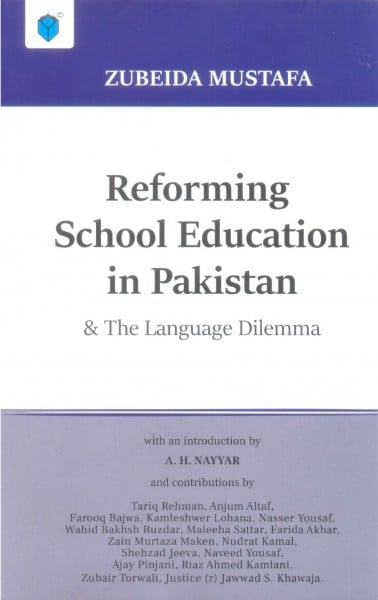
The cover of the book Reforming School Education in Pakistan & the Language Dilemma (2021)
-
Once, during a media conversation, she said that she had visited India many times, such as the Education Summit in Delhi (1992), the World Social Forum in Bombay (2004), South Asian Women Writers Conference in Delhi (2007). She once visited author Qurratulain Hyder.
-
She taught poor children for free at the Garage School in Karachi, Pakistan.
newspaper Recent News
Recent news and updates about Zubeida Mustafa will appear here.
Similar Celebrities
VIEW ALLHimani Naithani
News Anchor, Journalist • Indian
Jyotsna Bedi
Journalist, News Anchor • Indian
Nikhil Wagle
Journalist, Author, Columnist • Indian
Poornima Mishra
News Anchor, Journalist • Indian
Shagufta Nayyar Dev
News Anchor, Journalist • Indian
Saleh Al-Jafarawi
Journalist, Content Creator, Singer • Palestinian
Mangalam Maloo
Journalist • Indian
Nysa Devgan (Ajay Devgan’s Daughter)
Indian
Garima Bhardwaj
Journalist, TV Anchor • Indian
Shahla Nigar
Journalist, TV Anchor • Indian