Teesta Setalvad
Age
62
Nation
Indian
favorite Personal Life
Basic Information
Family & Relationships
Education
Lifestyle
person_book Biography
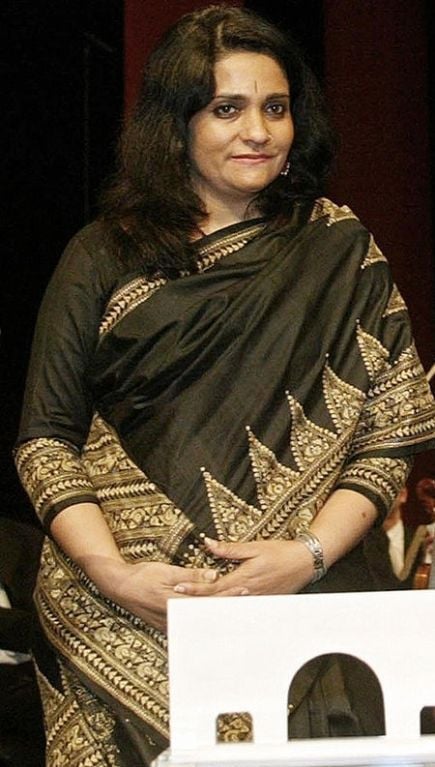
Some Lesser Known Facts About Teesta Setalvad
- Teesta Setalvad is an Indian journalist and a civil rights activist, who is known for filing litigations against the Narendra Modi-led Gujarat government after the 2002 Gujarat riots. In July 2022, she was arrested by the Gujarat police ATS on the charges of presenting false pieces of evidence against Narendra Modi in court.
- Teesta Setalvad hails from a family of renowned lawyers. Her grandfather, M. C. Setalvad, was independent India’s first Attorney General of India (AG). He remained the Attorney General of India from 1950 to 1963.
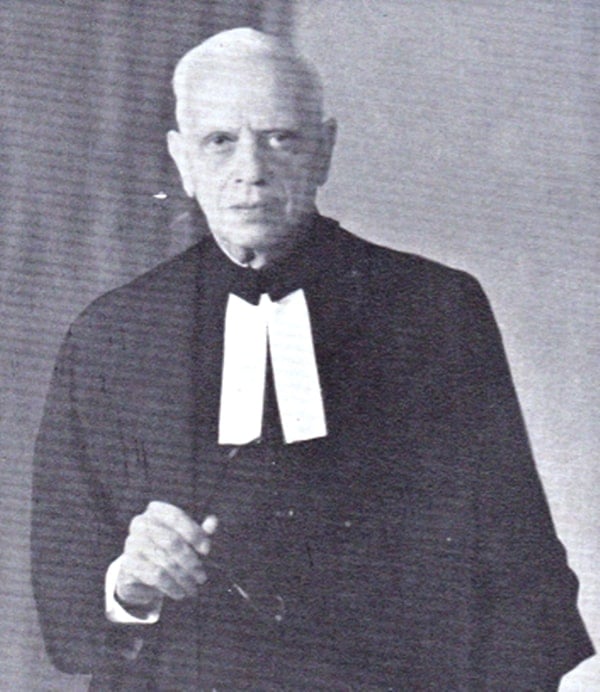
M. C. Setalvad, grandfather of Teesta Setalvad
- In 1979, after completing her schooling, Teesta Setalvad initially pursued her graduation in law, but she dropped out of the law college to pursue her graduation in Philosophy (Honours), which she completed in 1983.
- Teesta Setalvad started her career as a journalist in 1983. She began working with renowned print news media outlets like The Daily (India), The Indian Express and the Business Magazine. She was hired as a columnist by the media outlets to write the news for their audience in Bombay.
- Teesta Setalvad got her first major break in journalism when she was given the task of covering the 1984 anti-Sikh riots. The event was covered by her in great detail, earning her huge appreciation.
- In 1993 when the Hindu-Muslim riots broke out in Mumbai after the demolition of the Babri Masjid, Teesta Setalvad and Javed Anand, her husband, decided to leave their jobs as journalists to start their print media outlet named Communalism Combat. While giving an interview, Teesta said,
The opportunity to report on the riots is very limited in the mainstream media. We were allowed to cover only a few aspects of the riots, whereas a larger part of the information on the riots was mostly censored. Therefore, me and my wife, we both decided to quit our jobs and start our own reporting magazine.”
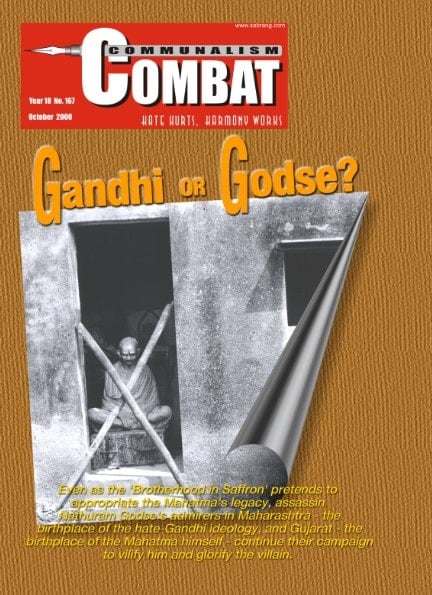
The cover page of the news magazine Communalism Combat
- In 1992, Teesta and her husband, Javed, founded another news agency named Sabrang. Through Sabrang, the couple published many articles such as Damning Verdict: Report of the Srikrishna Commission, Saffron on the rampage: Gujarat’s Muslims pay for the Lashkar’s deeds, The Foreign Exchange of Hate: IDRF and the American Funding of Hindutva, and many more. These articles were based on the reports which were published by several committees.
- In the early 2000s, while serving as a General Secretary of the People’s Union for Civil Liberties (PUCL), Teesta Setalvad launched a series of protests against the nuclear tests being conducted by both India and Pakistan.
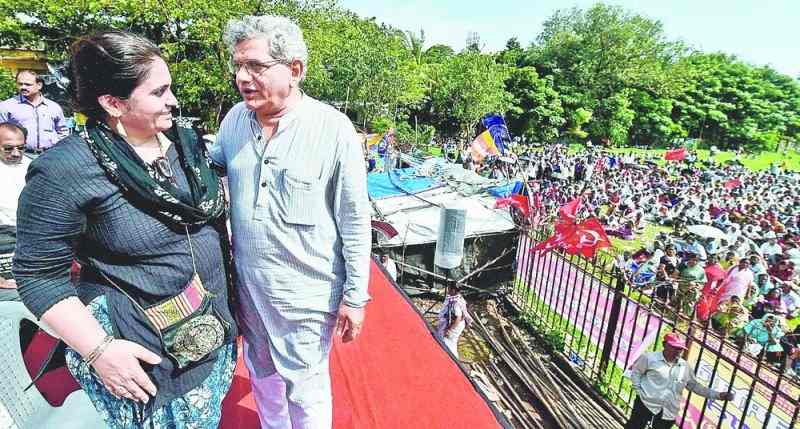
Teesta Setalvad at a protest rally
- On 1 April 2002, Teesta and Javed, established Citizens for Justice and Peace (CJP), a Non-governmental Organisation (NGO) that deals with upholding and safeguarding the civil rights of the citizens of India. The NGO was established by the couple in collaboration with other renowned personalities like Javed Akhtar (music composer), Rahul Bose (actor), Vijay Tendulkar, Anil Dharker (a journalist), Father Cedric Prakash (a catholic priest), and Alyque Padamsee.

Citizens for Justice and Peace’s logo
- The NGO was established by Teesta Setalvad and Javed after the occurrence of the infamous 2002 Gujarat riots. The NGO aims to bring those involved in the 2002 Gujarat riots to justice. Through her NGO, Teesta Setalvad also supports equal civil rights under the constitution of India for the Dalits, Muslims, and women.
- In 2002, Teesta Setalvad, through her NGO, filed a PIL against those accused of the 2002 Gujarat riots, including Narendra Modi, who back then was the Chief Minister of Gujarat.
- Teesta Setalvad, on 10 June 2002, testified against the then Chief Minister of Gujarat in front of the United States Commission on International Religious Freedom for his alleged role in instigating the riots in Gujarat. As a result of her testimony, the United States banned the entry of Narendra Modi into the country. The ban was revoked by the United States after Narendra Modi became the 14th Prime Minister of India.
- In 2002, Teesta Setalvad authored a chapter, When Guardians Betray: The Role of the Police, in a book titled Gujarat: The Making of a Tragedy. The book was based on the incidents that took place during the 2002 Gujarat riots.
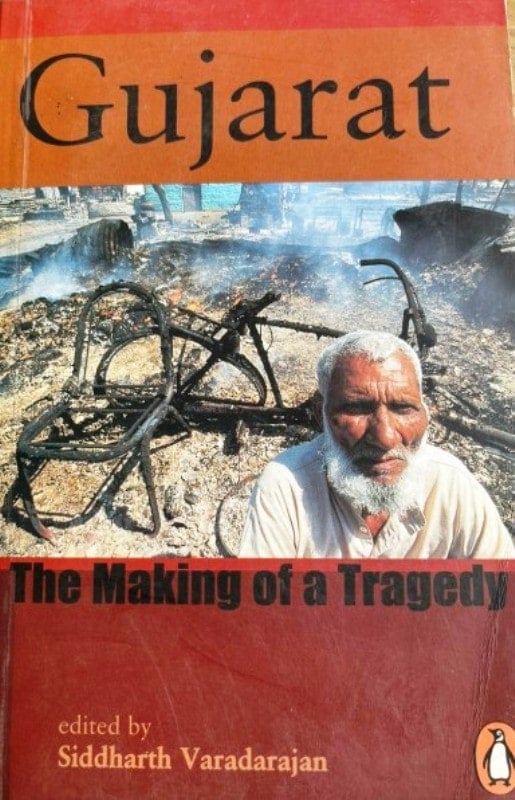
Cover page of the book, Gujarat: The Making of a Tragedy
- In 2002, CJP and Zakia Jafri, filed a joint PIL in the Supreme Court, levelling a series of 21 allegations against the then Chief Minister of Gujarat, Narendra Modi. The Chief Minister was accused of allowing the parading of the dead bodies of the victims of the riots, giving complete control of the Gujarat police’s control room to the cabinet ministers, appointing members of the Vishwa Hindu Parishad (VHP) as public prosecutors, and a lot more.
- On 27 April 2009, following the filing of another litigation by CJP, the Supreme Court ordered the formation of a Special Investigation Team (SIT) under the Chairmanship of R. K. Raghavan. The SIT was ordered to probe nine incidents pertaining to the 2002 Gujarat riots.
- On 14 May 2010, the SIT submitted its findings to the Supreme Court, and the Supreme Court then appointed Raju Ramachandran as its amicus curiae (advisor to the court). Raju Ramachandran found several disparities in the report filed by the SIT. Upon conducting an independent investigation into the matter, Raju Ramachandran stated in his report that an IPS officer, Sanjiv Bhatt, who, in 2002, was posted in Gujarat, was called to the CM’s residence for an emergency meeting where he was instructed by the CM himself to let the riots take place so as to allow the rioters to “teach the Muslims a lesson.”
- On 8 February 2012, disagreeing with the independent investigation of Raju Ramachandran, the SIT filed its closure report with the Supreme Court.
- On 10 April 2012, the Supreme Court, upon finding no conclusive evidence, gave its decision in favour of the accused individuals and acquitted the accused, including the then CM of Gujarat Narendra Modi.
- On 15 April 2013, demanding the SIT to hand over their collected pieces of evidence to the petitioners, CJP and Zakia Jafri filed another litigation. While filing a counter-petition against the litigation of CJP and Zakia Jafri, the SIT stated,
Teesta Setalvad and others have falsified the complaint targeting the chief minister who had never said that go and kill people. Their lawyer further submitted that the so-called incident of Chief Minister (Narendra Modi) giving instructions (in the meeting) to high-level police officers not to take action against the rioters is a sole creation of Teesta Setalvad. There is no evidence of the same and that Setalvad was not present during the incident.”
- In 2013, CJP filed another PIL in the Supreme Court, seeking an investigation into the alleged roles played by the accused persons in the burning down of the “Best Bakery” in the 2002 Gujarat riots. The CJP also successfully managed to have the “Best Bakery Case” transferred to the Bombay High Court from the Gujarat High Court.
- By early 2014, all the litigations filed by CJP against those accused of the 2002 Gujarat riots were rejected by the Supreme Court due to a lack of evidence against the accused individuals.
- In 2014, Teesta Setalvad published another book titled Gujarat: Behind the Mirage: a Collection of Informed Arguments.
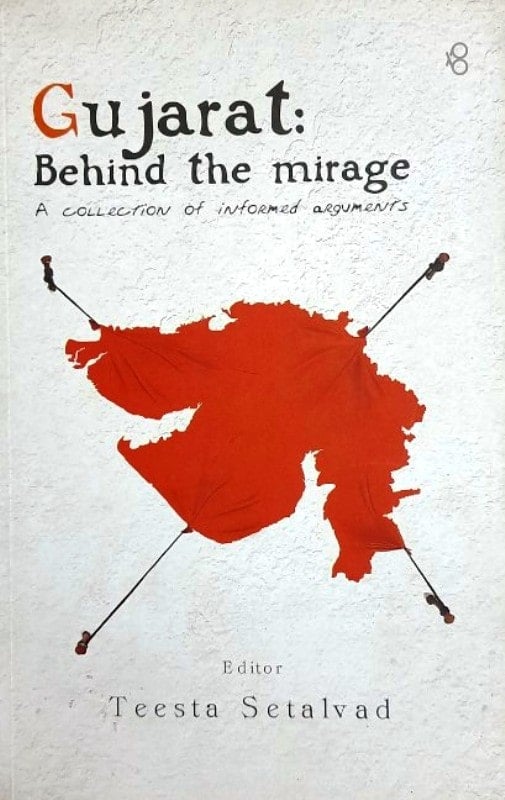
Cover page of Gujarat: Behind the Mirage: a Collection of Informed Arguments
- Teesta Setalvad authored another book in 2017. It was titled Foot Soldier of the Constitution: A Memoir.
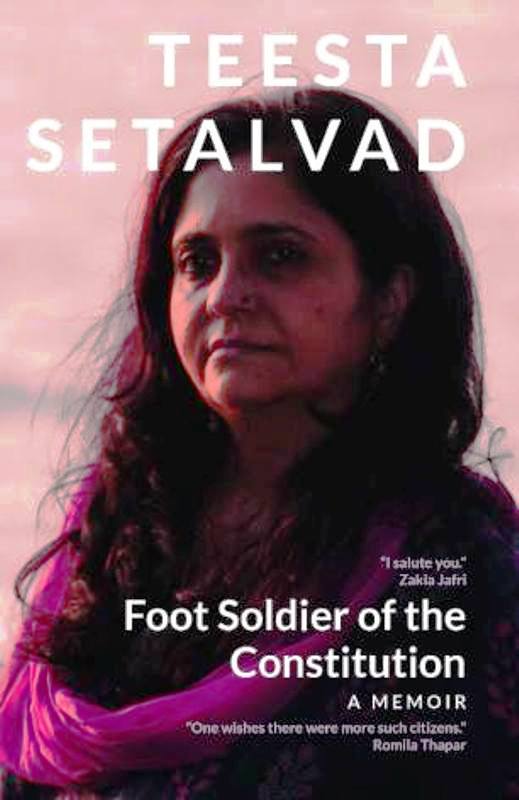
Teesta Setalvad’s book titled Foot Soldier of the Constitution: A Memoir
- In 2019, Teesta published another book, Sanvidhanacha Jaglya Mazya Aathavani. The book was published in Marathi.
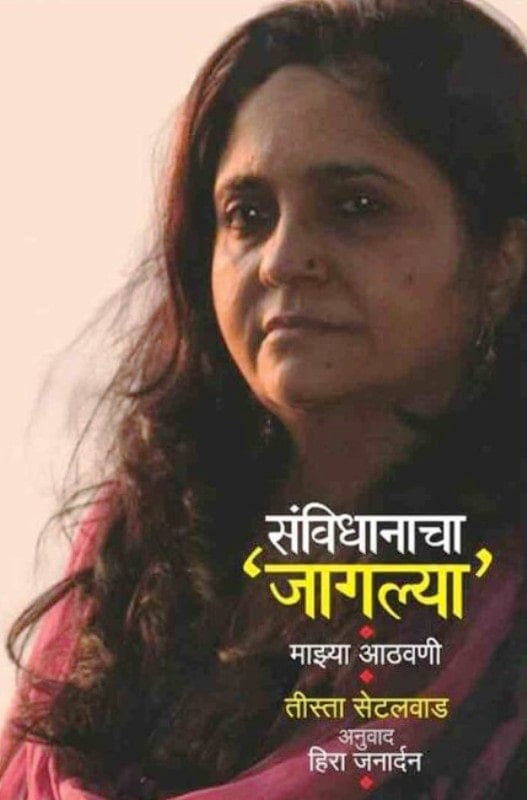
Cover page of Teesta Setavlad’s Marathi book titled Sanvidhanacha Jaglya Mazya Aathavani
- She published a book titled Beyond Doubt – A Dossier on Gandhi’s Assassination. It is based on the events of the assassination of Mahatma Gandhi.
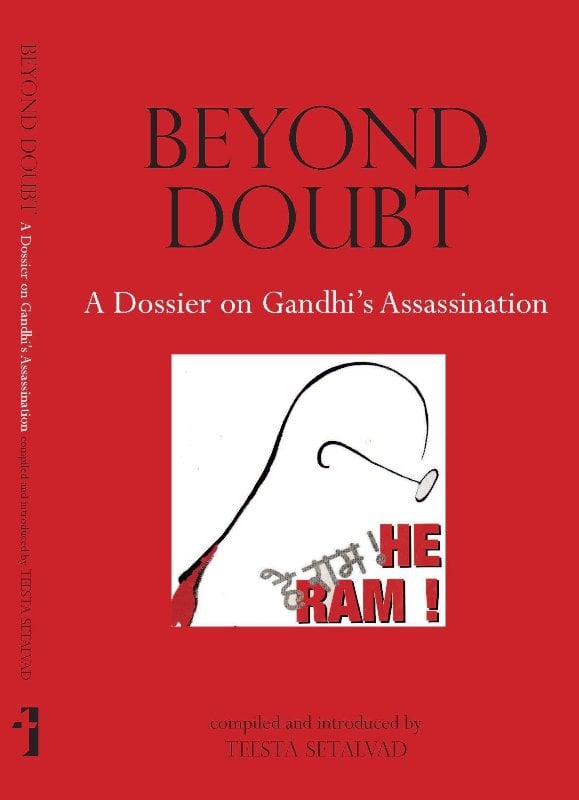
Beyond Doubt: A Dossier on Gandhi’s Assassination’s cover page
- In 2020, the British Columbian University honoured Teesta Setalvad with an Honourary Doctorate.
- Teesta Setalvad co-authored a book titled Delhi’s Agony. The book was published in 2021.
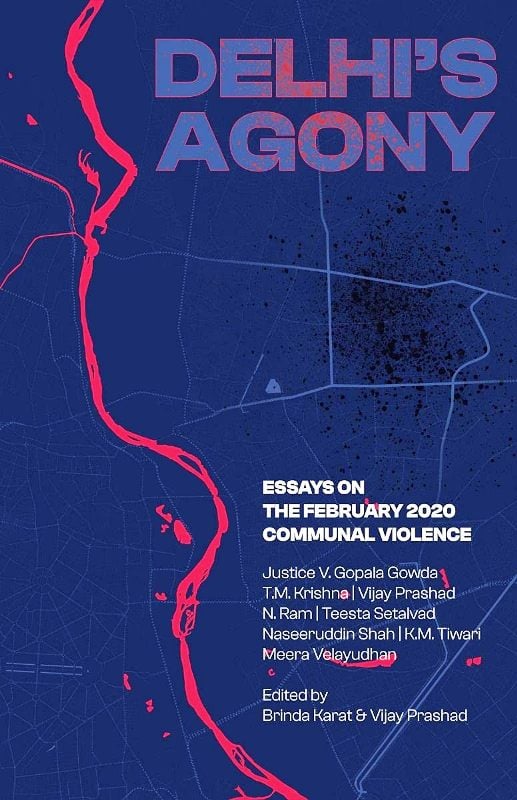
Cover page of the book Delhi’s Agony
- Teesta Setalvad is also an inner circle member of the Pakistan-India People’s Forum for Peace and Democracy. She was made a member of the forum for supporting better India-Pakistan relations.
- Teesta Setalvad is a staunch feminist. She is the founder of the Women in the Media Committee. The committee aims at providing relief to its members, facing different types of prejudices at the workplace by taking immediate action.
- According to several renowned journalists such as Indira Jaising, Teesta Setalvad has been politically hunted for her crusade against the culprits of the 2002 Gujarat Riots. While giving an interview, Indira stated,
The case against Teesta smacks of a dubious plan to deter her and her NGO from assisting the victims of the Gujarat 2002 riots. The financial dealings of Teesta Setalvad and Citizens for Justice and Peace can be probed by the government, but the disproportionality of the legal process, the timing, and the insistence of the prosecution on custodial interrogation smack of an evil vendetta.”
- In June 2022, upon getting arrested by Gujarat police, after the Supreme Court’s decision, Home Minister Amit Shah blamed her and her NGO, Citizens for Justice and Peace, for vehemently targeting Prime Minister Narendra Modi, time and again. While giving an interview, the Home Minister stated,
I have already read the judgement very carefully. The judgement clearly mentions the name of Teesta Setalvad. The NGO that was run being run by her – I do not remember the name of the NGO- had given baseless information about the riots to the police.”
- During an interview, Teesta Setalvad once claimed that during childhood she was very close to her father and grandfather, but she shared a very troubled relationship with her mother, Sita Setalvad.
newspaper Recent News
Recent news and updates about Teesta Setalvad will appear here.
Similar Celebrities
VIEW ALLAnjilee Istwal (News Anchor)
Journalist • Indian
11 Lesser Known Facts About Bahubali
Preeti Negi
News Anchor, Journalist • Indian
Kanhaiya Lal Tailor (Udaipur Murder Case)
Roopal Tyagi
Sandeep Maheshwari: Success Story & Life-History
Sumit Awasthi (Journalist)
Journalist and Anchor • Indian
Shekhar Gupta (Journalist)
Journalist • Indian
Sreenivasan Jain
Journalist • Indian
Amish Devgan
News Anchor and Journalist • Indian