Ted Egan
Age
93
Nation
Australian
favorite Personal Life
Basic Information
Family & Relationships
Education
Lifestyle
person_book Biography
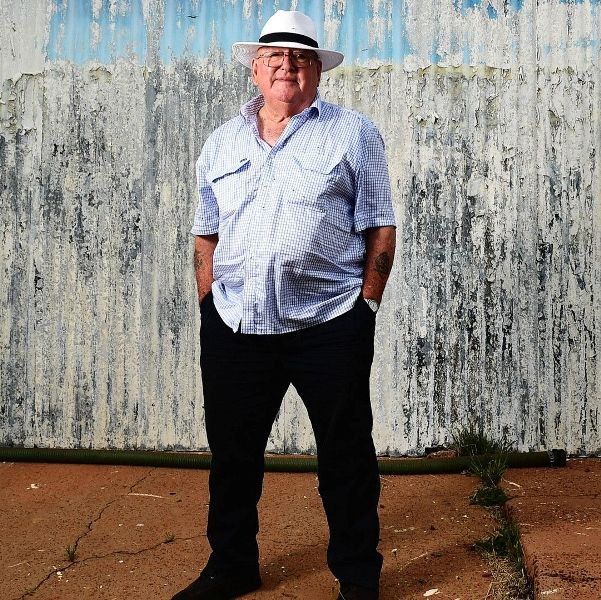
Some Lesser Known Facts About Ted Egan
- Ted Egan grew up in Melbourne, Victoria.
- In 1949, Egan left home and travelled to the Northern Territory, hoping to find work and explore a new life. During his early years there, he worked at the department that later became known as the Department of Aboriginal Affairs.
- In the Northern Territory, he spent most of this time in remote areas, where he patrolled communities, supervised Aboriginal reserves, and did work such as stockwork and crocodile hunting.
- After spending years in field-based government roles, Egan shifted into education and began teaching in remote bush schools. He even took on responsibilities that went far beyond just classroom duties.
- He also contributed nationally by serving as a member of the first National Reconciliation Council.
- In 1950, Ted became a founding member of the Works and Housing Football Club, now known as the Nightcliff Football Club.
- In 1952, he co-founded St Mary’s Football Club.
- In 1965, Egan became the only teacher at Newcastle Waters Station. Once, a major flood left him stuck for six weeks with no supplies coming in, so he had to rely on hunting local animals, including bush turkeys, to survive.
- In 1969, while working with the Australian Council of Aboriginal Affairs, Ted Egan co-wrote ‘Gurindji Blues’ (aka Poor Bugger Me) with Indigenous leader Vincent Lingiari, after hearing offensive remarks from Minister Peter Nixon during the Gurindji people’s Wave Hill land rights protest.
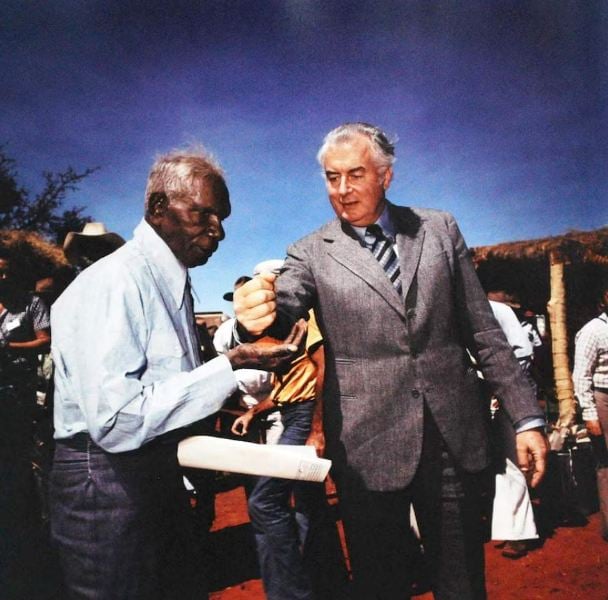
1975: Gough Whitlam places soil into Vincent Lingiari’s hands to mark the return of Wave Hill Station to the Gurindji people
- The song ‘Gurindji Blues’ was recorded by Indigenous activist Yunupingu, and the money went to support the Aboriginal Tent Embassy. Egan connected with this cause from his earlier work in communities like Yuendumu.
- His work included albums like ‘The Bangtail Muster’ (1973), ‘The Overlanders’ (1982), ‘I.O.U’ (2002), ‘Such Is Life’ (2003), and ‘Saving the Best’ (2010).
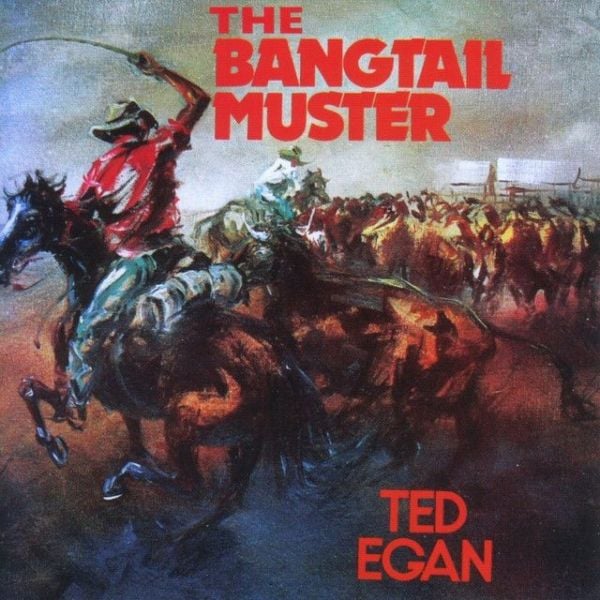
A poster of Ted Egan’s album ‘The Bangtail Muster’ (1973)
- He also authored many books, including ‘A Drop of Rough Ted I’ (1979), ‘The Paperboys War Ted Egan An Autobiography’ (1993), and ‘Due Inheritance: Reviving the Cultural and Economic Wellbeing of First Australians’ (2008).
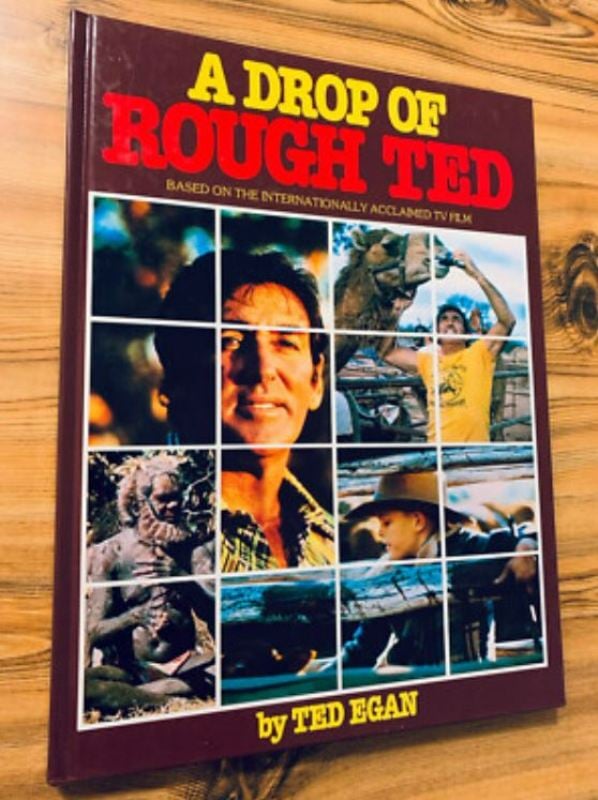
The cover of the book ‘A Drop of Rough Ted I’ (1979)
- In 1989, Ted Egan presented and narrated six episodes of the series ‘This Land Australia,’ which focused on iconic Australian people and places. He also wrote and performed the show’s theme song.
- Ted often said that ‘Granny’ (2002) was the song he most enjoyed performing. It was based on the life of Granny Lum Loy, a well-known Darwin woman who came from China as a seven-year-old child bride and lived to 97.
- In 2012, he revisited Newcastle Waters Station to attend the launch of the book Middle of Everywhere, which celebrated stories and life from that region.
- In his later years, Ted Egan wrote songs inspired by historical figures, including a Barossa Valley pioneer woman and Dr. Gilruth. He also wrote a song about Dr. Gilruth to help people pronounce his name correctly.
- Ted Egan was passionate about ‘pearling songs,’ which came to Darwin with workers from the Philippines, Malaya, and Indonesia during the pearling era. These songs were used by workers while performing tasks, and they often mixed different languages, creating unique regional versions.
- The Khungarakung people bestowed Ted Egan with the honorific name “Namiuk Kwaruk,” meaning “Singing Elder,” in recognition of his song ‘Alyandabu’ about their renowned matriarch.
- Most of Ted Egan’s albums focused on themes of outback life, Australian history, and Aboriginal people.
- On 4 December 2025, he passed away at the age of 93 in Alice Springs, Australia.
newspaper Recent News
Recent news and updates about Ted Egan will appear here.
Similar Celebrities
VIEW ALLRanjit Rana (Punjabi Singer)
Singer • Indian
Resham Singh Anmol
Singer, Model, Lyricist, Composer • Indian
Matin Rey Tangu (Tubelight Child Actor)
Actor • Indian
Swaalina
Model • Finnish
Georgina Dsilva
Model, Freelancer Photographer • British
Sampath Raj
Actor, Director, Story writer • Indian
Aastha Gill
Singer • Indian
Pooja Jhaveri (Actress)
Actress • Indian
Gyan Prakash
Actor, Theatre Artist, Former Mountaineer Instructor • Indian
Tintumol Joseph
Voice Over Artist, Translator, Anchor, Actress • Indian