Simranjit Singh Mann
Net Worth
Rs. 8,23,48,999 Note: It does not include the net worth of his wife and dependents. MyNeta
Height
in centimeters- 183 cm in meters- 1.83 m in feet & inches- 6’
Age
79
Nation
• British Indian (1945-1947) • Indian (1947- Present)
favorite Personal Life
Basic Information
Family & Relationships
Education
Lifestyle
person_book Biography
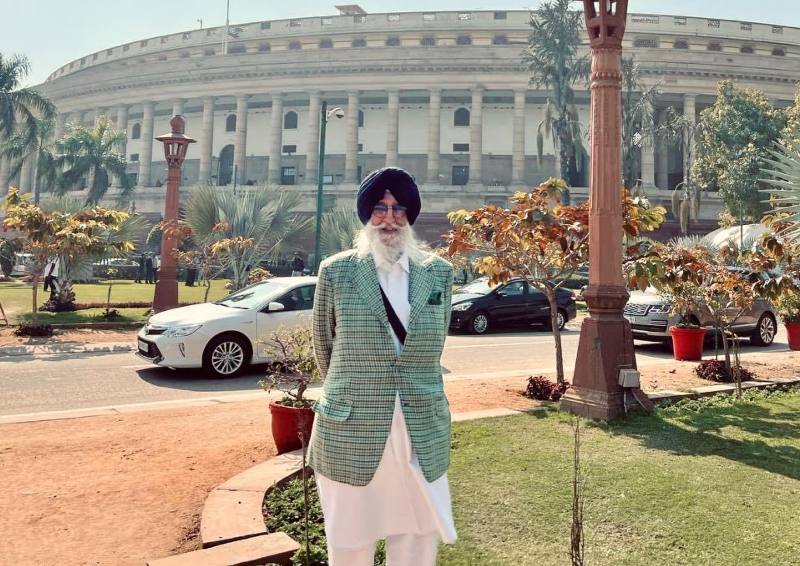
Some Lesser Known Facts About Simranjit Singh Mann
- Simranjit Singh Mann is an Indian politician and former Indian Police Service (IPS) officer. He is the founder of the separatist political party SAD (A) (also known as SAD (M)), a splinter faction of Shiromani Akali Dal. Mann was first elected to Lok Sabha as elected as MP from Taran Tarn in 1989. He was elected as MP from Sangrur in 1999 and 2022. He is a staunch follower of Jarnail Singh Bhindranwale‘s ideology of the creation of a separate Sikh country called Khalistan. On 19 March 2023, Mann’s Twitter account was withheld in India in response to a legal demand after he expressed apprehension that Amritpal Singh could be killed in an extrajudicial manner by Punjab police.
- Simranjit Singh Mann’s grandfather, Harnam Singh, belonged to the lineage of Manns of Sheikhupura. Sheikhupura, also known as Qila Sheikhupura, is a city in the Pakistani province of Punjab. The Mann family were wealthy landowners in the pre-Partition Punjab. After the Partition, the family started living in Talanian village in Fatehgarh Sahib district, Punjab.
- His family was residing in Shimla during the Partition of India in 1947. The book Stolen Years: A Memoir of Simranjit Singh Mann’s Imprisonment (2014), penned by Mann’s daughter Pavit Kaur, reads,
In 1947, when India and Pakistan were divided, my father’s family was already in Simla for the summer and as they led a hectic social life, Ammiji had brought along with her from their home (in what was soon to become Pakistan) two Persian carpets and enough silver tableware to serve a hundred people. That was the sum total of their wealth that they had salvaged!”
- Studying at the convent school, he grew developed an interest in the literary works of Homer, Percy Bysshe Shelley, and William Wordsworth. However, the religious proclivities of his mother, Gurbachan Kaur, lightened his westernised environment. At home, Mann would listen to parables of the Sikh gurus.
- His father, Joginder Singh Mann, served in various prominent positions during British rule. He was a member of the Punjab Provincial Assembly before partition. After Independence, he became a member of parliament in the Congress government and served as a Speaker in Punjab Legislative Assembly in 1968-69 during the tenure of the Akali government. [11]India Today It was his father’s long political association that instilled an interest in politics in him.
- Mann’s maternal grandfather, Giani Arur Singh Shergill, was appointed as the manager of the Golden Temple and the 10th Jathedar of the Akal Takht by the British government. After the Jallianwala Bagh massacre on 13 April 1919, Shergill honoured General Michael O’Dwyer with a ‘Siropa,’ thanking Dyer for their protection of the Darbar Sahib complex. The event is marked as a dark chapter in Sikh history. Mann sought an apology from the Panth on the behalf of his grandfather in 2002. [12]Hindustan Times [13]The Times of India However, Mann defended the act saying that Shergill honoured General Dyer to pacify his anger as the British government was planning an aerial attack on Golden Temple. Mann claimed,
He did it to save the Golden Temple from bombing on the advice of then principal of Khalsa College GA Wathen.”
- In an interview, Mann recalled that his fellow students in college would call him a “Yankee” in reference to his elite convent school background, to which he retorted,
I am not a Yankee. I am a Sardar.”
- Mann appeared in the Civil service examination in 1966 and cleared it on his first attempt. In 1967, he began his career in the Indian Police Service as a batch officer of the Punjab Cadre.
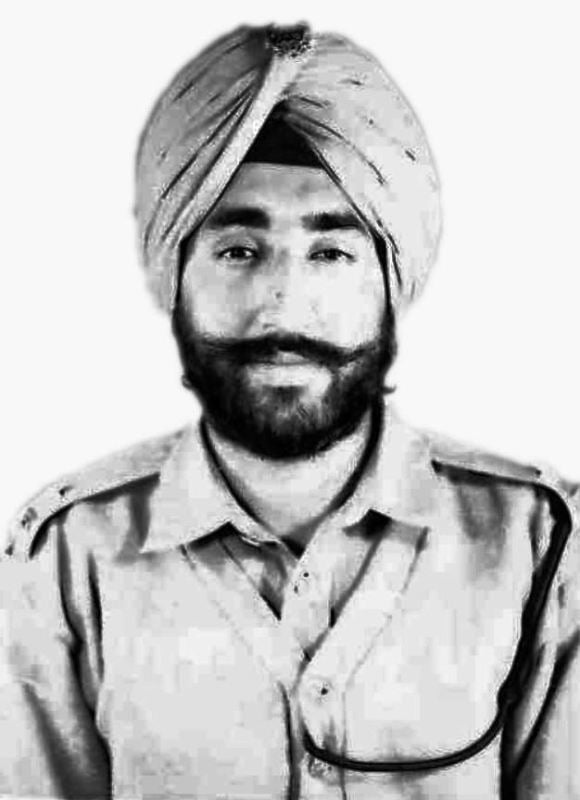
An old picture of Simranjit Singh Mann in a police uniform
- In an interview, his Punjab Police colleagues recalled that he was not overtly religious and even drank liquor at the beginning of his service. However, he always promoted Sikhism and encouraged his Sikh subordinates to follow the ideals of Sikhism and not trim their beards. [14]India Today
- In 1970, he got married to Geetinder Kaur, the daughter of the civil servant Gian Singh Kahlon. Geetinder is the sister of Preneet Kaur, the wife of Akali Dal leader Captain Amarinder Singh, who is the scion of the Patiala royal family.
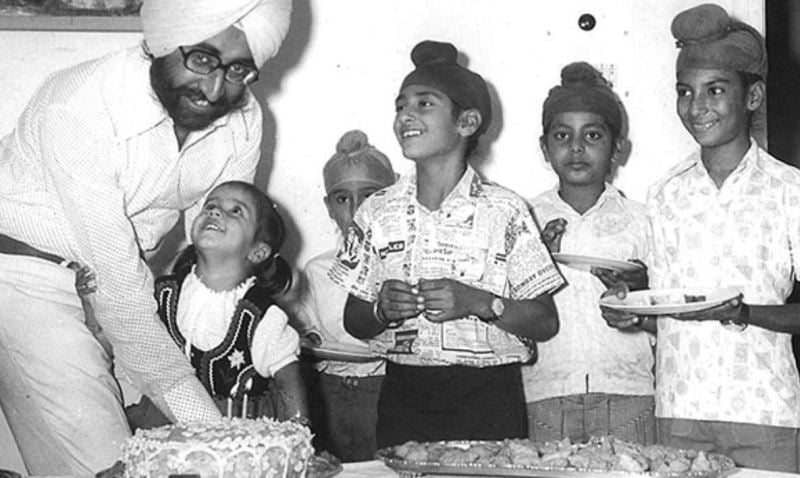
An old picture of Simranjit Singh Mann (extreme left) with his daughter
- Mann’s family had been supporting the activities of the Damdami Taksal, an orthodox Sikh cultural and educational organization, for several generations when he first met its chief Jarnail Singh Bhindranwale in 1979. Mann was an ardent sympathiser of the Khalistani cause, but he wasn’t involved with the terrorist movement launched by Bhindranwale in Punjab. Captain Amarinder Singh described the relationship between Mann and Bhindranwale in a 1988 interview and said,
Bhindranwale loved Mann like a son.” [15]India Today
- While Mann was posted as Faridkot district police chief in 1977, he raised eyebrows when Bhindranwale visited him there and organised an Amrit Prachar within the police lines. Amrit Prachar refers to a ceremony in which a Sikh is initiated into the Khalsa by consuming Amrit (holy water). During his tenure as SSP Faridkot, Mann was also accused of issuing arms licences to people who later turned out to be extremists. In an interview, Mann defended his actions by saying,
Amrit only gives you greater courage of conviction…Sikhs have a lust for weapons and I satisfied it through legal means.” [16]India Today
However, in a different interview, he claimed,
As SP I could only recommend applications for licensed arms, and these applications had to go through a very complicated process. The fact is that I did recommend many such applications, maybe 40 or so, and most of the applicants were either common people or Congress leaders. Some of them were, of course, Sikhs.” [17]India Today
- Between 1 and 10 June 1984, Prime Minister Indira Gandhi launched Operation Blue Star to remove Khalistani militant leader Jarnail Singh Bhindranwale and his followers from the buildings of the Sikh holy site Golden Temple in Amritsar. During the Indian Armed Forces operation, troops attacked the temple complex and killed thousands of civilians along with Bhindranwale. At that time, Mann was serving as the Commandant in CISF, Bombay, but he was visiting Punjab for some official work. In the aftermath of Operation Blue Star, Mann was summoned to Chandigarh by the government for a departmental enquiry about the issuing of the arms license. Soon, he discovered that the police was after him for his association with Bhindranwale. The police believed that Mann might rebel against the government. Hence, Mann hurriedly flew back to his wife and children in Bombay after reporting in Chandigarh.
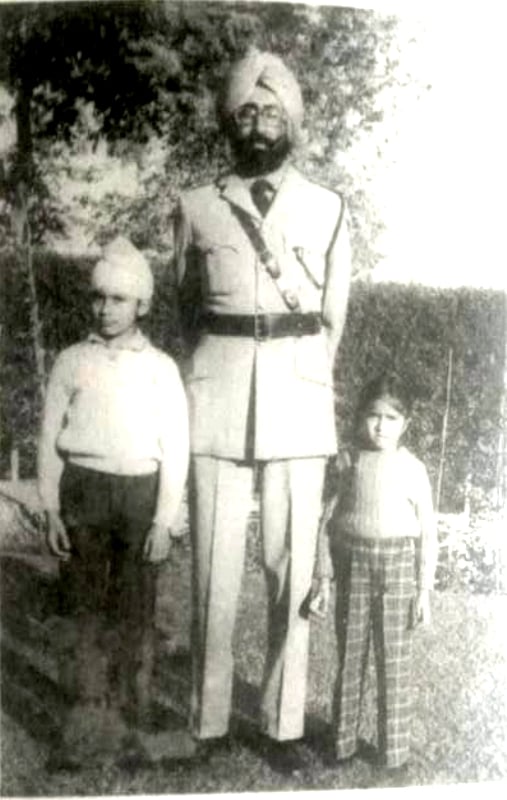
Simranjit Singh Mann in his police uniform posing for a picture with his children in Faridkot
- He resigned from the Indian Police Service on 18 June 1984 in protest of Operation Blue Star via a letter to then-President Giani Zail Singh. He did not receive any reply for days after which an officer from the CISF informed him that he was dismissed from the IPS and handed him his dismissal notice in Bombay.
- Thereafter, he went underground, first with a Maratha family in Indore and then in Calcutta. While hiding in Calcutta, Mann received a letter from his wife from which he learnt that the government had proposed a shoot-to-kill order for him. Consequently, he decided to flee to Nepal. He was on the run when Indira Gandhi was assassinated by her bodyguards Satwant Singh and Beant Singh on 31 October 1984.
- On 29 November 1984, Mann and 4 others while attempting to cross the Indo-Nepal borders from Jogbani in Bihar. They were accused of various charges, including conspiracy to assassinate Indira Gandhi, sedition to wage war against the State, and demanding independence for Khalistan. They were jailed without a trial in Bhagalpur, Bihar. Thereafter, Mann was in prison for five years, from 1984 to 1989. The dreadful years of Mann’s life in prison were chronicled by his daughter Pavit Kaur in the book Stolen Years: A Memoir of Simranjit Singh Mann’s Imprisonment. In an interview, he recalled his days in prison and said,
In Bharatpur, I was stripped naked. They gave me electric shocks by putting one terminal on my toe nails and the other on my genitals. At Bhagalpur, they put me in a lunatics’ cell for four days. In Bombay, I was in a cell whose walls were plastered with faeces. This would have gone on, if my lawyers. Ram Jethmalani and Dr B.L. Wadhera, were not breathing down their necks.”
- On 1 June 1987, he was appointed as the President of the newly-formed United Shiromani Akali Dal while he was imprisoned in Bhagalpur. A splinter group of the Shiromani Akali Dal, Mann’s party aimed at endorsing the adoption of the Anandpur Sahib Resolution and the creation of Khalistan. Later, the separatist political party came to be known as Shiromani Akali Dal (Mann). Reportedly, the party was called SAD (M) from 1988 to 1994 after which its name was changed to SAD (A). The names were used interchangeably in the following years.
- SAD (M) first entered in the political arena during the 1989 general elections. Mann contested the Tarn Taran Lok Sabha seat as a SAD(M) candidate in absentia as he was imprisoned in Bhagalpur. While Mann won the seat with an overwhelming majority of 4,80,417 votes, his party won 6 out of 13 seats in Punjab while 3 independent candidates backed by the party also won. The historic win led Mann to become a household name in Punjab after which he was released from jail. He was imprisoned for five years on vague charges during the administration of Prime Minister Rajiv Gandhi that were suddenly dropped by the VP Singh government.
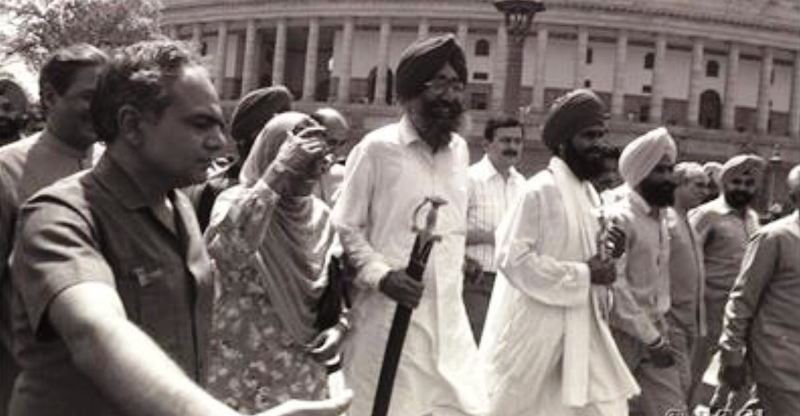
Simranjit Singh Mann and his supporters outside parliament house in New Delhi on April 4 1990
- He won the Shiromani Gurdwara Parbandhak Committee (SPGC) polls from Bassi Pathana in 1996 and 2004 but lost the SPGC poll from Fatehgarh Sahib in 2011.
- In 2022, he was elected to Lok Sabha from the Sangrur constituency in by-polls. The Sangrur by-poll was necessitated following the resignation of Bhagwant Mann, who had won the assembly elections in Punjab from the Dhuri constituency and became the Chief Minister. Simranjit Singh Mann had contested the 2022 Assembly polls from the Amargarh seat, but he was defeated by the AAP’s Jaswant Singh Gajjanmajra by a margin of 6,043 votes. In the polls, SAD chief Sukhbir Singh Badal had fielded Kamaldeep Kaur, the sister of Balwant Singh Rajoana, a convict in former Punjab chief minister Beant Singh‘s assassination case. Mann attributed his win in the elections to Bhindranwale.
- Mann has been booked in more than 85 cases in his lifetime, out of which 65 are sedition cases. [18]Hindustan Times In 2007, after he was acquitted in a lawsuit for calling Bhagat Singh a “petty terrorist”, he said,
The prosecution, in the past 30 years, has failed to prove a single case against me. I don’t know the exact number, but it is at least the 65th sedition case I have been acquitted in. Politicians and police have registered false cases against me and put me in jail from time to time to keep me out of politics. However, it’s time the Indian state learnt a lesson and didn’t register another sedition case and curbed the freedom of speech.”
- Every year on June 6, Mann and his supporters mark the anniversary of Operation Bluestar by gathering at the Golden Temple complex in Amritsar and raising pro-Khalistan slogans.
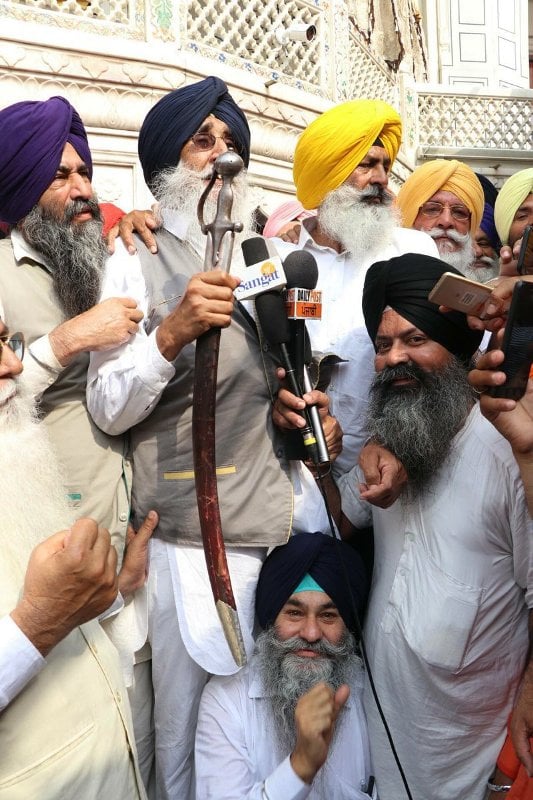
Simranjit Singh Mann addressing a Pro-Khalistani meeting at Shri Akal Takht Sahib in Golden Temple on the 34th anniversary of Operation Blue Star
- He is often referred to as ‘Budda Jarnail’ by his critics.
- He actively advocates for the release of Sikh prisoners lodged in jails even after the completion of their sentences.
newspaper Recent News
Recent news and updates about Simranjit Singh Mann will appear here.
Similar Celebrities
VIEW ALLH.D. Revanna
Politician • Indian
P.V. Anwar
Politician • Indian
Aparna Yadav
Politician • Indian
Sardar Vallabhbhai Patel
Barrister, Politician, Activist • Indian
Nana Patole
Politician, Farmer • Indian
Venkaiah Naidu
Indian Politician • Indian
Alka Lamba
Politician • Indian
Ana Brnabic (First Female Gay Prime Minister)
Serbian Politician • Serbian
Ratan Dubey
Politician • Indian
Kumar Vishwas
Performance Poet and an Indian Politician • Indian