Shibu Soren
Net Worth
Rs. 1,03,12,288 Note: The net worth was for the financial year 2019. It excludes the net worth of his wife and dependents. MyNeta
Height
in centimeters- 168 cm in meters- 1.68 m in feet & inches- 5’ 6”
Age
81
Nation
• British Indian (1944-1947) • Indian (1947-present)
favorite Personal Life
Basic Information
Family & Relationships
Education
Lifestyle
person_book Biography
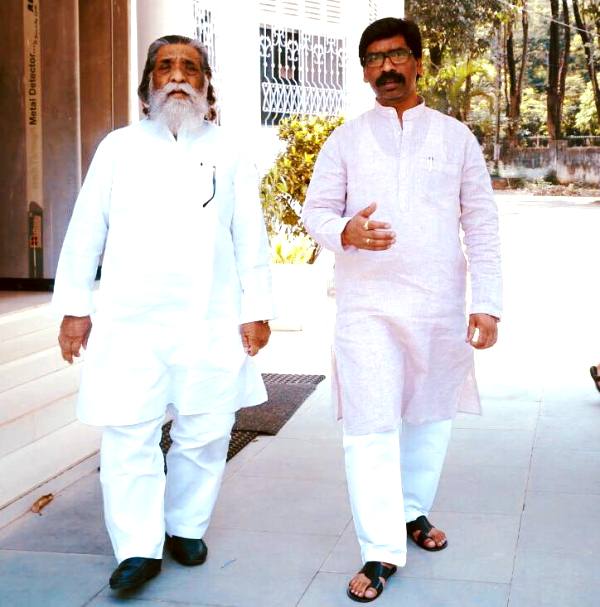
Some Lesser Known Facts About Shibu Soren
- Shibu Soren was an Indian Jharkhand Mukti Morcha (JMM) politician, who had held the office of the Chief Minister of Jharkhand thrice, the post of a Rajya Sabha Member of the Parliament thrice, the post of the Lok Sabha MP many times, and the President of the JMM ten times. Shibu faced allegations in both the 1975 Chirudih Massacre and the 1994 Sashi Nath Jha murder case. He was the father of the former Jharkhand CM Hemant Soren.
- While studying in school, Soren resided in a hostel along with his brother.
- He, however, had to leave his studies after the 10th standard because goons murdered his father. He had to take on the responsibility of looking after his family’s financial needs, so he took a job as a wood merchant.
- Shibu talked about his father’s passing in an interview, and claimed that the financial condition of his family had become so dire that his mother had to sell her jewellery. He said,
After the murder of my father, my mother somehow educated us brothers and sisters by selling her jewellery.”
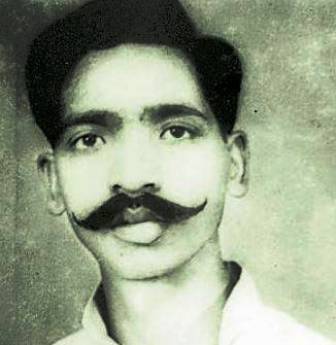
Shibu Soren’s photo taken during his younger days
- Shibu became inclined towards tribal activism following the death of his father.
- He began taking part in public meetings conducted by the well-known tribal activist Hori as a youngster. According to Soren, he took part in numerous agitations organised by Hori but never joined his organisation. Hori used to raise the issue of giving equal rights to the tribals and creating a separate state, Jharkhand, from Bihar.
- Soon, his stature as a tribal activist increased as a result of which he started leading mass protests and rallies while carrying forward the agenda of Hori.
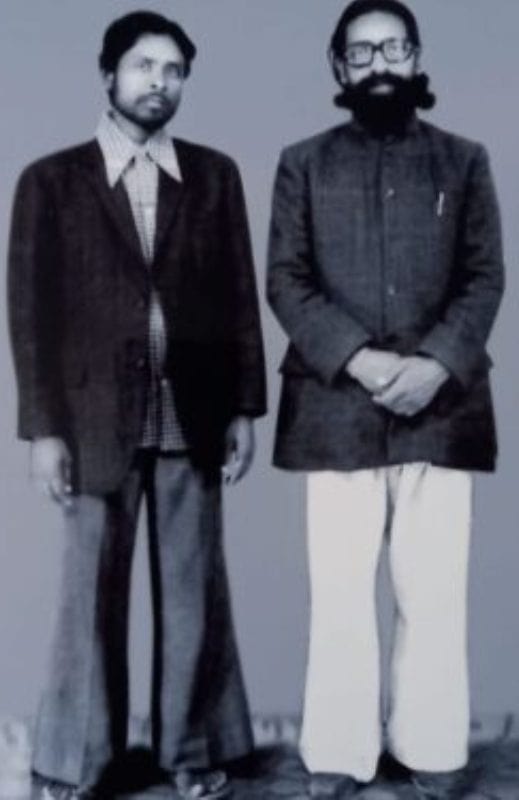
Shibu Soren’s photo taken when he was in his 20s
- He also took the responsibility of redistributing tribal land, originally granted to mining companies and landlords by the authorities by the government, back to its rightful owners.
- At 18 years old in 1962, Shibu Soren founded the Santhal Navyuvak Sangh to address tribal issues in Bihar. He then began targeting affluent moneylenders and gained a fearsome reputation. He also earned the title of “God” among the tribals.
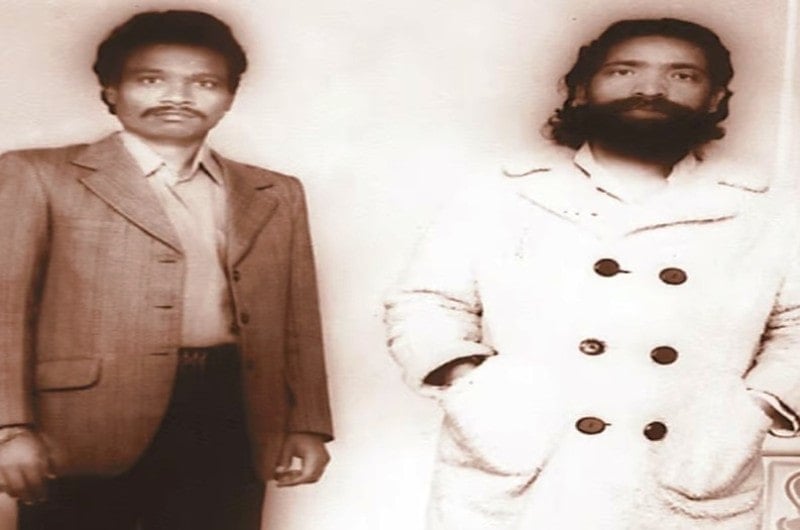
A photo of Shibu taken after he started the Sangh in the 60s
- The Sangh later began targeting Dikus, also known as the outsiders, with the intent of driving them away from the tribal areas.
- During the late 1960s, many sources claimed that Shibu established a parallel administration in the tribal regions of Bihar, with support from the Communist Party of India (Marxist-Leninist). He spoke of it in an interview, and said,
Here, we were owners of our fields but attempts were being made to dislodge us. The members of the red parties were with us, so were those of other parties. All of them wanted the people of Jharkhand to get their rights.”
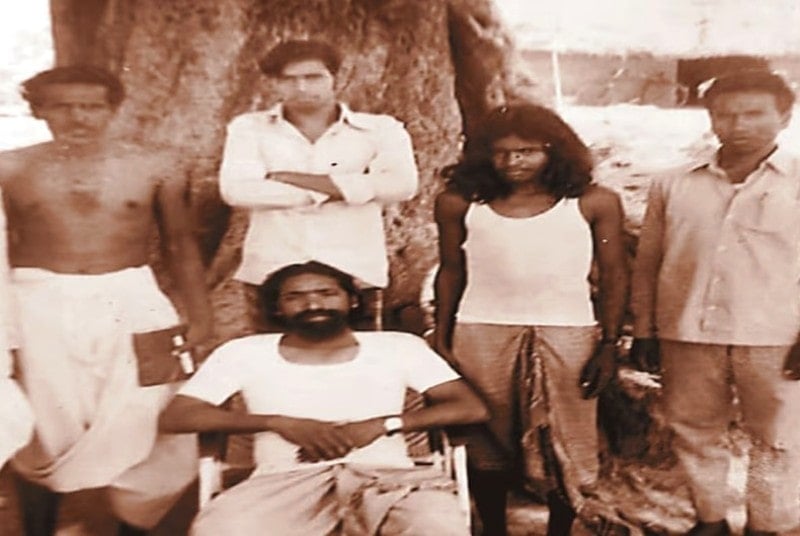
An old photo of Shibu Soren (seated) taken when he met the members of a tribe
- Shibu entered politics in 1973 with the establishment of the JMM with A. K. Roy, a Marxist trade union leader from West Bengal, and Binod Bihari Mahato, a Kurmi-Mahato leader.
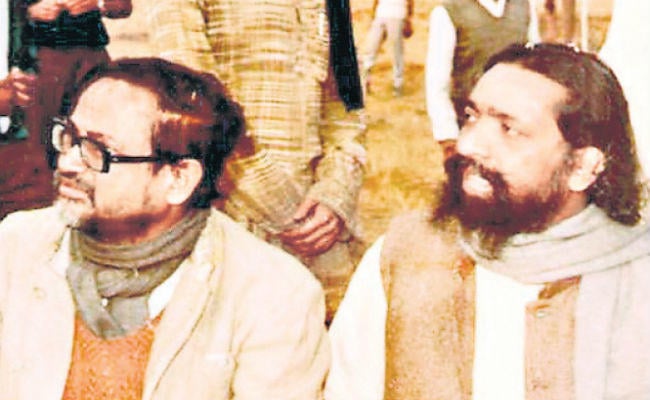
A photo of Shibu Soren with A. K. Roy
- Soon after its establishment, the JMM began a campaign named “Reclaim the lost tribal lands” and began agitating for the creation of Jharkhand. For it, the JMM, led by Shibu Soren, undertook many protests and enforced economic bandhs to put pressure on the Indian and the Bihar governments.
- Soren played a crucial role in formulating policies that resulted in the incorporation of predominantly Other Backward Class (OBC) industrial workers, which led to an increase in the power of the workforce of the JMM.
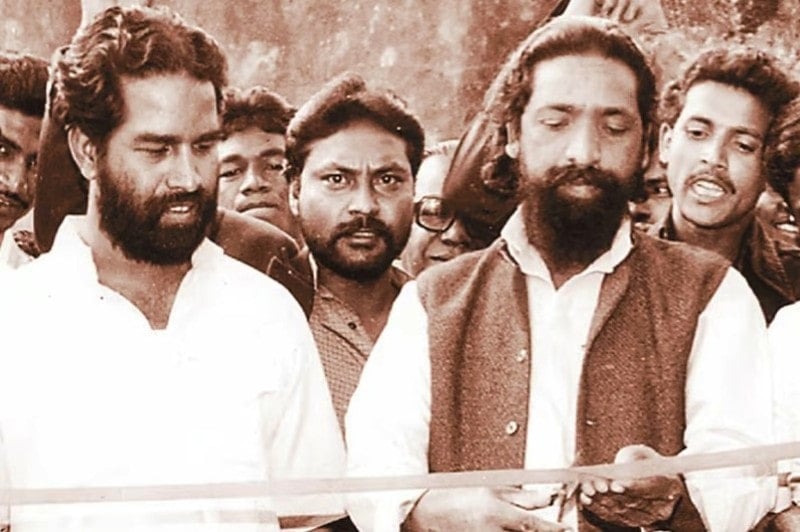
Shibu Soren’s photo taken while he was attending a rally in the late 1970s
- Many young leaders left the party and formed the All Jharkhand Students Union (AJSU) after it came to the limelight that Soren was trying to strike a deal of alliance with the then Prime Minister of India, Indira Gandhi.
- According to sources, the Santhal Navyuvak Sangh was involved in the Chirudih massacre in 1975, in which 10 people were killed. Out of the 10 people, the majority were Muslims.
- In the same year, Shibu went into hiding in an ashram in the thick forests of Pokhra, Jharkhand, after an arrest warrant was issued against him by the Indira Gandhi-led Union government during the emergency. He continued coordinating the working of the Sangh from the Ashram.
- In 1976, he turned himself in to the authorities following persuasion from a close friend, the Deputy Commissioner of Dhanbad.
- After going to jail in 1976, Shibu initiated the organisation of Chhath within the prison. He initiated it after he witnessed a fellow female inmate singing the Chhath song, unable to celebrate with her family due to her imprisonment. While giving an interview, a senior journalist said,
Shibu Soren could not understand anything after listening to the song of the woman prisoner in the jail, he asked another activist of Jharkhand movement and Jhagdu Pandit in jail about this. Jhagadu told them that the woman performs Chhath every time, but this time she is in jail for a crime, hence she is not able to perform Chhath, hence she is singing Chhath songs in great pain. Till then as a tribal leader Prashant was deeply saddened to hear the plight of a non-tribal woman. He made arrangements for the woman to observe Chhath fast in the jail itself.”
- He headed the Dhankati Movement under which he led numerous protests among tribal communities to reclaim their land from the zamindars who had allegedly acquired it through dishonest means.
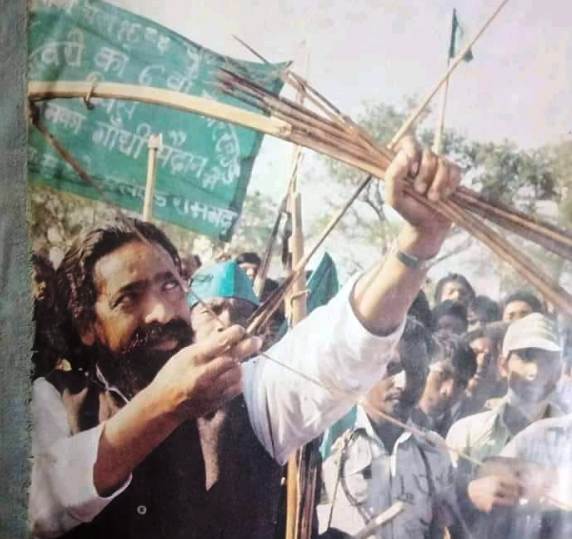
Shibu Soren in his days of movement for Jharkhand State
- He formed a group of Adivasis to safeguard women cutting crops in the zamindars’ fields using bows and arrows. This action was in response to the unjust seizure of tribal land. It resulted in a law and order crisis that led to numerous casualties.
- As per sources, Soren had given clear instructions to those involved in his movement to avoid hurting family members of the zamindars. He also instructed the Adivasis not to damage the property of the zamindars that had not been made on tribal land.
- Soon after becoming a member of the Jharkhand Coordination Committee (JCC), Soren, along with the JMM, left it, saying that “the collective leadership was a farce.”
- Soren was disqualified as a member of the Rajya Sabha in 2002 for holding an office of profit by being chairman.
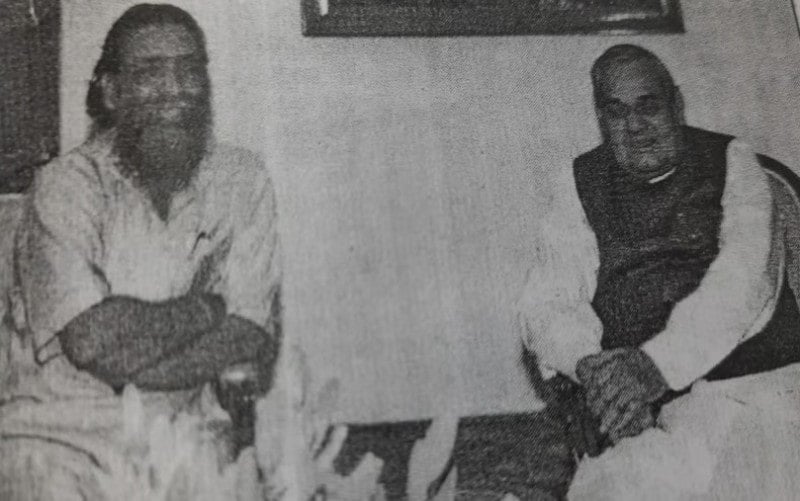
Shibu Soren with Prime Minister Atal Bihari Vajpayee
- Soren resigned as the coal minister for the first time on 24 July 2004 after a court issued an arrest warrant against him for his role in the 1975 Chirudih massacre.
- On 2 March 2005, he resigned as coal minister for the second time to take over the office of the Chief Minister of Jharkhand.
- Shibu Soren left the Chief Ministership of Jharkhand on 11 March 2005 after he failed to prove the majority of his government in the assembly.
- He had to resign as the minister of coal for the third time on 29 November 2006 after Prime Minister Manmohan Singh asked for his resignation following his conviction in the 1994 Shashi Nath Jha murder case.
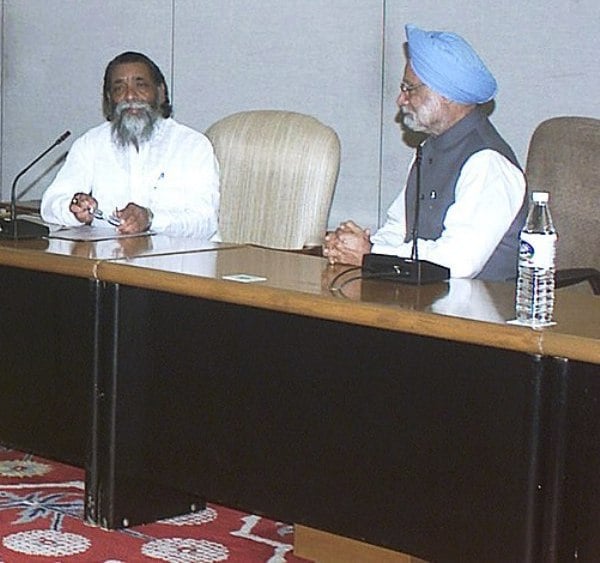
Shibu Soren in a photo with Manmohan Singh, the then Prime Minister of India
- His second and third terms as the Chief Minister ended with the imposition of the President’s rule in the state on both occasions. President’s rule was declared during Shibu’s second tenure as a CM, as he was unable to become an MLA, which is a constitutional requirement for a CM of a state. Sources also claimed that not only did his family members not vacate their seats, but other JMM MLAs reportedly rejected the idea, stating that if Shibu’s family members were not willing to give a seat to him, they saw no reason to do so themselves. [20]Hindustan
- He got a total of 3,35,815 votes in the 2014 Lok Sabha elections.
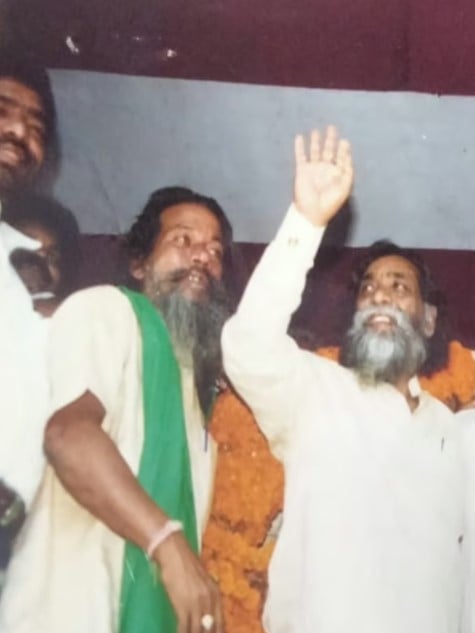
Shibu Soren during a rally conducted during an election
- He received criticism from the tribal people who attended his election rally in 2014 after he spoke against the consumption of liquor. Many of those who attended the rally said that Soren’s advocacy against liquor was not justified, as the earnings of the tribals depended upon making and selling alcoholic beverages. [21]The Times of India
- Due to his influential stature as a tribal leader, he was often referred to as God in the tribal areas.
- Many publications have been released about Shibu Soren, including Shibu Soren Jharkhand Andolan Ka Ek Siprahi (2015), Dishom Guru Shibu Soren (2020), and Tribal Hero Shibu Soren (2023).
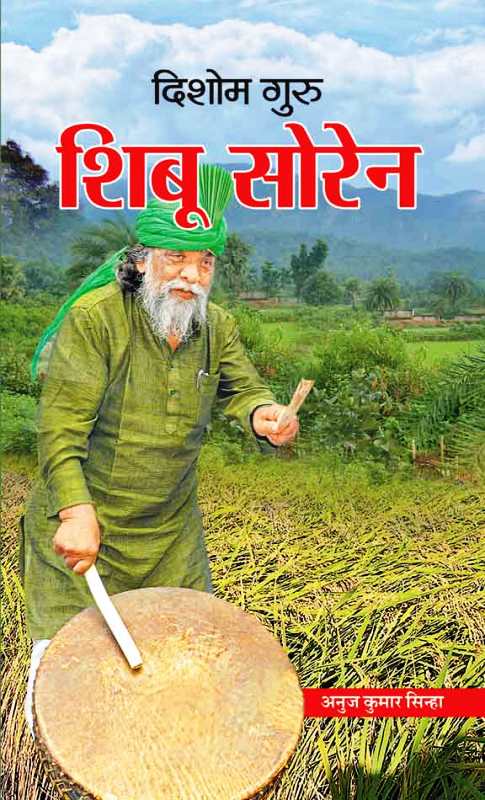
Dishom Guru Shibu Soren’s cover page
- Soren knew how to play traditional tribal instruments such as Nagada and Dugdugi. He had once revealed that when he went to tribal areas, he signalled his arrival using such instruments.
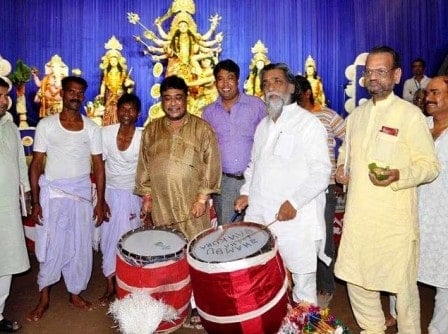
Shibu Soren playing nagada during an event
- In an interview, he revealed that he had a very tight routine, and even if he slept late at night, he got up early in the morning.
- Neither did Shibu drink alcohol, nor did he consume tobacco. Several sources claim that he dislikes those who indulge in such activities. [22]The Times of India In an interview, he revealed that he was once about to beat his uncle, who refused to give up drinking even after Shibu’s continuous requests.
- He once shared a story of his days as an activist and revealed that while having dinner with his followers in the forests, he heard a distant dog bark. Relying on his instincts, he went to check and discovered that the dog was alerting them about the approaching police force, which was there to take him into custody.
- He had supported the candidature of the RJD chief Lalu Prasad Yadav to the legislative assembly many times, as he considered him to be a close friend.
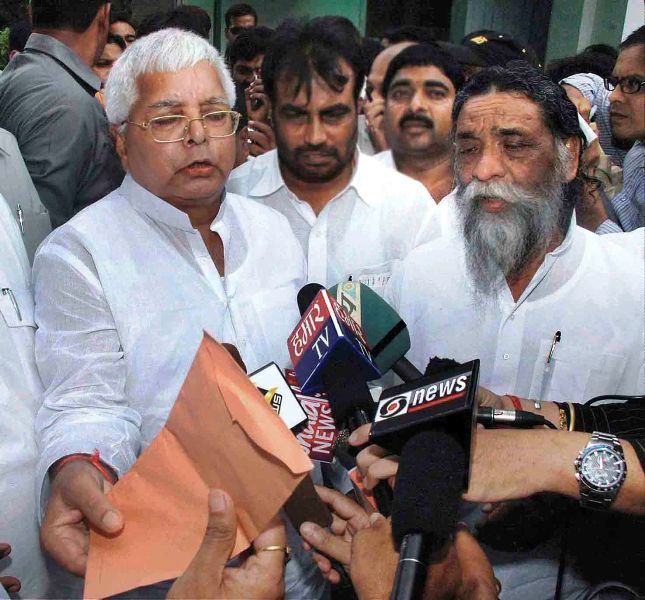
Shibu Soren with Lalu Prasad Yadav
- He used to prepare his own food and liked to eat simple food like chapati and green vegetables.
- After his health worsened in 2023, he was admitted to a hospital in New Delhi.
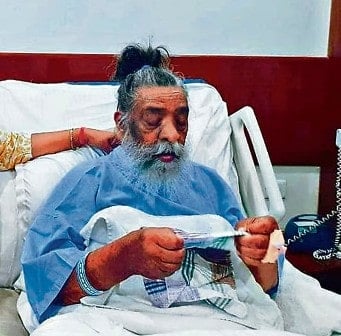
A photo of Shibu Soren taken when he was in the hospital
- Hemant Soren, Shibu’s son, went into hiding ahead of an Enforcement Directorate raid on their home in 2024.
- He was fluent in many languages, including Hindi, Bengali, Oriya, Maithili, and Santhali.
- He had a garden in his home, where he grew fruits and vegetables such as papaya, cucumber, and carrots.
- According to Hemant, he used to stay at the guest house or his relatives’ home when Shibu was at home because of his strictness. Hemant spoke about it in an interview and said,
I think he is too strict. Whenever he is at home, I move over to a guest house or a relative’s place. He does not allow anyone to sleep till late or enjoy good food. Even smoking and drinking are strictly prohibited.”
- He had a fondness for archery and photography. According to sources, he had purchased a Polaroid camera when he was young and had just entered politics.
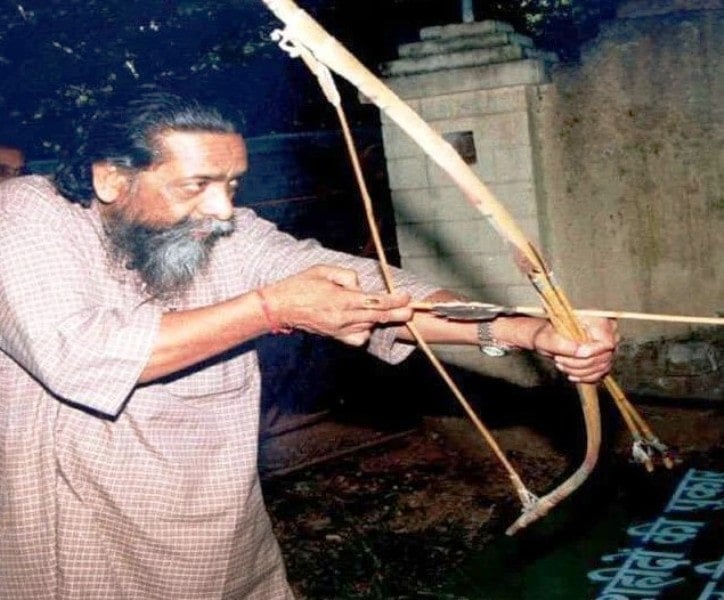
Shibu Soren holding and aiming a bow and arrow 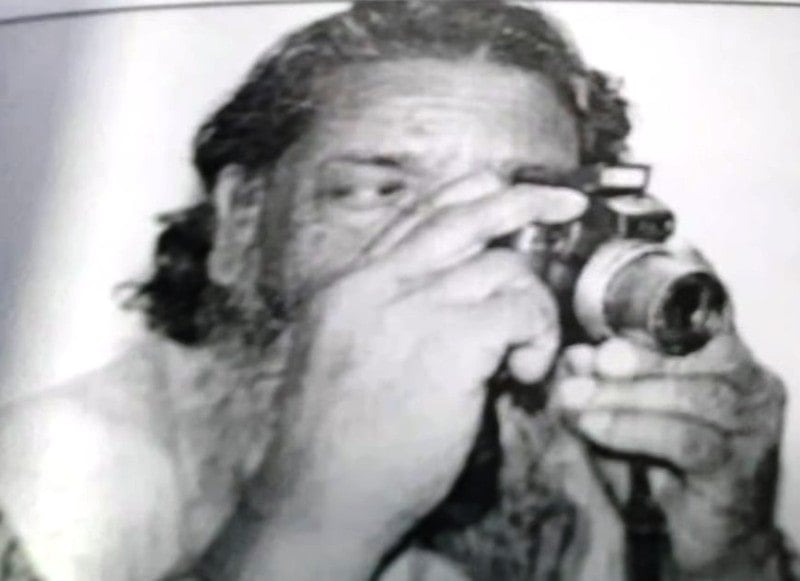
A photo of Shibu Soren taken with a camera
- Shibu Soren passed away due to a prolonged illness on the morning of 4 August 2025 at the age of 81. His death was confirmed at 8:56 AM.
- His son, Hemant Soren, shared the news on X, referring to his father as “Respected Guru Dishom” and expressing his grief by saying,
Today, I have become a zero.”
- About a month before his death, Soren suffered a stroke and was placed on life support. He had been battling kidney issues for a long time and was under the care of Dr. A.K. Bhalla and the Neurology and ICU teams at Sir Ganga Ram Hospital, Delhi, during his final weeks.
newspaper Recent News
Recent news and updates about Shibu Soren will appear here.
Similar Celebrities
VIEW ALLSuresh Pujari
Politician, Advocate • Indian
Yasmeen Shah
Politician • Pakistani
JP Nadda
Politician • Indian
Shahid Khaqan Abbasi
Pakistani Politician • Pakistani
Ram Jethmalani
Lawyer, Jurist, Politician, Philanthropist, Entrepreneur • Indian
Yahya Sinwar
Politician, Former Military Officer • Palestinian
Pema Khandu
Politician • Indian
Chitra Wagh
Politician • Indian
Meghnad Desai
Economist, Politician • English
Manpreet Monica Singh
Politician, Social Activist, Lawyer • American-Indian