Salman Rushdie
Height
in centimeters- 170 cm in meters- 1.70 m in feet & inches- 5’ 7”
Age
77
Nation
British
favorite Personal Life
Basic Information
Family & Relationships
Education
Lifestyle
person_book Biography
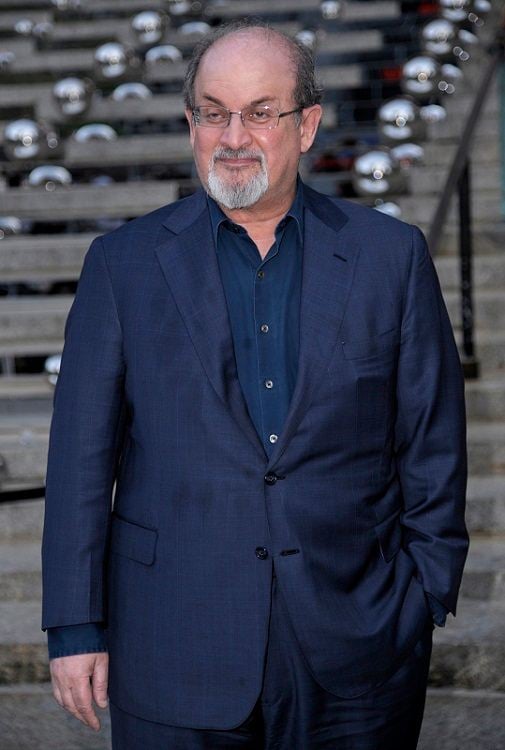
Some Lesser Known Facts About Salman Rushdie
- Does Salman Rushdie smoke?: Yes
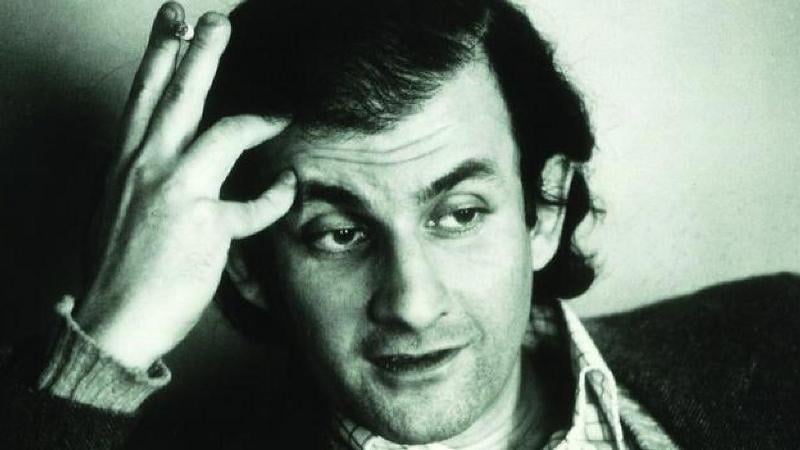
An old picture of Salman Rushdie while holding a cigarette
- Does Salman Rushdie drink alcohol?: Yes
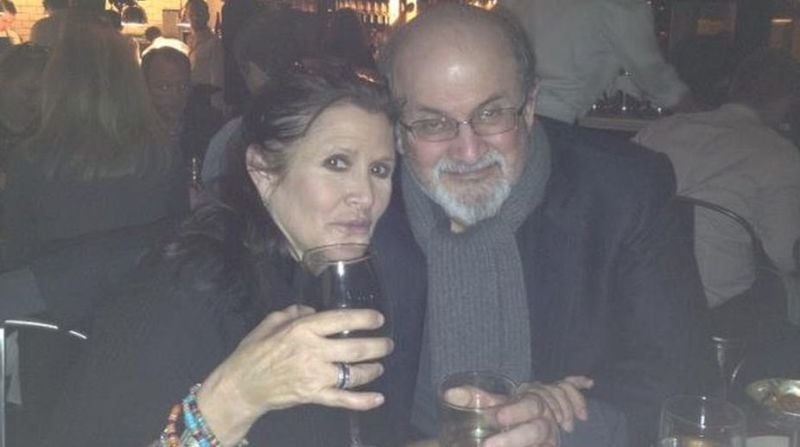
Salman Rushdie while holding a glass of alcohol
- Salman Rushdie is an Indian born British-American essayist and novelist. The stories on the Indian subcontinent, magical realism and historical fiction like migrations, connections and disruptions between Eastern and Western civilizations are his main genre of writings.
- In 1981, his second novel clinched the Man Booker Prize. In 1988, his fourth novel ‘The Satanic Verses’ was full of controversies that led to announce the fatwa of assassination against him from Muslims all over the world. [8]The Conversation In 1989, he was given death threats by the leader of Iran, Ayatollah Ruhollah Khomeini, over his book. [9]Britannica
- Rushdie was born in Bombay (now Mumbai), British India to a Muslim family of Kashmiri heritage. His father, Anis Rushdie, was once dismissed from the prestigious Indian Civil Services (ICS) after the British government found out that he had produced a forged date of birth proof.
- It is believed that the husband of Rushdie’s maternal aunt is the mind behind Pakistan’s premier intelligence agency- Inter-Services Intelligence (ISI). [10]DNA
- Rushdie turned down a scholarship offered by Balliol College, Oxford to attend Kings College, Cambridge, the same college from which his father had once graduated. However, unlike his father who was a bright student, Rushdie could only manage a below-average grade point score of 2.2.
- After finishing college, Rushdie made an unsuccessful attempt at acting and production; he worked as a small-time actor in London, a television station producer in Karachi and even tried his hands at writing.
- In one of his writings in 2012, Salman Rushdie penned that his father adopted the surname Rushdie in honour of Averroes (Ibn Rushd).
- Before becoming a full-time writer, Rushdie worked as a copywriter for advertising agencies like Ogilvy & Mather, and Ayer Barker. During his stint with the latter, he wrote many popular slogans for a number of companies like American Express (That’ll do nicely), Aero Chocolates (“irresistibubble”), etc.
- Salman Rushdie had a disastrous beginning to his writing career as his debut book, Grimus, could barely sell a few copies in 1975.
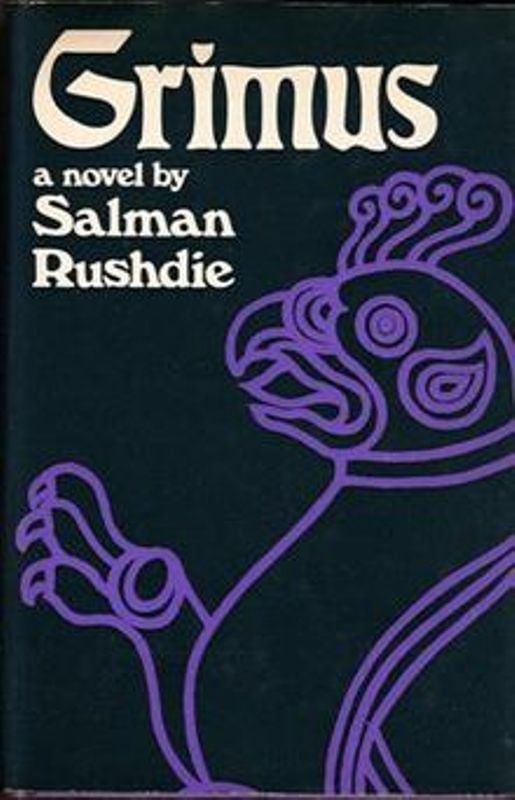
Grimus by Salman Rushdie
- However, things turned back in his favour, 6 years later, when the author published his second book titled ‘Midnight’s Children’. Not only did the book become a huge hit among readers from all walks of life, but it also fetched him the prestigious Booker Prize.
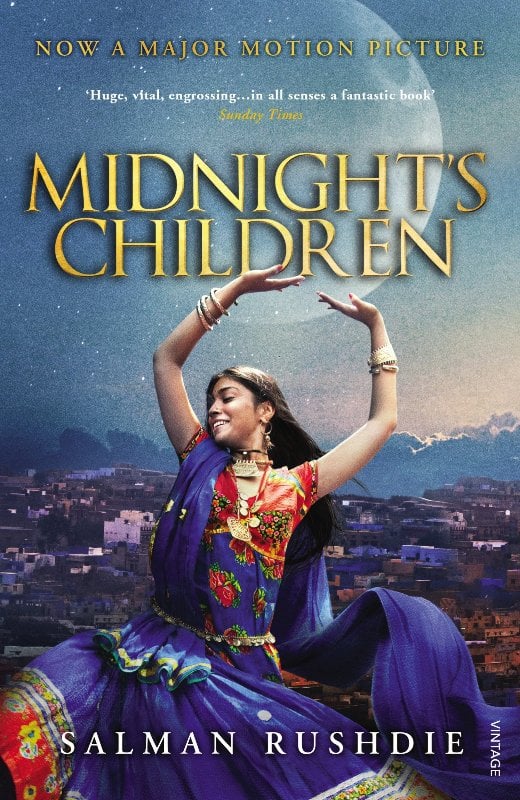
Midnight’s Children by Salman Rushdie
- In 1983, he wrote Shame that was a controversial novel depicting the political issues in Pakistan based on Zulfikar Ali Bhutto and General Muhammad Zia-ul-Haq. In 1987, he wrote The Jaguar Smile, non-fiction about Nicaragua. This book was based on first-hand experiences and researches of Sandinista political experiments.
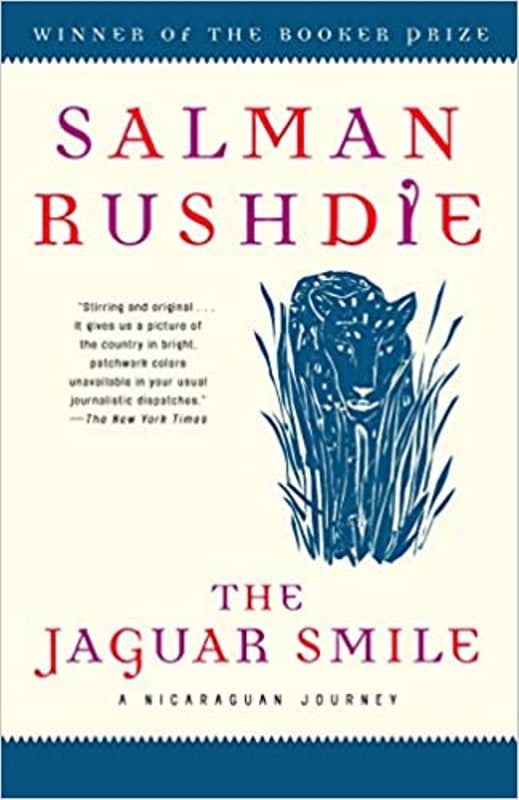
The Jaguar Smile by Salman Rushdie
- Salman Rushdie wrote his novel Shame in 1983 that was based on the political issues of Pakistan during the rule of Zulfikar Ali Bhutto and General Muhammad Zia-ul-Haq.
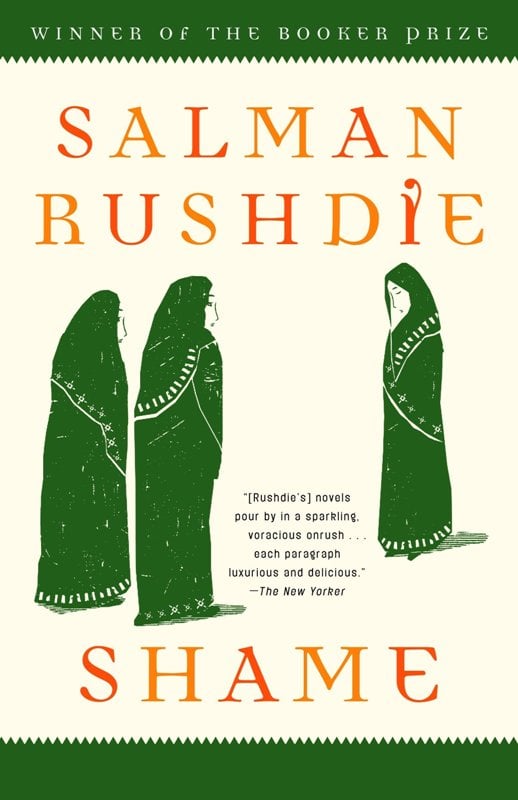
Shame, a novel by Salman Rushdie
- In 1987, he published his next novel titled The Jaguar Smile that was a non-fiction book about Nicaragua. First-hand experiences and researches were conducted to write this novel, and it was based on Sandinista political experiments.
- As per Salman Rushdie, budding writers must have a relationship with language while starting writing a book. He said in a conversation with Harvard Business Review,
Understanding the world is a very difficult thing. Bringing human beings to life on the page is a difficult thing. I’ve always felt that a writer should also have some relationship with language that changes all the time—new voices, new styles, new manners.”
- All was going well in his life until he wrote the highly controversial book- The Satanic Verses (1988), which reportedly portrays Islam and Prophet Muhammad in a bad light. Rushdie had to ‘run’ for his life when the spiritual leader of Iran Ayatollah Khomeini issued a Fatwa on Radio Tehran for Rushdie’s execution. Widespread violence and riots broke out across the world, forcing Rushdie to spend the next 10 years of his life under police protection.
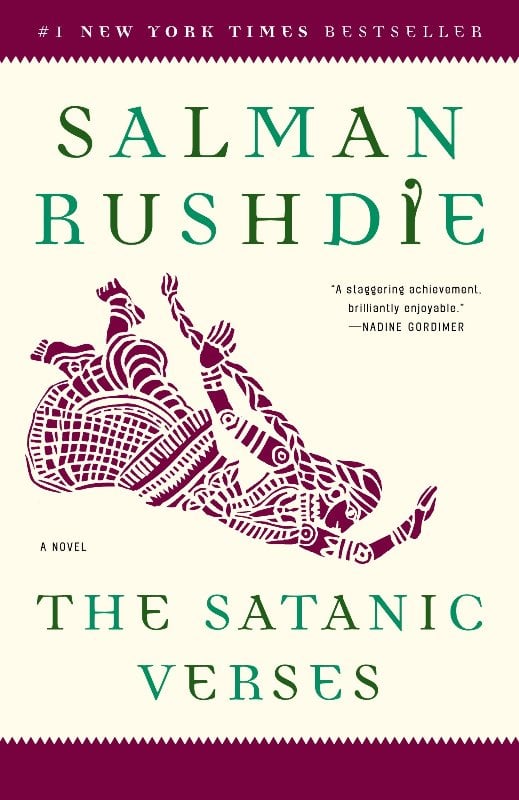
The Satanic Verses by Salman Rushdie
- Even during these hard times, Rushdie did not stop writing, Fortunately enough, this time he chose children’s stories, a subject that was least likely to create another controversy!
- In 1989, Salman Rushdie revealed his religious views as,
My point of view is that of a secular human being. I do not believe in supernatural entities, whether Christian, Jewish, Muslim or Hindu.”
- When Iran restored peaceful relations with Britain in 1998, it released a statement that allowed Rushdie to heave a sigh of relief. The statement read,
The government of the Islamic Republic of Iran has no intention, nor is going to take any action whatsoever to threaten the life of the author of the Satanic Verses, or anybody associated with that work, nor will it encourage or assist anybody to do so.”
- Known for amalgamating magical realism with historical fiction, Rushdie, in 2008, was ranked 13th among Times Magazine’s 50 greatest British writers.
- In 1994, he published various short stories like East, West, The Moor’s Last Sigh, and in 1999 he released The Ground Beneath Her Feet.
- In 1999, Salman Rushdie had an operation to operate ptosis disease, a problem with the levator palpebrae muscle. As per Salman Rushdie,
If I hadn’t had an operation, in a couple of years from now I wouldn’t have been able to open my eyes at all.” [11]CNN
- Since childhood, Salman wanted to work in Hollywood movies. He worked in several movies and shows including Bridget Jones’s Diary in 2001, Then She Found Me in 2007, the HBO program Real Time with Bill Maher in 2008 and 2009. He also interviewed Deepa Mehta in 2006 in The Charlie Rose Show as a host. In 2012, his novel Midnight’s Children was adapted into a film. Seema Biswas, Shabana Azmi, Nandita Das, and Irrfan Khan were the main characters of the movie. In Curb Your Enthusiasm in 2017, Rushdie appeared on the television screen.
- Salman Rushdie headed PEN American Center from 2004 to 2006, and at the same time, he also founded the PEN World Voices Festival.
- Salman Rushdie is often seen criticising Cultural relativism. While talking to Point of Inquiry in an interview in 2006, Salman expressed that the things must be called by their actual and real names and there must be a debate on what was right and what was wrong. [12]Point of Inquiry He narrated,
We need all of us, whatever our background, to constantly examine the stories inside which and with which we live. We all live in stories, so called grand narratives. Nation is a story. Family is a story. Religion is a story. Community is a story. We all live within and with these narratives. And it seems to me that a definition of any living vibrant society is that you constantly question those stories. That you constantly argue about the stories. In fact the arguing never stops. The argument itself is freedom. It’s not that you come to a conclusion about it. And through that argument you change your mind sometimes.… And that’s how societies grow. When you can’t retell for yourself the stories of your life then you live in a prison.… Somebody else controls the story.… Now it seems to me that we have to say that a problem in contemporary Islam is the inability to re-examine the ground narrative of the religion.… The fact that in Islam it is very difficult to do this, makes it difficult to think new thoughts.”
- In 2007, Salman Rushdie served as a Distinguished Writer in Residence at Emory University in Atlanta, Georgia till 2012. [13]New York Journalism He is on the advisory board of The Lunchbox Fund [14]Lunch Box and Secular Coalition for America.
- He was appointed as the Foreign Honorary Member of the American Academy of Arts and Letters in 2008.
- He wrote a non-fiction book named Step Across This Line in 2002. In 2005, he wrote a novel named Shalimar the Clown related to the betrayal and love in Kashmir and Los Angeles.
- In 2008, he published The Enchantress of Florence. In 2010, he released two novels named Luka and the Fire of Life.
- Salman Rushdie was the founder member of Ralston College in 2010. This venture aims at ‘free speech in life itself.’
- In 2012, in an interview with BBC News, Salman Rushdie condemned both India and Pakistan over the Kashmir issue. He said,
In an ideal world you could reunite the Pakistan-occupied part of Kashmir with the Indian-occupied part and restore the old borders. You could have both India and Pakistan agreeing to guarantee those borders, demilitarise the area, and to invest in it economically. In a sane world that would happen but we don’t live in a sane world.”
- Salman Rushdie became the first author in 2012 whose books were translated into ebooks with customised soundtracks. A novel based on magical realism titled Years Eight Months and Twenty-Eight Nights was published by him in 2015.
- Salman Rushdie writes in magic realism, satire and postcolonialism genre.
- According to Salman Rushdie, in his teens, he moved to England with his family and there he went to boarding school. He narrated an incident in a conversation with GQ that at that time his mother tried to prepare him for some horrors of the Western country. He explained,
Having to wipe your bottom with paper. This I had refused to believe. “I said, ‘What do you mean? It’s not possible. No water? Not possible.”
- Salman Rushdie was seen criticising Hebdo Attack in June 2015 as he advocates Religious satire. In a conversation with Huff Post, he explained,
Religion, a medieval form of unreason, when combined with modern weaponry becomes a real threat to our freedoms. This religious totalitarianism has caused a deadly mutation in the heart of Islam and we see the tragic consequences in Paris today. I stand with Charlie Hebdo, as we all must, to defend the art of satire, which has always been a force for liberty and against tyranny, dishonesty and stupidity. ‘Respect for religion’ has become a code phrase meaning ‘fear of religion.’ Religions, like all other ideas, deserve criticism, satire, and, yes, our fearless disrespect.”
- A satirical novel named The Golden House was published by him in 2017. In 2019, he released his novel Quichotte, which was based on Don Quijote written by Miguel de Cervantes. Quichotte was his 14th novel.
- In a conversation with PBS, a media house, Salman Rushdie disclosed that he was an atheist. [15]PBS. He stated,
I’m a hard-line atheist I have to say.”
- Salman Rushdie claims himself to be a humanist. He keeps the view that human existence can be understood only through reading and writing. [16]PEN In a media conversation, he stated,
The larger stories, the grand narratives that we live in, which are things like nation, and family, and clan, and so on. Those stories are considered to be treated reverentially. They need to be part of the way in which we conduct the discourse of our lives and to prevent people from doing something very damaging to human nature.”
- He was seen supporting feminism in a conversation with the New York magazine’s The Cut. [17]The Cut
- Salman Rushdie writes quotes too.
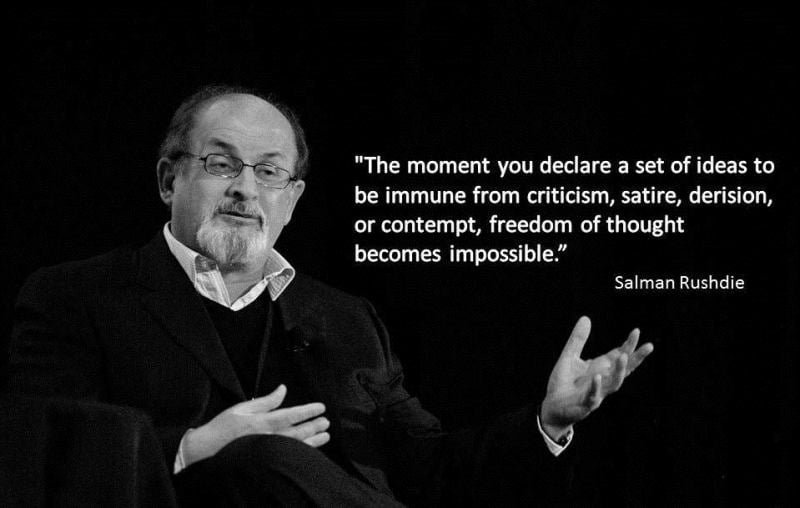
A quote by Salman Rushdie
-
Rushdie kept hiding for ten years after the fatwa was issued against him in 1988 after the release of his controversial novel named The Satanic Verses.
- Salman Rushdie likes Tottenham Hotspur, the English football club.
- In an interview with Harvard Business Review, Salman Rushdie disclosed his feelings when he started writing a new book. He explained,
Usually because an idea is nagging at me. Sometimes you have a person you want to write about, sometimes there’s an event you want to explore. Joseph Heller said that all his novels began with a sentence—one would come to him, and he would know that it contained many more.”
- He further added when he felt like finishing the same book,
Exhaustion. It’s not that I’m physically tired, but my imagination is. There’s a point at which you’re not making it better; you’re just making it different. You have to be good at recognizing that point.”
- On 12 August 2022, a man attacked Rushdie on the stage of Chautauqua Institution in Western New York, where Mr. Rushdie was scheduled to give a talk about the United States as a safe haven for exiled writers. The assailant stabbed him in the abdomen and the neck. Following the arrest of the suspect, the local police sought the help of the F.B.I. in identifying the suspect’s motives and background. [18]The New York Times
- In December 2024, the book The Satanic Verses was published in India. The book was sold in New Delhi at the Bahrisons Booksellers Stores for Rs. 1,999. The book was cleared for sale after 36 years of ban.
newspaper Recent News
Recent news and updates about Salman Rushdie will appear here.
Similar Celebrities
VIEW ALLJack Veal
Actor, Fitness Trainer • British
Grace Van Dien
Actor • American
Nithya Sasi
Actress, Lawyer • Indian
Maera Mishra
Actress, Model • Indian
Naveen Andrews
Actor • American and Britisher Note: Naveen Andrews obtained U.S. citizenship in the year 2010
Keaton Jennings
English Cricketer • South African, English
Dr. Rajesh Shah
Physician, Researcher, Teacher • Indian
Shweta Gulati
Actress • Indian
Kumail Nanjiani
Comedian, Actor, Screenwriter, Podcaster • Pakistani-American
Meenakshi Joshi (News Anchor)
News Anchor • Indian