Mahinda Rajapaksa
Net Worth
Net worth of the Rajapaksa family was approximately $18 billion (Rs 3.2 trillion).Newsfirst.lk
Height
in centimeters- 175 cm in meters- 1.75 m in feet & inches- 5’ 9”
Age
77
Nation
• Ceylonese (1945-1948) • Sri Lankan (1948-present)
favorite Personal Life
Basic Information
Family & Relationships
Education
Lifestyle
person_book Biography
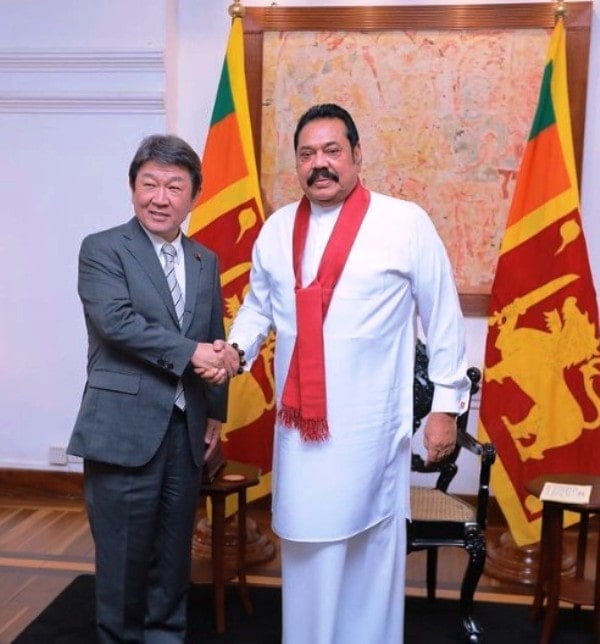
Some Lesser Known Facts About Mahinda Rajapaksa
- Mahinda Rajapaksa is a Sri Lankan politician of the Sri Lanka Podujana Peramuna (SLPP) and a lawyer. He has served as the President as well as the Prime Minister of Sri Lanka. He is the elder brother of the 8th President of Sri Lanka, Gotabaya Rajapaksa, who fled Sri Lanka amidst the Sri Lankan crisis in 2022.
- At the beginning of the 1960s, Mahinda Rajapaksa joined the University of Sri Jayewardenepura as an assistant librarian. At the university, he read several left-wing political pieces of literature and aligned himself with the leftist ideology.
- When Mahinda Rajapaksa was working as an assistant librarian, he joined the Ceylon Mercantile Union (CMU).
- In 1967, after Mahinda Rajapaksa became the branch secretary of the Ceylon Mercantile Union, he resigned as a librarian.
- After the death of his father in 1968, Mahinda Rajapaksa was offered his father’s post as a party organiser in the Sri Lanka Freedom Party (SLFP).
- In 1970, Mahinda Rajapaksa contested his first Sri Lankan general elections against the UNP leader Dr Ranjit Atapattu from the Beliatta constituency. Mahinda entered the Sri Lankan parliament after defeating Ranjit Atapattu by 6,626 votes.
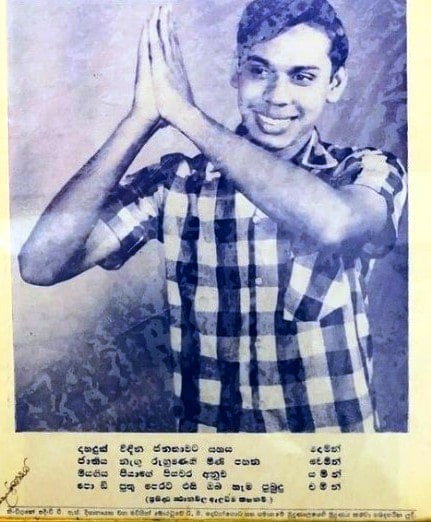
An electoral poster of Mahinda Rajapaksa printed in 1970
- Mahinda Rajapaksa served as a member of the parliament from 1970 to 1977; however, despite winning the elections, he was not given a portfolio in the ruling government and remained a backbencher (an MP who does not hold any appointment in the governing party).
- Mahinda Rajapaksa once again contested the 1977 general elections in Sri Lanka from the Sri Lankan Freedom Party (SLFP) from the Beliatta constituency, where he lost to his UNP rival, Dr Ranjit Atapattu.
- In 1989, Mahinda Rajapaksa once again entered the Sri Lankan parliament from the Hambantota constituency after winning the general elections.
- After getting elected to the parliament, Mahinda Rajapaksa demanded an intervention of international organisations like the United Nations (UN) and Amnesty International in Sri Lanka to investigate and curb the alleged human rights violations being perpetrated by the UNP-led Sri Lankan government during the Janatha Vimukthi Peramunap (JVP) insurrection from 1987 to 1989. Talking about it, Mahinda said,
If the government is going to deny human rights, we should go not only to Geneva, but to any place in the world, or to hell if necessary, and act against the government sponsored human rights violations. The lamentation of this country’s innocents should be raised anywhere.”
- Mahinda Rajapaksa was given charge of the Ministry of Labour in 1994 after he won the Sri Lankan parliamentary elections. He remained the minister of labour till 1997.
- In 1994, Mahinda Rajapaksa appeared in a Sri Lankan film titled Nomiyena Minisun. The film was produced in the Sinhalese language.
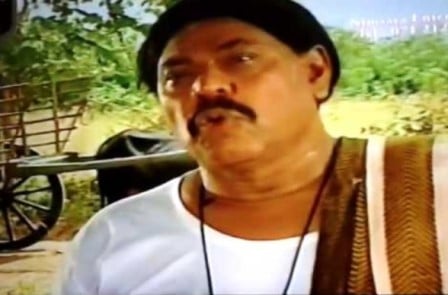
A still from Mahinda Rajapaksa’s 1994 film Nomiyena Minisun
- In 1997, following a cabinet reshuffle in Sri Lanka, Mahinda Rajapaksa left the Ministry of Labour and took charge of the Ministry of Fisheries and Aquatic Resources, where he remained till 2001.
- In 2001, despite winning the parliamentary election in Sri Lanka, Mahinda Rajapaksa could not get a ministry because his party lost to the United National Party (UNP).
- In 2004, Mahinda Rajapaksa contested and won the general elections in Sri Lanka, which took place after President Chandrika Kumaratunga dissolved the parliament. The Sri Lanka Freedom Party (SLFP) defeated the United National Party (UNP) in the elections and formed a government in Sri Lanka.
- After winning the 2004 general election in Sri Lanka, Mahinda Rajapaksa became the 13th Prime Minister of Sri Lanka and took the oath on 6 April 2004. Later, he was given the additional charge of the Ministry of Highways, Ports & Shipping.
- In 2005, the Sri Lanka Freedom Party (SLFP) chose Mahinda Rajapaksa as its Presidential candidate against Ranil Wickremesinghe, the United National Party’s candidate, for the 2005 Presidential elections in Sri Lanka.
- In 2005, Mahinda Rajapaksa became the President of Sri Lanka after he won the elections by defeating Ranil Wickremesinghe by a margin of 1,90,000 votes. Dissatisfied by the results of the polls, Ranil Wickremesinghe claimed that Mahinda was able to win the elections as the rebel faction Liberation Tigers of Tamil Eelam (LTTE) had issued an ultimatum in the LTTE-dominated parts of Sri Lanka in which it threatened the Tamil population of facing dire consequences had they voted. [38]The Guardian Talking about the elections, Ranil said,
It is a setback for the peace process as you have a very divided society. There is no Sri Lankan mandate but a divided one. I have demanded a recount of the vote in parts of the country where Tamil militants had prevented an estimated 500,000 voters from reaching polling stations, but the request was rejected by Sri Lanka’s elections commissioner.”
- After taking over the office of the President, Mahinda Rajapaksa kept the Ministry of Defence (MoD) and the Ministry of Finance (MoF) under his control. On 23 November 2005, he handed over the charge of the Ministry of Defence (MoD) to his younger brother Gotabaya Rajapaksa by appointing him the permanent defence secretary of Sri Lanka. Mahinda also extended the service period of Sarath Fonseka, a Sri Lankan Army commander. [39]BBC Reportedly, Mahinda brought Gotabaya and Sarath together to defeat the Liberation Tigers of Tamil Eelam (LTTE).
- In 2006, the Mahinda Rajapaksa-led Sri Lankan government scrapped the peace accord signed between the LTTE and the UNP-led Government of Sri Lanka in 2002. Reportedly, the ceasefire was revoked after the LTTE violated the peace accord by attacking and killing unarmed civilians and off-duty military personnel. In 2006, the LTTE attacked and captured a water reservoir named Mavil Aru after which they stopped the supply of water in the eastern provinces of Sri Lanka, affecting more than 15,000 Sri Lankan citizens.
- After revoking the peace accord, the Sri Lankan military, after receiving orders from the government, mounted a counter-offensive against the LTTE across Sri Lanka. Reportedly, the response of the Sri Lankan Armed Forces was very effective and the Sri Lankan Armed Forces managed to reclaim 95% of the territory under LTTE’s control within three years, and on 18 May 2009, the LTTE surrendered to the Sri Lankan government, marking the end of the Sri Lankan civil war. Mahinda, while giving a victory speech in the parliament, said,
We have liberated the whole country from LTTE’s terrorism. Our intention was to save the Tamil people from the cruel grip of the LTTE. We all must now live as equals in this free country. We must find a homegrown solution to this conflict. That solution should be acceptable to all the communities. We have to find a solution based on the philosophy of Buddhism.” [40]The Guardian
- In 2010, Mahinda Rajapaksa contested the Presidential election in Sri Lanka, where he secured a victory against his UNP rival Sarath Fonseka, the former Sri Lankan Army commander. According to the media, after Mahinda took oath as the President of Sri Lanka, he ordered a probe against Sarath Fonseka and had him arrested and jailed for two years.
- After beginning his second Presidential term, Mahinda initiated several infrastructural projects such as Colombo Lotus Tower, Magampura Mahinda Rajapaksa Port, the Colombo Harbour South Container Terminal, the Mattala Rajapaksa International Airport, the Colombo-Katunayake Expressway, and the Mahinda Rajapaksa International Cricket Stadium. Several media sources claimed that the implementation of such projects improved Sri Lanka’s Human Development Index (HDI) ranking; however, many sources also claimed that after the government implemented such projects, corruption in Sri Lanka increased manifolds and increased the cost of construction of the infrastructure as a result of which the Sri Lankan government had to take more loans from China, ultimately falling into its debt trap.
- In the 2015 Presidential elections in Sri Lanka, Mahinda Rajapaksa lost the polls to his rival Maithripala Yapa Sirisena, whose’s candidature was supported by Ranil Wickremesinghe. Reportedly, after Sirisena became the President of Sri Lanka, he wanted to make Mahinda Sri Lanka’s Prime Minister, but this could not happen as the Sri Lanka Freedom Party (SLFP) lost the 2015 general elections against the United National Party (UNP) following which Sirisena appointed Ranil Wickremesinghe, the leader of the UNP, as the Prime Minister of Sri Lanka.
- Mahinda Rajapaksa contested in the 2015 Sri Lankan general elections from the Kurunegala constituency and secured a victory against his UNP rival.
- In 2016, following a rift caused by some disagreements between Mahinda and the Sri Lanka Freedom Party’s senior leadership, Mahinda’s supporters quit SLFP and founded their political party named Sri Lanka Podujana Peramuna (SLPP) and appointed Mahinda as the party’s chairman. While talking about the party, a supporter of Mahinda said,
In the wake of the Central Bank bond scandal, the whole SLFP machinery is preoccupied with defending the Prime Minister. The sole aim of the SLFP today is to help the UNP to stay in power. It is the Sri Lanka Podujana Peramuna which will now truly embody the SLFP identity and character. He is our vision. He is the true leader in our hearts. We are his followers. These are his aspirations we are trying to fulfill. There are 36,000 villages in this country. All of them will rise in support of us.”
- Reportedly, after Mahinda Rajapaksa joined the Sri Lanka Podujana Peramuna (SLPP) as its chairman, he demanded a ban on the Chinese corporations that had invested a large amount of money in the Southern Economic Development Zone (SEDZ). In 2017, defying the orders of the Sri Lankan Supreme Court, Mahinda led the SLPP in an agitation against the Chinese during the inauguration ceremony of the Hambantota-China-Sri Lanka Industrial Zone, where the SLPP not only pelted stones at the then-Chinese Ambassador to Sri Lanka, Yi Xiangliang but also at the other guests present at the inaugural ceremony.
- In 2018, the Sri Lanka Podujana Peramuna (SLPP) defeated Ranil Wickremesinghe-led UNP in the local elections, where the UNP managed to secure only 34 seats out of 340 seats whereas the SLPP won the remaining seats. After defeating the UNP, the SLPP not only demanded the resignation of Ranil as Prime Minister of Sri Lanka but also demanded President Sirisena to dismiss the UNP-led government in the centre.
- After the defeat in the local elections, many UNP MPs demanded the resignation of Ranil following which the President of Sri Lanka Maithripala Sirisena asked him to resign. On 26 October 2018, the President removed Ranil from office and appointed Mahinda Rajapaksa as the Prime Minister. This act of the Sri Lankan President was termed “unlawful” and “undemocratic,” and it attracted criticism from the international community. [41]Scroll.in
- The events that unfolded on 26 October 2018 led to a constitutional crisis in Sri Lanka as Ranil had refused to resign from his post, claiming the move of the President to be unconstitutional, and the President, on the other hand, had appointed Mahinda Rajapaksa as the Prime Minister.
- In November 2018, Ranil Wickremesinghe appealed to the Supreme Court, and the apex court delivered its judgement in favour of Ranil in December 2018. The Supreme Court, through its judgement, asked the President to reinstate Ranil as the PM of Sri Lanka. [42]Reuters Talking about it, Ranil, in an interview, said,
It is a victory for Sri Lanka’s democratic institutions and the sovereignty of our citizens. I thank everyone who stood firm in defending the constitution and ensuring the triumph of democracy. I will work for a better economic situation, better standard of living for Sri Lankans after first working to normalize the country.”
- On 18 December 2018, Mahinda Rajapaksa became the leader of the opposition in the Sri Lankan parliament.
- After Gotabaya Rajapaksa won the 2019 Sri Lankan Presidential election, the Sri Lanka Podujana Peramuna (SLPP) won the 2020 parliamentary elections against the UNP after which Gotabaya Rajapaksa appointed Mahinda Rajapaksa as the Prime Minister of Sri Lanka.
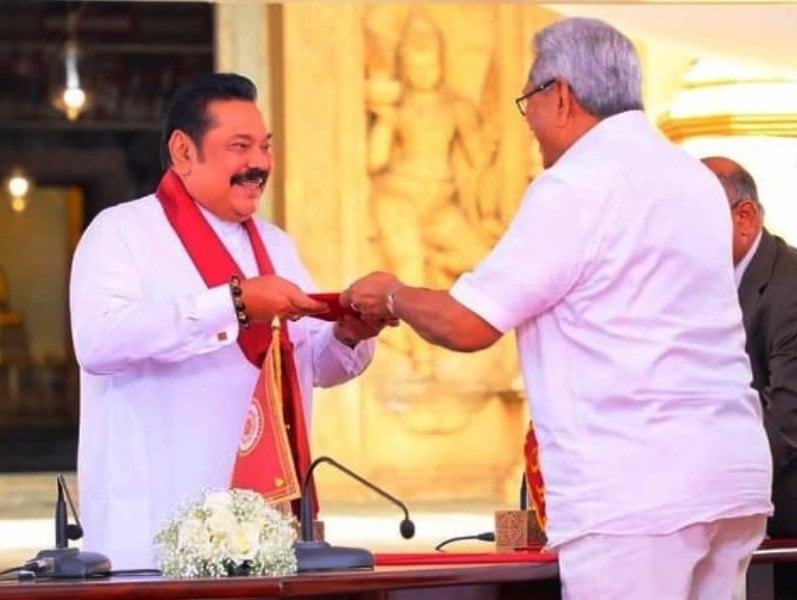
Mahinda Rajapaksa (left) handing over documents to Gotabaya Rajapaksa after taking oath as the Prime Minister of Sri Lanka
- In 2020, after Gotabaya appointed Mahinda as the Prime Minister, Sri Lanka became the second country after Poland, where siblings held the top political posts in the country. [43]Fox News
- In 2022, when Mahinda Rajapaksa was serving as the Prime Minister of Sri Lanka, the country was declared a sovereign default due to its inability to pay debt worth $51 billion. The country fell into a debt trap because of the faulty policies implemented by the different Rajapaksa governments in Sri Lanka.
- On 9 May 2022, following the outrage of the public during the economic crisis in Sri Lanka, Mahinda Rajapaksa resigned as the Prime Minister of Sri Lanka.
- Several sources claim that Mahinda Rajapaksa puts a lot of faith in astrology. The sources also claim that before making a crucial decision, Mahinda always asks for advice from his trusted astrologers, and he is also known for wearing many astrological rings. Reportedly, one of the rings worn by him contains elephant hair in it, which, according to Mahinda, has brought good luck for him.
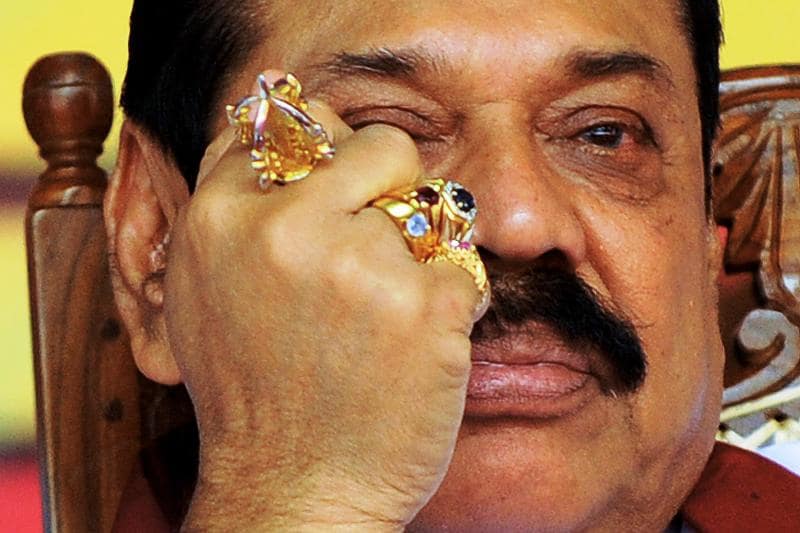
A photograph of Mahinda Rajapaksa with his rings taken during a meeting
newspaper Recent News
Recent news and updates about Mahinda Rajapaksa will appear here.
Similar Celebrities
VIEW ALLNitesh Narayan Rane
Politician, Businessmen • Indian
Sita Soren
Politician • Indian
Sheila Dikshit
Politician • Indian
JP Nadda
Politician • Indian
Mark Carney
Politician, Economist, Climate Activist • Canadian
Manish Sisodia
Politician, Former journalist • Indian
Laxmikant Parsekar
Indian Politician • Indian
M. S. Golwalkar
Author, Lawyer, Political activist • Indian
Hardeep Singh Puri
Politician & Former IFS Officer • Indian
Prahlad Singh Patel,
Politician • Indian