Lata Mangeshkar
Net Worth
Some sources claim her net worth to be around Rs. 360 crores, while others claim it to be around Rs. 108-115 crores. News 18
Height
in centimeters- 155 cm in meters- 1.55 m in feet & inches- 5’ 1”
Age
92
Nation
Indian
favorite Personal Life
Basic Information
Family & Relationships
Education
Lifestyle
person_book Biography
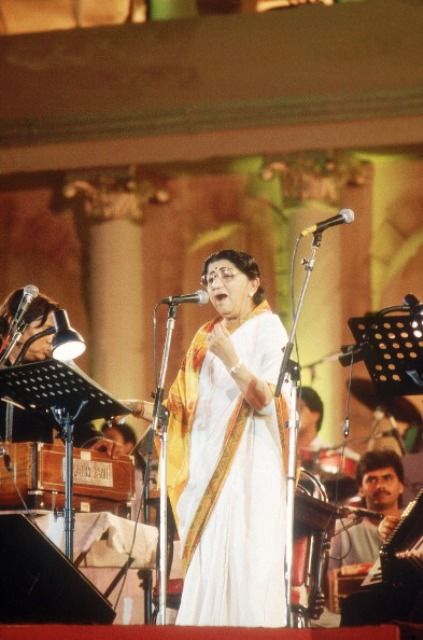
Some Lesser Known Facts About Lata Mangeshkar
-
Who is Lata Mangeshkar?
Lata Mangeshkar was a legendary Indian playback singer. The ‘Queen of Melody,’ who began her career in the 1940s, rose to prominence when she lent her voice to the cult song ‘Ayega Aane Waala’ from the 1949 classic Mahal. Through her melodious voice, she redefined the fabric of Indian music, remaining an inseparable part of it for nearly six decades. By the early 2000s, she had decided to focus on her personal commitments and give younger singers a chance. On 6 February 2022, she passed away, marking the end of an era.
It was not really the external influence that made me a singer. Music was within me. I was full of it.” – Lata Mangeshkar
-
Named After a Character from Her Father’s Play
When Lata was born, she was named Hema, which her parents later renamed Lata, which was a female character ‘Latika’ in one of her father’s plays, ‘BhaawBandhan.’ Her father, Deenanath, changed the surname of the family from Hardikar to Mangeshkar as he wanted to identify his family with their native town, Mangeshi in Goa.
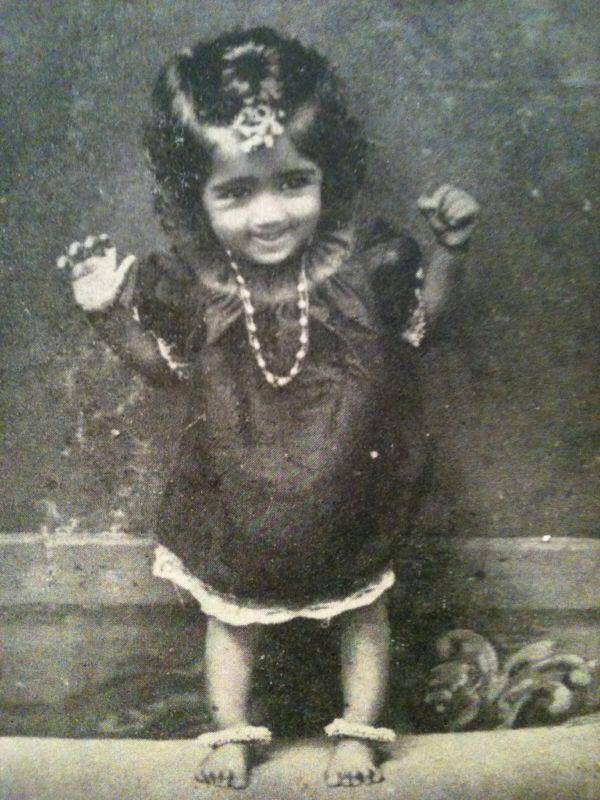
A rare childhood photo of Lata Mangeshkar -
A Huge Fan of K. L. Saigal
While growing up, Lata became a huge fan of singer K. L. Saigal, and she even wanted to marry him. According to Lata, her family was never supportive of film songs back then, and she was the only one in her family who had permission to sing Saigal’s songs, and she would often sing ‘Ek Bangla Bane Nyaara.’ [28]Bollywood Hungama In an interview, she recalled her fandom for Saigal and said,
As far as I can remember, I always wanted to meet K. L. Saigal. As a child, I used to say that ‘I will get married to him after I grow up’ and that’s when my father explained to me that when I’ll be big enough to get married, Saigal saab will be too old enough to get married.”
-
Smallpox
When Lata Mangeshkar was two years old, she was attacked by smallpox, and she carried its marks throughout her life. [29]India Today
-
Nomadic Childhood
The early life of Lata Mangeshkar is a tale of poverty, hard work, and hard luck. The Maratha heartland of Maharashtra is far away from Indore, where she was born. Her father, Deenanath Mangeshkar, who belonged to Mangeshi in Goa, was a classical singer trained in the colorful Punjabi school of Baba Mushelkar. A theatrical troupe Deenanath owned made him pitch his tent in nearly every town in the state, including Pune, Kolhapur, Satara, Sangli, and Miraj. Lata Mangeshkar, along with her siblings, was roped into a nomadic life by their father’s profession. In the absence of a proper schooling system for his children, Deenanath tried to compensate by injecting them with music lessons at a young age. Lata once said,
The foundation of my musical propensities was laid as early as that.”
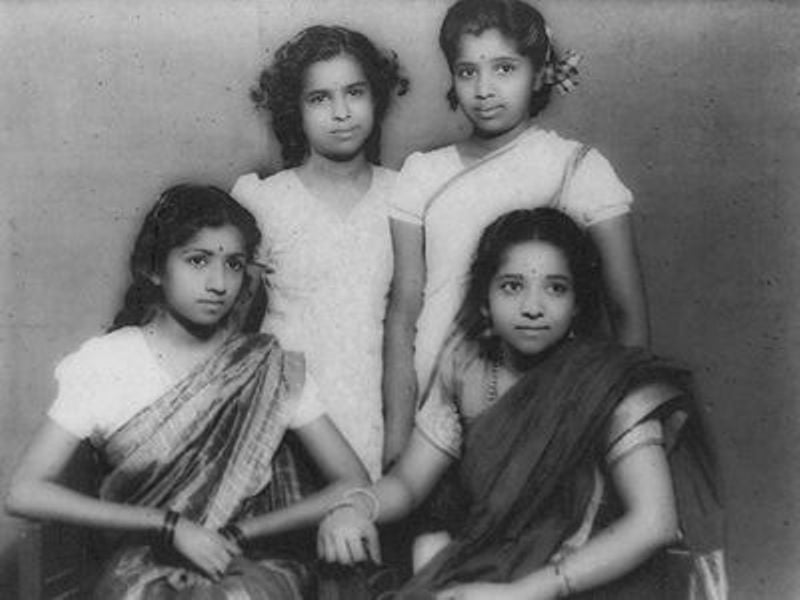
Lata Mangeshkar (sitting left) with her sisters The real blow for the family occurred in 1934-35 when Ardeshir Irani, a fearless Parsee, released the first “talkie,” Alam Ara, which ended the silent era in Indian cinema. There were many roving drama companies in Maharashtra, the only other state to have them except Bengal, which were affected by this “sound invasion.” Many companies closed down including Deenanath’s Balwant Sangeet Natak Mandal following which the Mangeshkar family moved to a small trading town, Sangli, where, according to Lata, they settled for the first time. At Sangli, her father started a film company; however, the switchover was not easy as the audience’s interest was rapidly changing in the ’30s, and her father’s productions failed to find many buyers. During this time, her father produced four mythological Marathi plays and one Hindi film, Andheri Duniya, and all were flops in a row. In 1938, her father’s company shut down following which the family again moved to a new location, this time to Pune. [30]India Today
-
Sole Breadwinner
During the remaining four years of Deenanath’s life, the family survived largely on his meager earnings from singing in All India Radio’s Pune station. In 1942, her father died of pleurisy, heart disease, and frustration, and during the same time, her brother, Hridyanath, suffered from tuberculosis of the bones. Lata, who was only 13 at the time, put on full war paint on the eighth day of Deenanath’s death to appear in a film titled Pahili Manglagaw, a Marathi film by Master Vinayak Rao, father of actress Nanda. According to Lata Mangeshkar, she never wanted to enter into the glamour world, and she had to sing and act in films as she was the sole breadwinner of her family after her father’s demise. [31]India Today In an interview, she talked about this and said,
I hated putting on make-up; I hated standing in the glare of lights. But I was the breadwinner of the family, and there was hardly any choice left. The day I went to work in Master Vinayak’s film, there was nothing to eat in the house.”
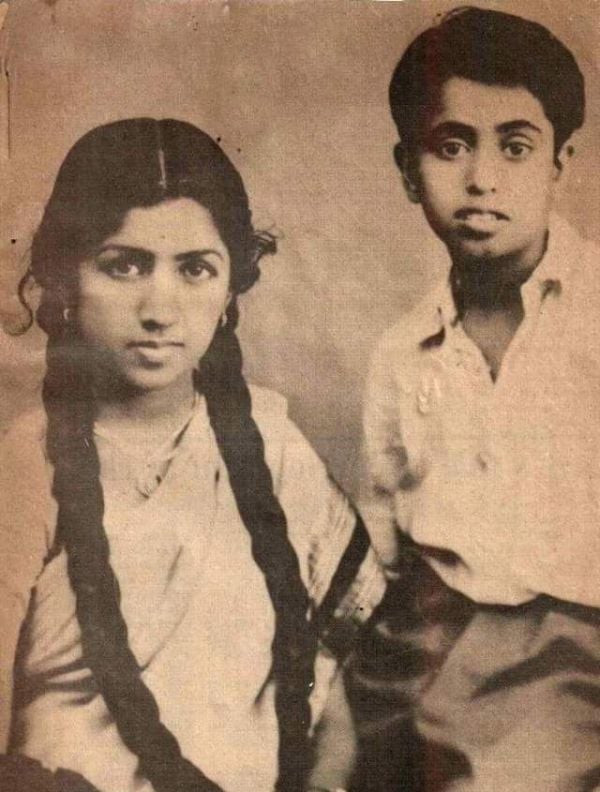
A rare old photograph showing teenage Lata Mangeshkar with young Hridaynath She also talked about how she missed her childhood as she rose to stardom at an early age. She said,
I missed out on my childhood. I had to work hard, but I was immediately given a place in playback.”
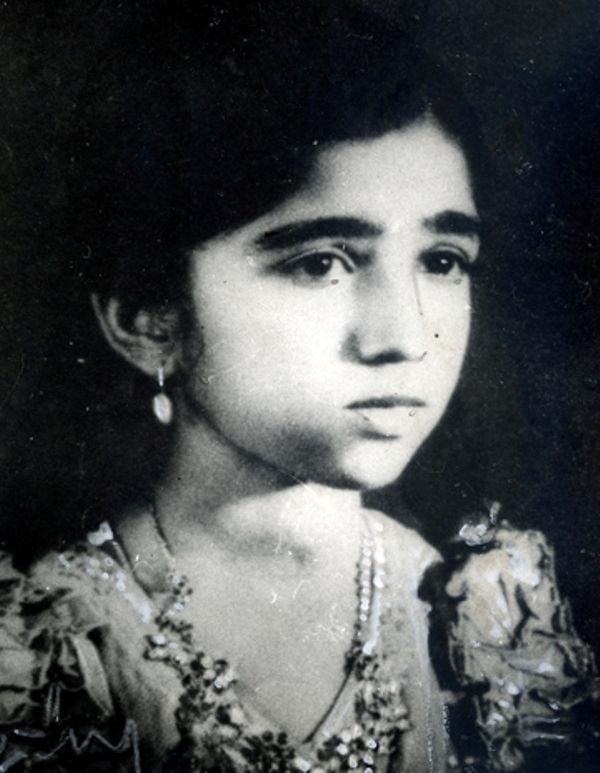
Young Lata Mangeshkar -
Attended School For Only One Day!
She went to school for only one day. It is said that on the very first day of her school, she brought her younger sister, Asha, and started teaching music to other students and when teachers intervened, she was so furious that she stopped going to the school. In an interview, she talked about her anger issues and said,
I have a fierce temper. I’ve mastered it over the years, but when I’m angry, no one can force me to do anything I don’t want to.”
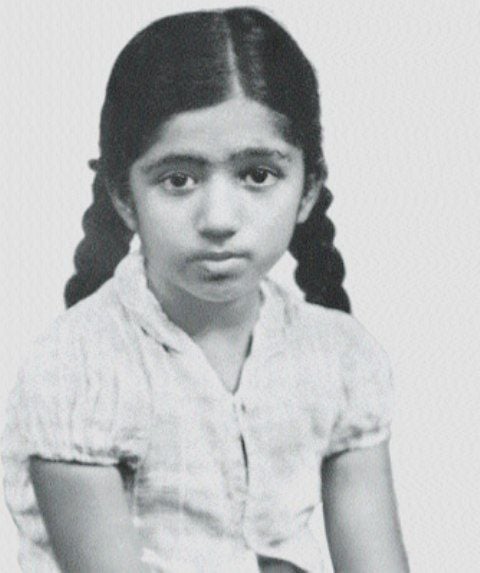
Lata Mangeshkar’s childhood photo -
First Public Performance
Lata started working as an actress at the age of five in her father’s musical plays (Sangeet Natak) in Marathi. On 9 September 1938, she made her first ‘Shastriya Sangeet’ performance when she accompanied her father to a program at Nutan Sangeet Theatre in Solapur, Maharashtra, where she sang Raag Khambavati. The legendary singer revealed this in a Facebook post that she posted in September 2021.
-
Initial Career
When she was 13 years old, her father died of heart disease in 1942, and after her father’s death, one of the close friends of the Mangeshkar family, Master Vinayak (Vinayak Damodar Karnataki), took care of her family and helped her start a career as an actress and singer. She sang her first song ‘Naachu Yaa Gade, Khelu Saari Mani Haus Bhaari’ for the Marathi film ‘Kiti Hasaal’ in 1942; however, the song was later dropped from the final cut. She sang her debut song ‘Natali Chaitraachi Navalaai’ for the Marathi film ‘Pahili Mangalaa-gaurin’ (1942).
-
Arrived in Bombay
Lata moved to Bombay (now Mumbai) in 1945, where she rented a two-room flat at Nana Chowk that cost her Rs. 25 a month. In the same year, she played a minor role along with her sister Asha in Master Vinayak’s first Hindi film ‘Badi Maa’ (1945). Vinayak was so impressed by her performance that he signed her as a staff artist on a monthly salary of Rs. 60, and by the time Vinayak died in 1947, it was hiked to Rs. 350; however, it was not easy for Lata as she had to feed eight mouths, including cousins. [32]India Today In an interview, Lata’s brother, Hridaynath, recalled this and said,
Didi was burning the candle at both ends to keep the family going.”
-
She Would Have Become a Classical Singer
Lata’s first big achievement in Bombay was her meeting with Aman Ali Khan Bhindi Bazarwala, a classical singer, who accepted her as a student; reportedly, A cord was tied around her arm as part of the ceremonial acceptance. After India’s partition, Aman Ali went to Pakistan, and Lata had to find a guru in Amanat Ali, an accomplished singer who went to the same school as Amir Khan. When Amanat Ali died in 1951, Lata’s apprenticeship in classical music ended abruptly. Lata once wistfully said,
Maybe I’d have become a classical singer if Amanat Ali were alive.”
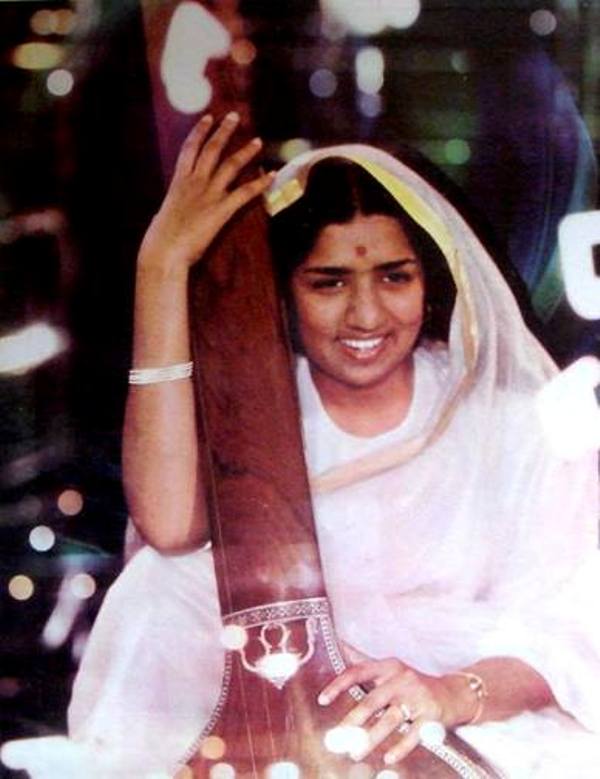
Lata Mangeshkar playing the Veena -
Rejected For Her ‘Thin’ Voice
After Vinayak’s death, Lata had no fixed income following which she approached a supplier of film extras who later introduced her to Master Ghulam Haidar, a close friend of Amanat Ali and a leading music director of the times. Haidar, who was awed by her range and sweet voice, took her to Filmistan, the Mecca of Bombay’s show business, owned by Subodh Mukherjee. When Ghulam Haidar (music director) introduced Lata to Mukherjee who was making the film ‘Shaheed’ (1948), Mukherjee dismissed Lata’s voice as “too thin” and said that her voice would not match that of the heroine, Kamini Kaushal, the screen siren of the ’40s, to this Haidar responded,
In the coming years, producers and directors would “fall at Lata’s feet” and “beg her” to sing in their movies.”
In an interview, Lata Mangeshkar declared that Ghulam Haidar was her true Godfather who trusted her talent.

Lata Mangeshkar’s mentor Ghulam Haidar -
First Breakthrough
On The same day, when Mukherjee rejected her voice, she accompanied Haidar to the studios of Bombay Talkies at Malad, where she was selected to sing for Majboor (1948), and the song ‘Dil Mera Toda, Mujhe Kahin Ka Na Chhora’ from the film became her first breakthrough hit song. She reportedly recorded the song at the 32nd take. While recalling the success of Majboor’s song, Lata said,
I never looked back since then.”
-
Early Fame and Hectic Schedule
Following the success of her songs in Majboor, she was approached by many renowned composers including Naushad who signed Lata for Andaaz, a smashing box-office success, followed by Bhagatram who got her to sing for Badi Batten. Then came Shanker-Jaikishen who offered her to sing for their film Barsaat in which she sang ‘Jiya Bekaraar Hai,’ a song whose popularity is undiminished even today. She became wide-popular after the song ‘Aayega Aanewala’ from the movie ‘Mahal’ (1949). The song is considered one of the toughest songs to sing in the music fraternity, and it is said that nobody can sing this song as beautifully as Lata sang. Although Lata experienced sudden fame, big money still eluded her, and the maximum amount she was paid was Rs. 400 for many years. Reportedly, she sat through rehearsals for a fortnight for each song, not to mention the pain of going through at least half a dozen retakes. In the morning, Lata would board the train at Grant Road station, heading towards Dadar, Goregaon, Andheri, or Malad, hoping around the studios to catch up with the shifts, and at that time, a taxi ride was a luxury as well as eating in the canteens. [33]India Today Sometimes she would record several songs in a single day. She would often say –
I recorded two songs in the morning, two in the afternoon, two in the evening and two at night.”
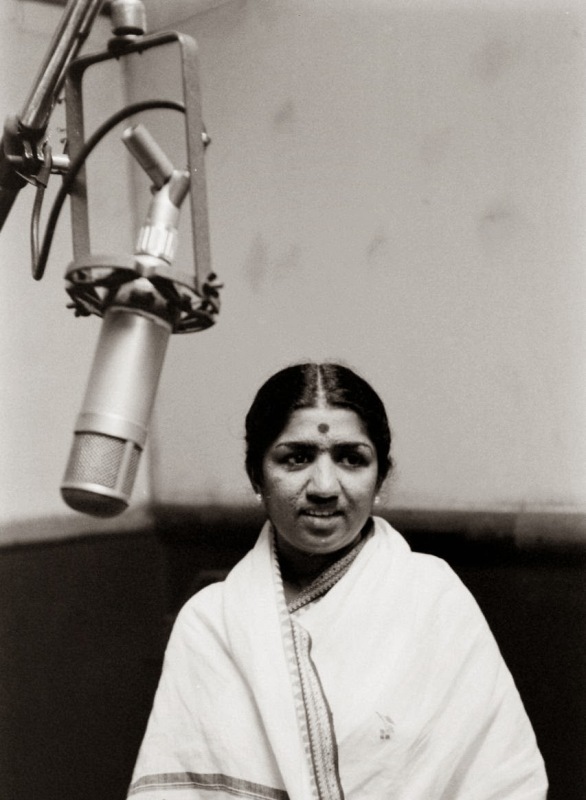
Lata Mangeshkar in a recording studio -
Dilip Kumar Questioned Her Accent
When Naushad introduced her to Dilip Kumar, he teased her for her Marathified Hindi following which she took lessons in Urdu from an Urdu teacher, Shafi. Dilip Kumar recalled the incident over three decades later and said he got embarrassed hearing Lata to pronounce each Hindi and Urdu word with such eloquence that he could not comprehend. He said,
my ears tingled in shame.”
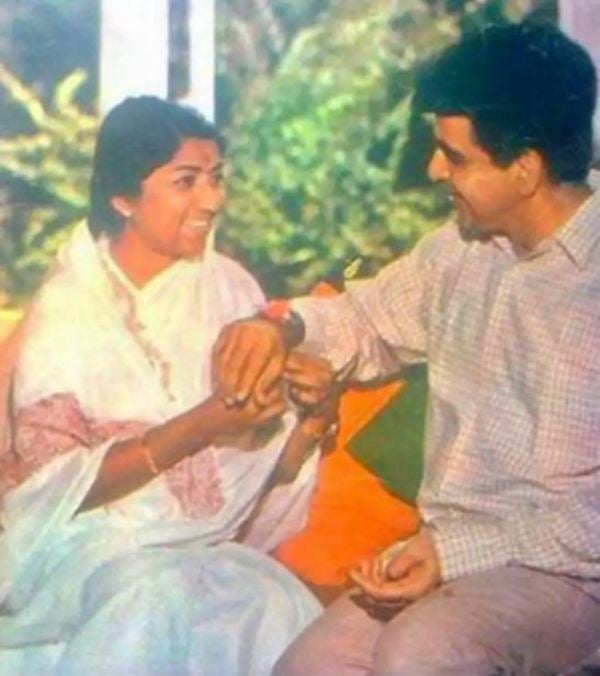
Lata Mangeshkar tying Rakhi to Dilip Kumar
-
She Monopolized the Filmfare Awards
Filmfare Awards were first introduced in 1954, and at that time, the Best Music award was given to a particular song, not to the whole album; however, from 1956, the award was given to the music director for the whole album. When Shankar-Jaikishan won the award in 1957, Lata was not happy as she wanted the awards to include the category of Best Singer. In an interview, she narrated this story and said,
Jaikishan came to see me and said: ‘We’re getting the award so you must sing Rasik Balma at the awards ceremony.’ I said: ‘I won’t sing.’ Then Jaiskishan said, ‘Why won’t you? We’re getting an award.’ And I said, ”You are getting the award, not me. The award is for Best Music. They aren’t giving the award to the singer or lyricist. So why don’t you let your orchestra play the tune without words and singer?’ We had a big fight and he said: ‘How can you talk to me like this? I’m going.’ I said: ‘Very well. Go!’ Then Shankarji came and said: ‘Lataji, he’s naïve and young. Don’t be upset by what he says.’ I explained to Shankarji why I had refused. ‘I won’t sing unless Filmfare introduces awards for playback singers and songwriters. Then I’ll come. Otherwise I won’t.’ These were the kinds of quarrels we had.”

Lata Mangeshkar with Shankar Jaikishan Finally, Filmfare introduced awards for Best Singer and Best Lyricist in 1959, and Lata Mangeshkar won her first Filmfare Award for the Best Playback Singer for the song ‘Aaja Re Pardesi’ from the film Madhumati (1958). She monopolized the Filmfare Awards for the Best Playback Female Singer from 1958 to 1966, and it was stopped in 1969 only when she gave up Filmfare Awards in an unusual gesture to promote fresh talents. [34]Rediff
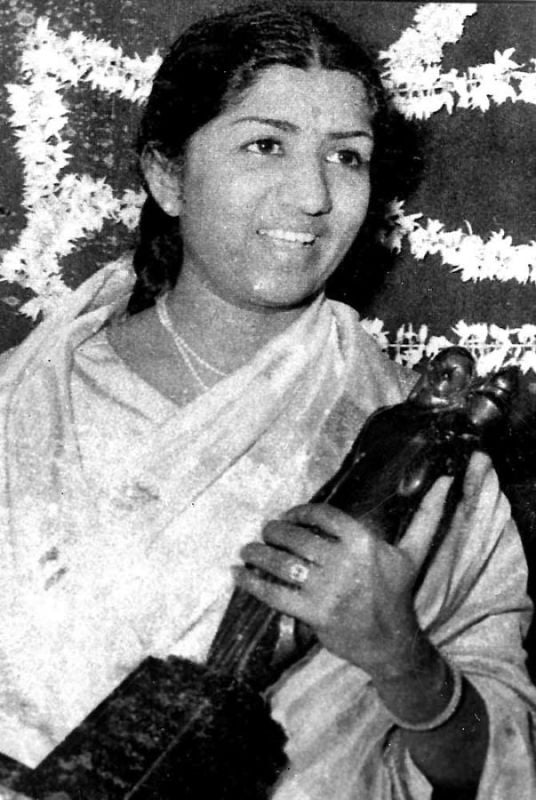
Lata Mangeshkar posing with her Filmfare Award
-
Oldest Winner of the National Film Award
She won her first National Film Award for Best Female Playback Singer for the songs in the film ‘Parichay’ (1972). She held the record for the oldest winner (age 61) of the National Film Award in the category of Best Female Playback Singer for the movie ‘Lekin’ (1990).
-
She Imitated a Singer
It is said that initially she imitated the acclaimed singer Noor Jehan, but later, she developed her own singing style.
-
Slow Poison
Reportedly, she was given slow poison in early 1962, and after that, she was bed-ridden for almost 3 months. Reportedly, she was slowly poisoned, possibly by her servant, in 1962. [35]NDTV Lata talked about this in Nasreen Munni Kabir’s book “Lata Mangeshkar in Her Own Voice” and said,
In 1962, I fell very ill for about three months. One day, I woke up feeling very uneasy in my stomach. And then I started throwing up – it was terrible, the vomit was a greenish colour. The doctor came and even brought an x-ray machine home because I could not move. He x-rayed my stomach and said I was being slowly poisoned.”
-
Her Song Brought Nehru to Tears
Two months after the 1962 Sino-Indian War, Lata sang a patriotic song, ‘Aye Mere Watan Ke Logon,’ that brought Jawaharlal Nehru (the then Prime Minister of India) to tears. She sang the song on Republic Day (26 January 1963) at New Delhi’s National Stadium. [36]Hindustan Times Reportedly, when the song ended, Nehru walked to Lata and said,
Lata, Tumne Aaj Mujhe Rula Diya”
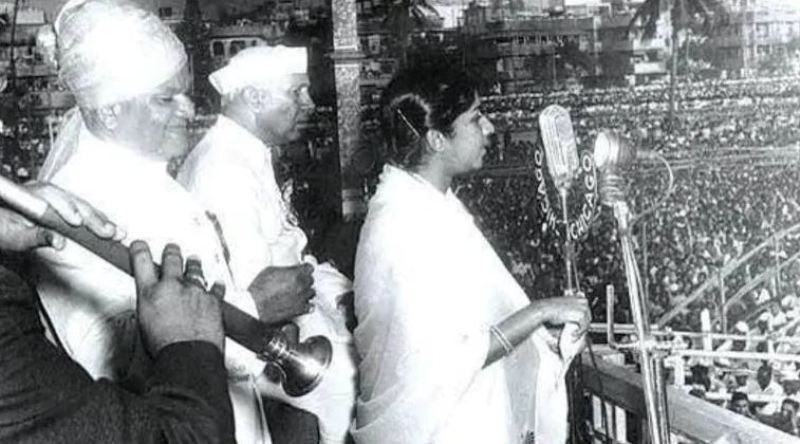
Lata Mangeshkar singing Aye Mere Watan Ke Logon at New Delhi’s National Stadium on 26 January 1963
-
Composer and Producer
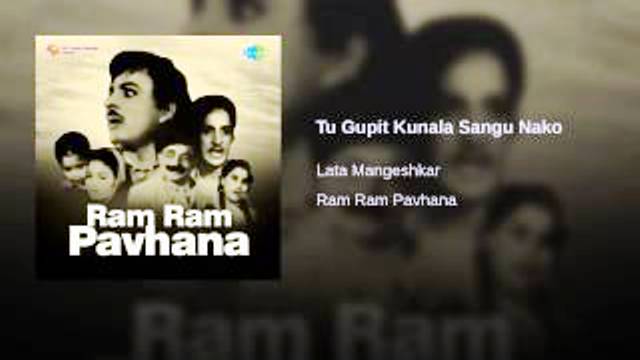
She composed music for the first time in 1955 for the Marathi film ‘Ram Ram Pavhana.’ Later, she composed music for the Marathi films Maratha Tituka Melvava (1963), Mohityanchi Manjula (1963), Sadhi Manase (1965), and Tambadi Mati (1969). She also produced four films – Vadai (Marathi 1953), Jhaanjhar (Hindi 1953), Kanchan (Hindi 1955), and Lekin (1990).
-
Abroad Tours
Lata gave many memorable performances abroad, where she was equally popular as in India. It all began with her performance at London’s prestigious Royal Albert Hall in 1974 to benefit the Nehru Memorial Fund. The album she cut from it was split into two LPs, which sold more than 133,000 copies. In the USA, Canada, and Europe, she drew unbelievably large ethnic audiences. [37]India Today
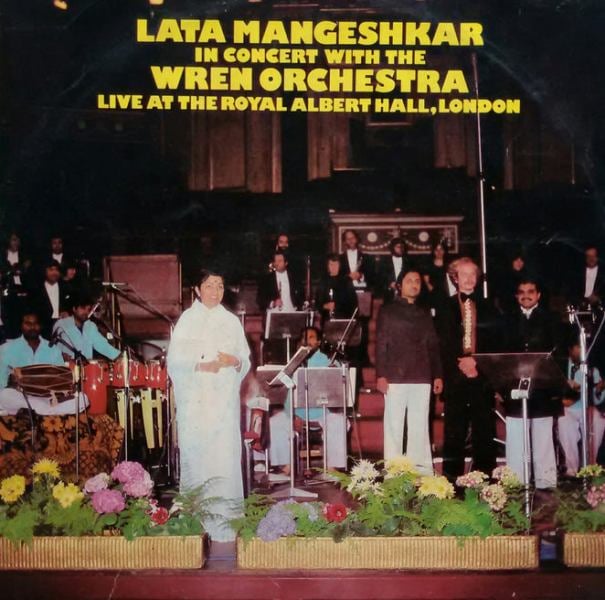
Lata Mangeshkar performing at London’s prestigious Royal Albert Hall in 1974 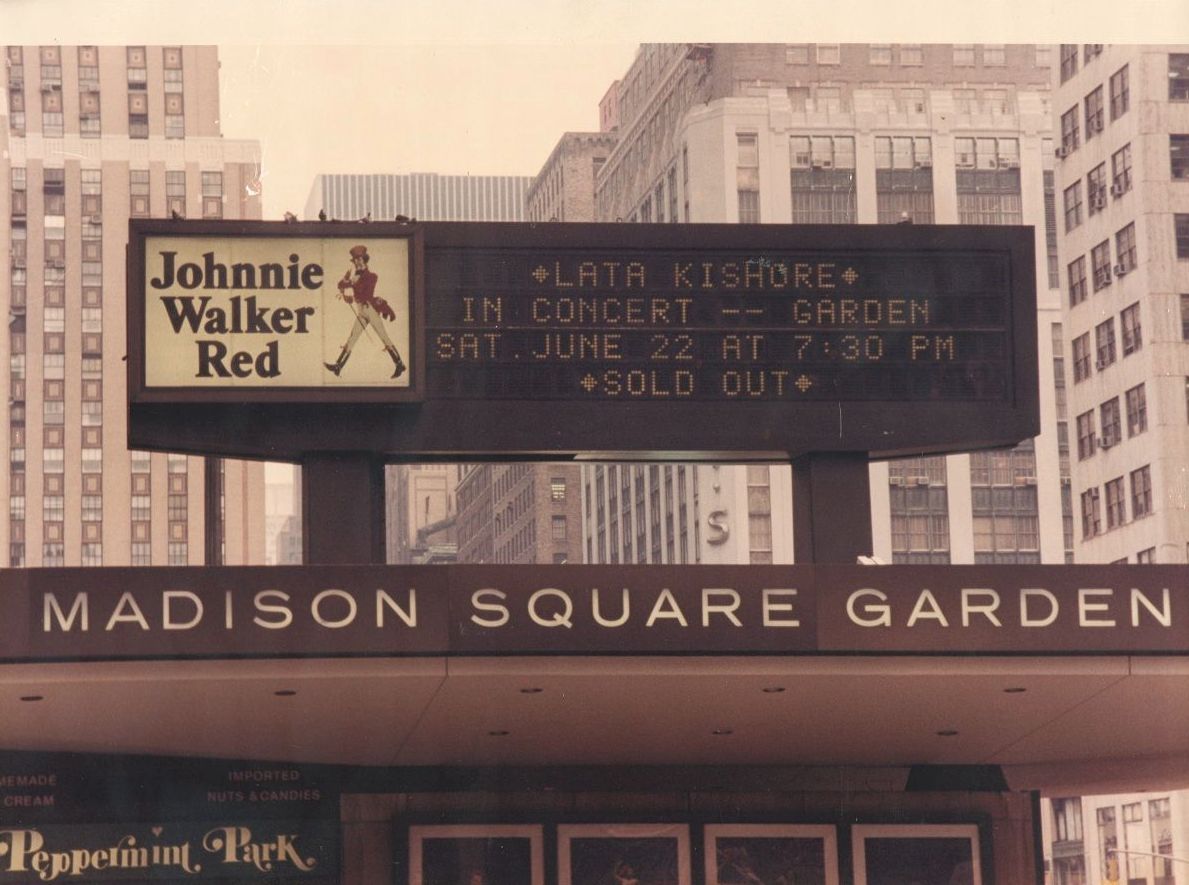
Details of a concert of Lata Mangeshkar on the display board of Madison Square Garden in New York -
Member of Rajya Sabha
In 1999, the Atal Bihari Government nominated her as a member of the Rajya Sabha, and during her tenure as a Member of Parliament, from 22 November 1999 to 21 November 2005, she never took any allowances. Reportedly, all payments that were made to the singing legend from the Pay Accounts Office were returned. Her tenure as a Member of Parliament, however, was infamous for her being absent from the House, and the records say that she attended the house for only twelve days., and during her term, she asked just one, unstarred, question ‘on the derailment of trains!’ [38]The Indian Expres She asked,
Whether it is a fact that the incidents of derailment of trains on various sections have been on the increase; if so, the number of train derailment incidents since the beginning of the year 2000; the estimated loss suffered by the Railways as a consequence thereof; what measures have been taken by government to prevent such incident?”
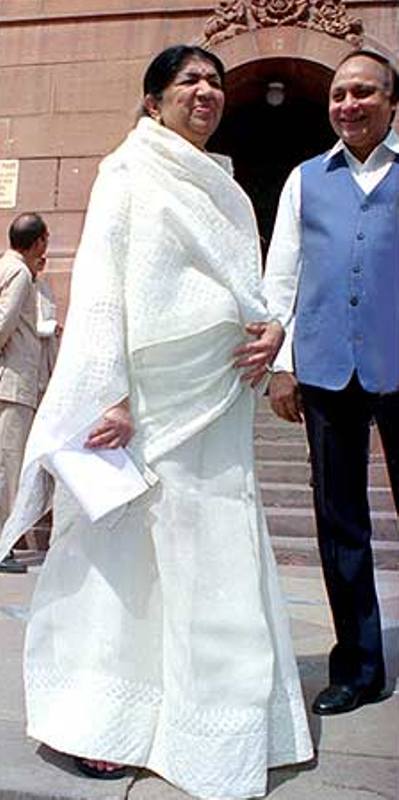
Lata Mangeshkar outside the Parliament of India
-
Legacy
The Madhya Pradesh Government and the Maharashtra Government instituted the ‘Lata Mangeshkar Award’ in 1984 and 1992, respectively.
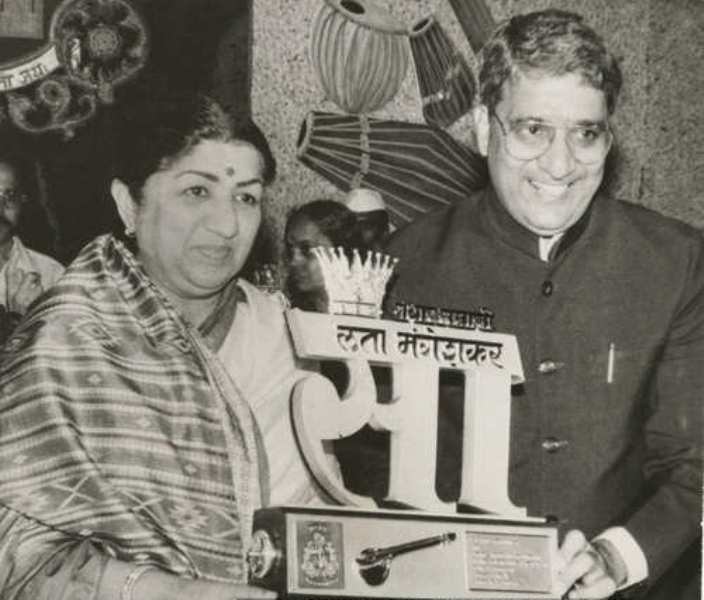
Lata Mangeshkar Award announced by the Maharashtra government in 1992 On 24 April 2022, Prime Minister Narendra Modi became the first recipient of the Lata Deenanath Mangeshkar Award, instituted by the Master Deenanath Mangeshkar Smruti Pratishthan charitable trust in memory of the legendary singer. [39]The Hindu
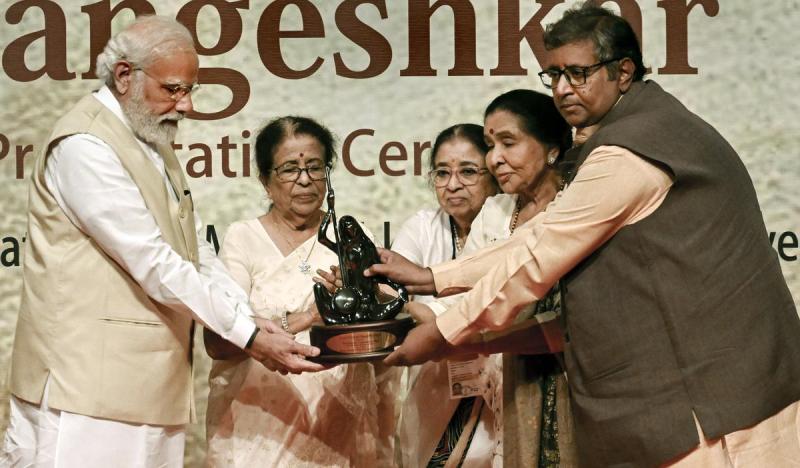
Prime Minister Narendra Modi receives the first Lata Deenanath Mangeshkar Award in Mumbai on 24 April 2022 -
Relevant in Every Generation
Her voice suited to almost every female star, from Madhubala in the 1940s to Kajol in the 1990s, and she sang alongside top male singers, including Mohammed Rafi and Kishore Kumar. She also worked with every leading filmmaker in Bollywood, from Raj Kapoor and Guru Dutt to Mani Ratnam and Karan Johar. Moreover, from roadside vendors to long-distance truckers, and from Army jawans in Ladakh to the glittering elite of Mumbai, Lata Mangeshkar’s voice is considered the one that no Indian can miss.
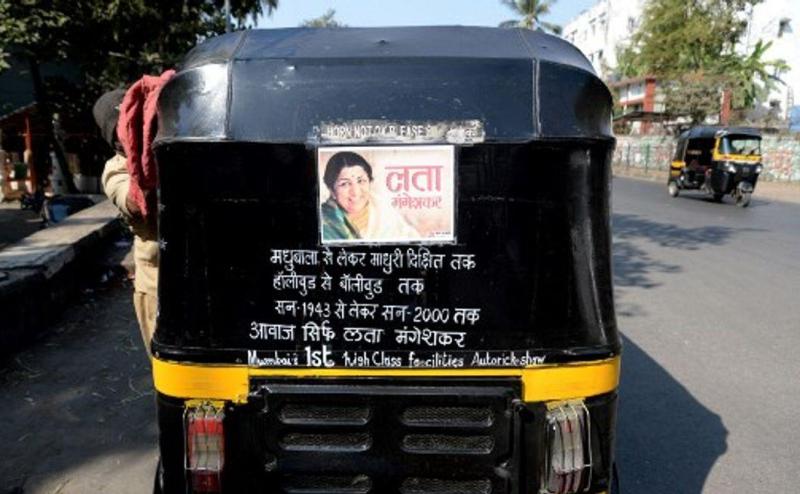
An auto-rickshaw in Mumbai displaying the versatility of Lata Mangeshkar -
A Feminist
In 2012, she again rose her voice to get royalties from recording companies after her songs, owned by recording companies, began appearing on various music albums. She lamented,
What do I get from this? I don’t get any royalty. Now there is internet and the MP3 format.”
Finally, in 2018, after her decades-long cry, singers started getting royalties, and for her advocacy for fair pay, Lata Mangeshkar was dubbed a feminist. [40]Vox
-
Unfulfilled Desires
In an interview, she revealed that meeting K. L. Saigal and singing for Dilip Kumar were her unfulfilled desires.
-
Daughter of the Nation
On her 90th birthday in 2019, the Government of India honoured her with the title “Daughter of the Nation” as a tribute to her contribution to Indian Music.
-
A Different Lata
Rarely did she play down her image, such as when she toured abroad, where she would let herself go. On holidays in the US, she was often spotted losing heavily at casinos in Las Vegas, enjoying her food at Bombay restaurant in New York, and driving down 52nd Street in a gay, printed sari. [41]India Today She enjoyed listening to Mozart, Beethoven, Chopin, Nat King Cole, the Beatles, Barbra Streisand, and Harry Belafonte. Ingrid Bergman’s stage was her favorite, and she loved watching Marlene Dietrich on stage. During US visits, she loved playing the slot machines in Las Vegas through the night. [42]BBC She admitted this in an interview and said,
This may sound strange but when I used to visit America on holiday, I loved spending time in Las Vegas. It’s an exciting city. I really enjoyed playing the slot machines. I never played roulette or cards – but I used to spend the whole night at a slot machine. I was very lucky and won many times.”
-
Dog Lover
Lata Mangeshkar was an avid dog lover, and she owned nine dogs. [43]BBC In February 2020, she shared photos of her pet dog “Bittu” on her Facebook account.

-
Loved Cooking
She had a great passion for cooking, and she would often cook for her family and friends. In an interview, she talked about her love for cooking and the people who taught her the basics of culinary. [44]News 18 She said,
It was my maternal grandmother and mother who taught me how to cook. I started cooking when I was very young and often made lunch and dinner at home. In later years, Mrs. Bhalji Pendharkar, whom we called Bakula Mausi, taught me how to cook some dishes. She was a dear and close family friend. I called her ‘Ma.’ I was very close to her and often stayed with her. She used to wash my hair and taught me how to make pulao and mutton. And many vegetarian dishes too. Mrs. Majrooh Sultanpuri showed me how to make pasanda and chicken curry.”
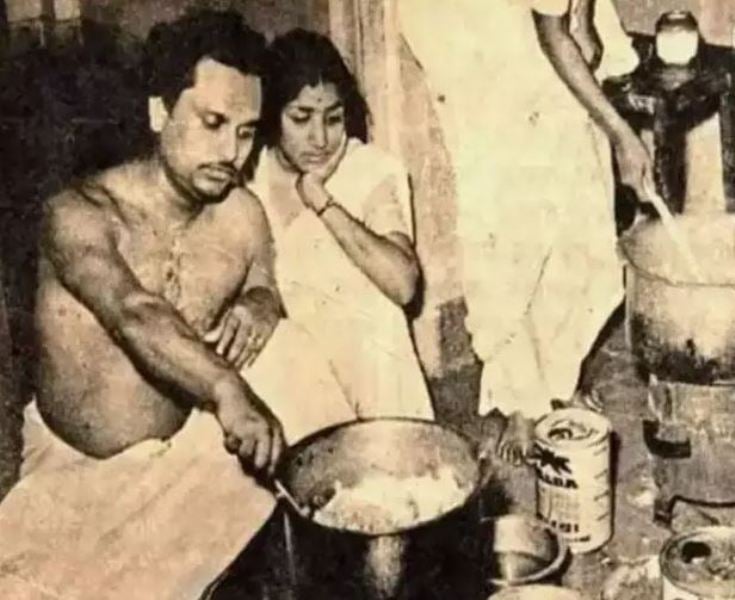
Lata Mangeshkar (sitting) learning cooking skills from composer Anil Biswas She added,
I cook quickly, and the kitchen is always left neat and tidy after I have finished. The pleasure of cooking isn’t in cooking, but seeing people enjoy the meal and say they have liked what I made for them – that makes me happy. earlier, when I used to spend time in London, I always used to cook there.”
-
An Outstanding Photographer
According to Lata Mangeshkar, when she entered the entertainment industry, she became curious about cameras and photography, and the first still camera that she ever bought was a Rolleitflex; she bought this for Rs. 1200. In an interview, she talked about her interest in photography and how she would often click for her friends and family. [45]News 18 She said,
My love for photography started in 1946. I was on an outdoor shoot and took a picture of someone who was standing by a river. I became intrigued by photography. I told Madhavrao Shinde, the film editor, about my interest, and he taught me the basics: how to load film and the kind of camera I should buy.”
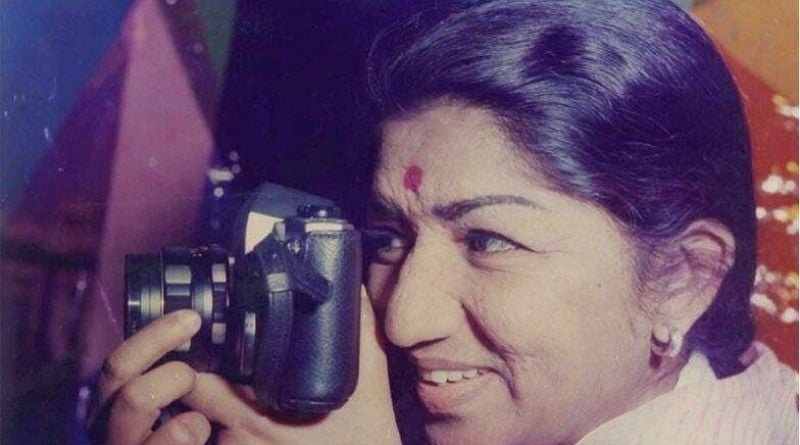
Lata Mangeshkar posing with a camera When she was young, some exhibitions of her photography were also held. She was so skilled at clicking pictures that it was seen as an alternative career for her. Although she enjoyed film cameras, she was critical of digital photography. [46]National Herald She once said,
I don’t know what I’d have done if I wasn’t a singer. But photography was definitely a feasible option. It’s a pity that the art of clicking pictures has been replaced by digital photography. People now take all their pictures on their phone. The sheer joy of capturing cameras through the lens of an old fashioned camera is lost.”
-
A Passionate Cricket Fan
An avid cricket fan, Lata Mangeshkar would often take a break from recording to watch Test matches, and was proud to own a signed photograph of Don Bradman. Reportedly, she helped the BCCI in raising funds to felicitate the members of the 1983 Cricket World Cup-winning Indian squad; she performed a 2-hour-long concert in the Jawaharlal Nehru Stadium in Delhi, where she raised Rs. 20 lakh, which was enough to honour a 14-member Indian cricket team. [47]Koimoi
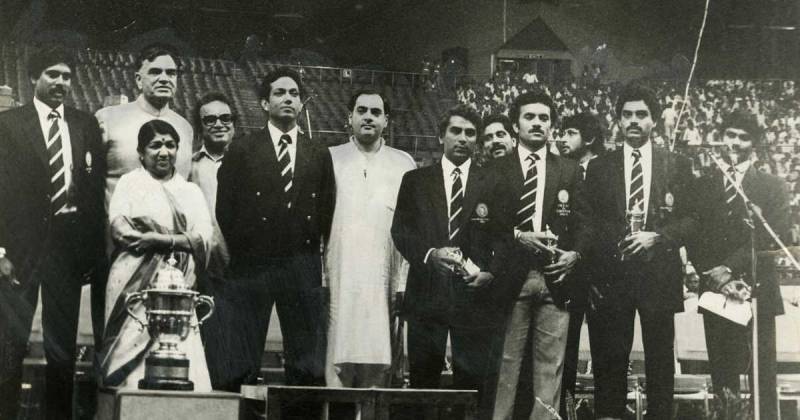
Lata Mangeshkar with the 1983 Cricket World Cup-winning Indian team She was very close to cricketer Sachin Tendulkar. He would call her ‘Aai (mom)’ and visit her at home. At the celebration of Sachin’s 100 international century, she sang a song he suggested at a special function. [48]Hindustan Times

Lata Mangeshkar with Sachin Tendulkar
-
Voice insurance
In the 1960s, she had some issues with her vocal cords following which the doctors advised her not to sing for at least a year. Later, she got her voice insured.
-
Last Birthday
On 28 September 2021, her 92nd birthday, which also proved to be her last birthday, she recalled her childhood days and said,
That long journey is with me, and that little girl is still with me. She has not gone anywhere. Some people call me ‘Saraswati’ or say that I have her blessings. They say I am this and that. All this is nothing I believe but the blessings of my parents, our deity Mangesh, Sai Baba, and God.”
She added,
It is their blessing that people like whatever I sing. Otherwise who am I? I am nothing. There have been better singers than me, and some of them are not even with us. I am grateful to God and to my parents for whatever I have today.”
-
The End of an Era
On the morning of 6 February 2022, the world of music came to standstill when the news of Lata Mangeshkar’s demise broke on television sets. On the same day, her last rites were performed at Shivaji Park Crematorium, Mumbai with the full state honour, and it was attended by many dignitaries and celebrities including Shah Rukh Khan, Sachin Tendulkar, and PM Narendra Modi who paid their last tributes to the legendary singer at the crematorium. Later, two-day national mourning was observed for the departed soul. On 10 February 2022, her ashes were immersed in the holy Ramkund on the banks of the Godavari river in Maharashtra.
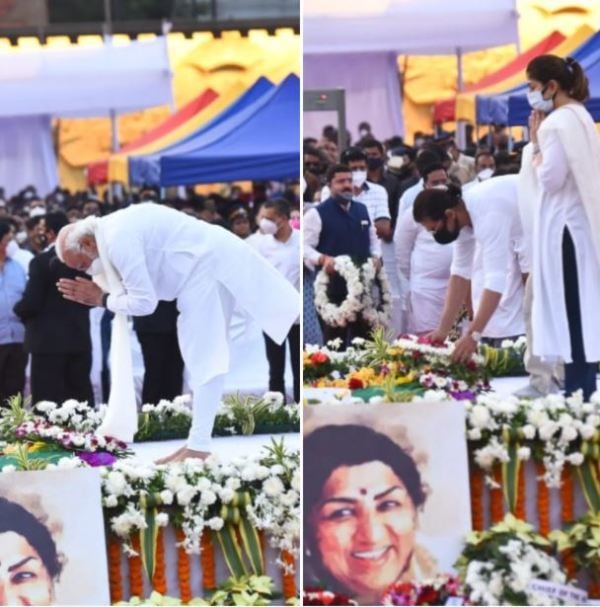
Prime Minister Narendra Modi (left) and Shah Rukh Khan (right) pay their last tributes to Lata Mangeshkar on 6 February 2022 at Shivaji Park in Mumbai
newspaper Recent News
Recent news and updates about Lata Mangeshkar will appear here.
Similar Celebrities
VIEW ALLZubeen Garg
Singer, Music director, Composer, Music producer, Actor, Film director, Film producer, Script writer, Philanthropist • Indian
Navdeep Kaler
Actor, Film Director, Music Video Director, Model • Indian
Surjit Khan (Punjabi Singer)
Singer, Record Producer, Musician, Music Director, Lyricist, Model • Indian
Daniel Weber
Actor, Guitarist, Business Manager • American
Karan Tacker
Actor, Model, Television Host, Dancer • Indian
Violeta Crespo (Gran Hermano 19)
Dance teacher, Model • Spanish
Manoj Mitra
Theatre Artist, Film & TV Actor, Film Director, Playwright, Painter • Indian
Klarisse de Guzman (Pinoy Big Brother: Celebrity Collab Edition)
Singer • Philippine
Mangal Dhillon
Actor, Writer, Film Producer, Director, Poet • Indian
Udita Goswami
Actress, Model, DJ • Indian