Ali Azmat
Height
in centimeters- 178 cm in meters- 1.78 m in feet & inches- 5’ 9”
Age
52
Nation
Pakistani
favorite Personal Life
Basic Information
Family & Relationships
Education
Lifestyle
person_book Biography
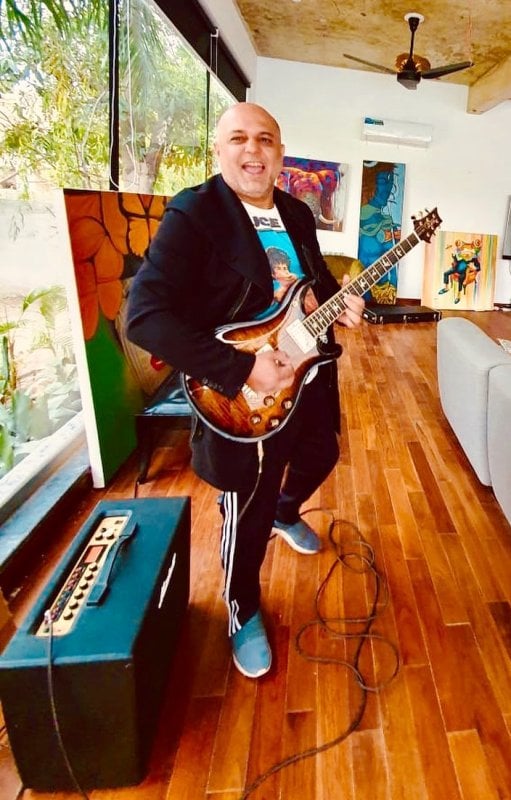
Some Lesser Known Facts About Ali Azmat
- Ali Azmat is a popular Pakistani singer-songwriter, musician, and actor, who is known for being the lead singer of the influential Sufi Rock band Junoon. Junoon is known for the chartbuster songs ‘Sayonee’ from the album Azadi (1997) and ‘Ehtesaab’ from Kashmakash (1995).
- His paternal grandfather worked as a station master at the Havelian Railway Station. Later, his family relocated to Peshawar when his grandfather was posted there. Around 1972-73, his family moved to Lahore, where he grew up in the neighbourhoods of Muhammad Nagar and Garhi Shahu. Meanwhile, his maternal grandmother resided at Nisbat Road, Lahore.
- In an interview, he revealed that he attended a government school.
- Growing up in a notorious environment in Lahore, Ali was a mischievous child who was often suspended from school and college. In an interview, he said that he frequently used to engage in quarrels and was beaten up; therefore, he started carrying weapons to college.
- He recognised his musical instincts listening to the rock band Pink Floyd when he was in Class 10.
- His passion for music soon drove him from Lahore to Karachi.
- In 1988, he began his musical journey when he joined the Pakistani music band Jupiters. Tanvir Tafu, a guitarist of Jupiters, recognised Ali’s three-octave vocal range when he sang a song by a band called Aha. At the age of 16, he started performing gigs with Jupiters as a singer in Lahore.
- While talking about the initial days of his career in an interview he said that he was paid Rs 500 for performing with local bands in schools, colleges, and private events. Out of Rs 500, he would spend Rs 50 to eat Egg paratha and save the remaining amount. He also made some money by purchasing flea market goods and selling them at higher rates to his friends. Eventually, he saved up enough to buy his first bike for Rs 30,000. Unaware of the money he earned from gigs, his friends and family thought he was a robber when he first purchased a bike. While recalling the same, he said,
Aside from my initial earning from Jupiters, I also purchased products from flea markets and sold them to my rich friends. When I handed the profit to my mother she thought that I had started robbing as well.”
- He came into the spotlight with Jupiters’ hit song “Yaaro Yehi Dosti Hai,” Ali’s first song. [10]Ali Azmat’s Facebook
- Once, in an interview, he revealed that at the beginning his relatives forbade him from visiting their homes saying that singing wasn’t a respectable pursuit.
- Jupiters participated in a competition held at Alhamra Art Center, Lahore, where Ali’s parents saw him performing for the first time. Until then, his parents did not support his career choice. Jupiters came first and won a cash prize of Rs. 10,000 in the competition. That’s when his parents came on board.
- While recalling his time with Jupiters in an interview, he said,
I started back in ‘88 with a band called Jupiter. It was more of a commercial band that played music in a bar but we didn’t have any bars [Laughs] so we played at weddings, birthday parties, school events, fun fairs, etc. I would generally sing English songs. I was 18 and I needed something to do. It was fun and a good way of learning what music is all about, how to play the guitar, what different melodies are, what guitar chords are, etc. I did that for a couple of years then moved to Australia for college. I studied business administration, then came back, started Junoon and was with them for 14 to 15 years.”
- After returning from Australia in 1990, he pursued a job in a Bank for a while but soon realised that a 9 to 5 job wasn’t his cup of tea.
- In the same year, Ali Azmat and Salman Ahmad formed the Sufi rock band Junoon, also known as “U2 of Pakistan.” While Ali was the lead singer, Salman was the lead guitarist. The band was later joined by keyboardist Nusrat Hussain and bass guitarist Brian O’Connell.
- Thereafter, Nusrat Hussain parted ways with the band to pursue his own career as a solo singer and Junoon got signed to the prominent record label EMI Records.
- Junoon’s first compilation album, Kashmakash, was released in 1995. The album featured the controversial song “Ehtesaab,” which highlighted the corrupt political scenario of Pakistan. Ehtesaab’s video showcased a polo horse eating in a posh restaurant. Many viewed the polo horse as a reflection of the crooked Pakistani political elite, especially former Prime Minister Benazir Bhutto. [11]The Express Tribune The controversial video was soon banned in Pakistan, attracting controversy for the Junoon members.
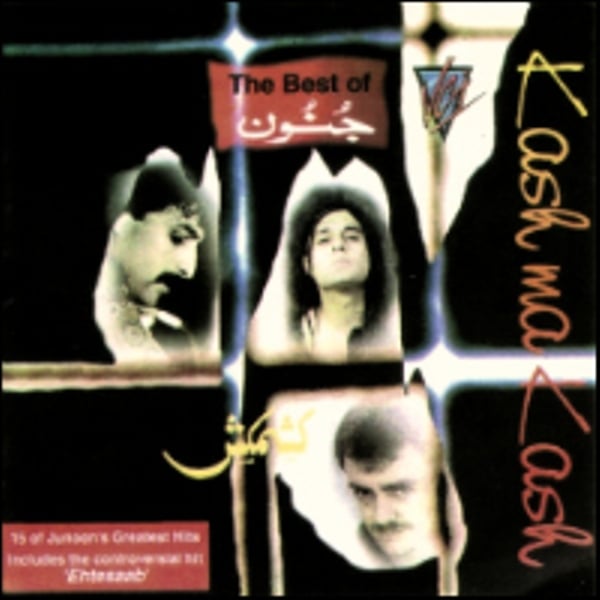
Cover picture of Junoon’s compilation album, Kashmakash (1995)
- Soon, the powerful song turned into the ‘Ehtesaab’ campaign which led to Junoon’s historic concert at Nishtar Park, Karachi. When the authorities refused to give the band an NoC for the concert, a local mosque came to Junoon’s aid by lending them a generator for sound and light equipment, which required heavy electricity. In an interview, while recalling the historic concert Salman said,
I went to a nearby mosque and asked the Imam to give us a power connection. It didn’t take the prayer leader long to recognise the band, after he was informed that they were the “Jazba-e-Junoon guys. He said we could use the mosque’s generator. The condition was to stop playing when the azaan starts. Around 10,000 screaming Karachiites turned up for the show. They were young and foolish … like us. The entire crowd sang Ehtesab with us in one voice, saying, “We want accountability now!”
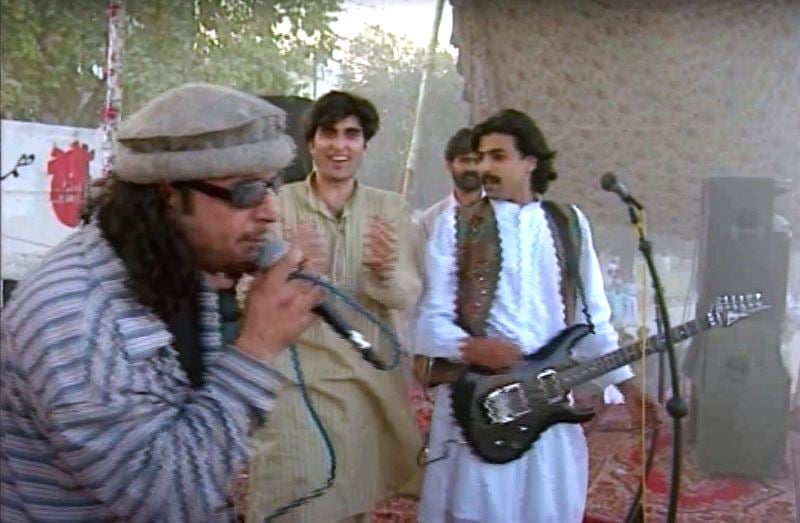
Ali Azmat, Junaid Jamshed, and Salman Ahmad at Junoon’s concert in Nishtar Park, Karachi
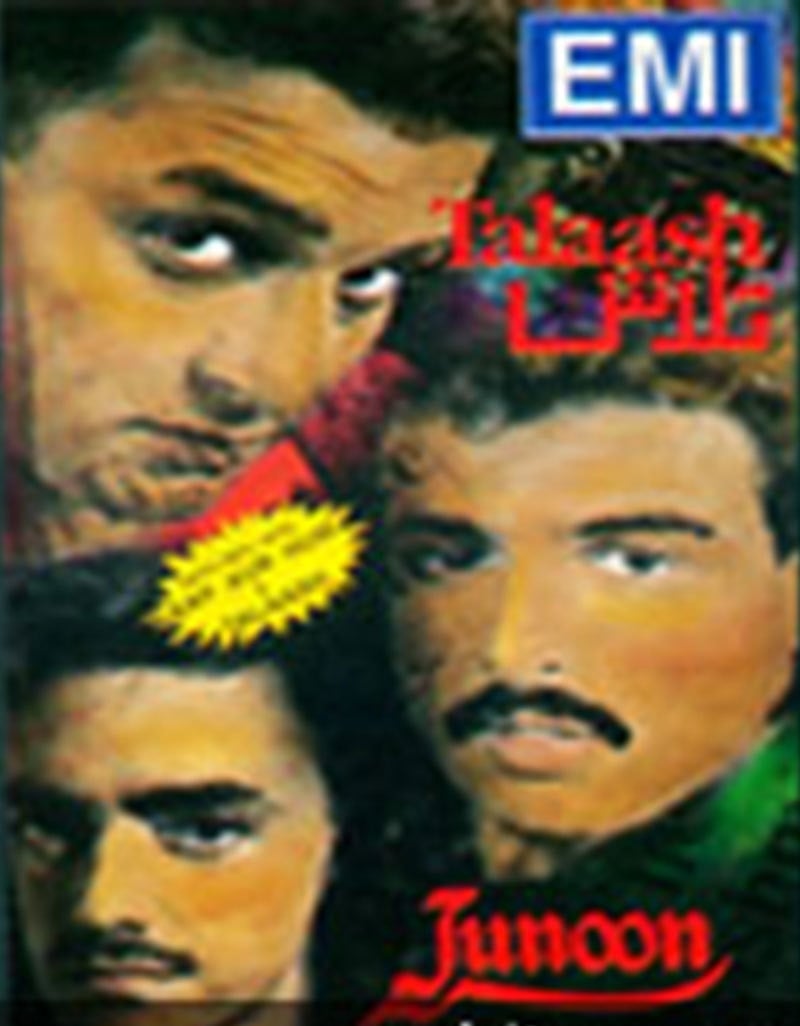
- In 1993, Junoon released its second album Talaash (1993).
- While working on Talaash (1993), the band members featured in a Pakistani mini-series of the same name, written by Anwar Maqsood and directed by Atiqa Odho.
- In 1996, the band gained popularity with its third album Inquilaab, featuring the song Jazba-e-Junoon (spirit of passion). The song became the official song of the 1996 World Cup Cricket, which was jointly hosted by India and Pakistan.
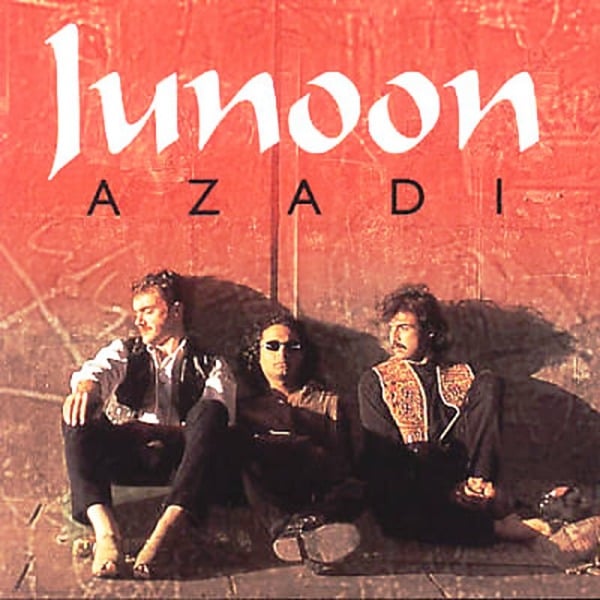
- In 1997, Junoon gained international stardom with its critically acclaimed album Azadi, which introduced the band to India under the British record label EMI/Virgin Records. The album featured the chartbuster song Sayonee, which ranked number 1 on Channel V and MTV Asia’s playlist for over two months.
- In 1998, Pakistan’s Nawaz Sharif government slapped a ban on the band from performing in the country after Salman Ahmad’s comment on the nuclear weapons test at Pokhran in which he had suggested that the Indian and Pakistani governments should spend more on education and health instead of developing weapons of mass destruction. The government also banned Junoon’s music from being aired on Pakistani media. However, Junoon believed it was a repercussion of their 1995 song Ehtesaab.
- In 1999, the UN recognised Junoon for fostering peace in South Asia.
- In 2001, they released the studio album Andaz.
- In the aftermath of the terrorist attacks on 11 September 2001, Junoon performed a series of shows at universities and high schools in the United States. On 9 October, the band played a peace concert at the United Nations (UN), becoming the first-ever rock band to be invited to perform at the United Nations general assembly.
- The 2003 studio album Dewaar was their last studio album after which they disbanded.
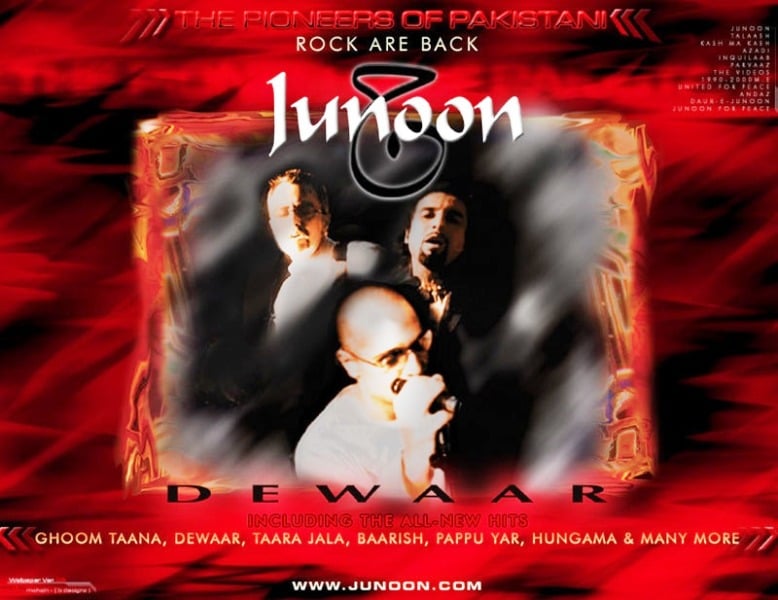
Cover picture of Junoon’s Deewar (2003) - In an interview, Ali talked about Junoon’s disbandment and revealed that it was Salman Ahmad’s constant effort to become the lead singer that led to the end of the group. He said,
Most people couldn’t deal with it and they were like, “Please stop him from singing.” Even if I tried, he still thought he was singing really well. And I was like, “Well if you are so cool, then like do it on your own, I don’t want to be on stage with you.” Also musically, we were growing apart. I would write a song, and he’d be like, “It’s great but I don’t know if it’s for Junoon.” So I was like so what is “for Junoon”? So slowly, we drifted apart and he moved to America and that was the last nail in the coffin.”
- In the same year, Ali Azmat debuted in Bollywood with the song “Garaj Baras,” a track on Junoon’s 2003 album Dewaar. The song featured in the 2003 Indian crime thriller film ‘Paap.’
- His debut solo album Social Circus (2005) featured the crowd-puller song Na Re Na.
- Ali Azmat was scheduled to perform at Karachi Arts Council before the play Aangan Terrha in 2013 when his father passed away. Although the director of the play Dawar Mehmud tried to call off Ali’s performance keeping in view his father’s death, Ali refused to compromise his professionalism and gave the performance.
- Thereafter, he released various music albums which includes Klashinkfolk (2008), Josh-e-Junoon (2010), Bum Phatta (2011), and Chalta Main Jaun (2011).
- The title track of the album Josh-e-Junoon (2010) of the same name became the anthem for Pakistan for the 2011 Cricket World Cup.
- Ali Azmat earned a nomination in three categories at the 8th Annual Lux Style Awards (2009), Best Music Album for Klashinfolk (2008), Best Music Video for the song Gallan, and Song of the Year for Gallan.
- Azmat lent his voice to the songs ‘Yeh Jism Hai Toh Kya’ and ‘Maula for Bollywood’ for the Indian erotic thriller Jism 2 (2012).
- Other playback credits under his belt include the 2013 Pakistani films ‘Josh: Independence Through Unity’ and ‘Waar.’
- Apart from that, he has made several appearances on the Pakistani music TV series Coke Studio.
- In 2022, he played that role of Gogi in the popular Pakistani Punjabi-language action drama film ‘The Legend of Maula Jatt.’
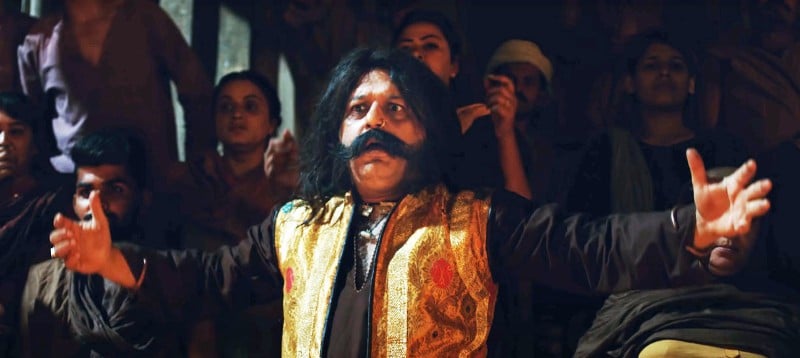
Ali Azmat as Gogi in The Legend of Maula Jatt (2022)
newspaper Recent News
Recent news and updates about Ali Azmat will appear here.
Similar Celebrities
VIEW ALLAkshita Mudgal
Actor and Model • Indian
Shivansh Kotia (Child Actor)
Child Actor • Indian
Deepika Das
Actress • Indian
Rauw Alejandro
Singer, Rapper, Songwriter • Puerto Rican
Basu Soni
Actor • Indian
Suhel Seth
Actor, Columnist, Socialite, Entrepreneur, Author • Indian
Tramell Tillman
Actor • American
Keerthy Suresh
Actress, Model • Indian
Deepti Bhatnagar
Actor, Film Producer, TV Presenter, Former Model • Indian
Alan Kapoor (Actor)
Actor • Indian