Dilip Vengsarkar
Height
in centimeters- 177 cm in meters- 1.77 m in feet & inches- 5’ 8”
Age
69
Nation
Indian
favorite Personal Life
Basic Information
Family & Relationships
Education
Lifestyle
person_book Biography
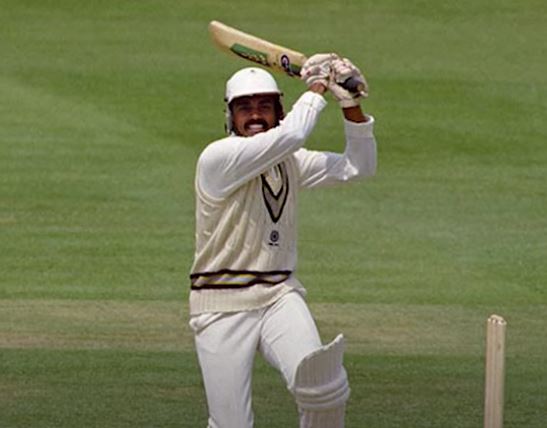
Some Lesser Known Facts About Dilip Vengsarkar
- Dilip Vengsarkar was one of the key batters of the Indian Cricket team during the 1970s and early 80s alongside Gundappa Vishwanath and Sunil Gavaskar. He is known for his upright stance and his ability to play elegant drives.
- He made his mark in cricket when he scored 110 runs for Bombay against the Rest Of India (ROI) side during the Irani Trophy match at the Vidarbha Cricket Association (VCA) in Nagpur (Maharashtra). ROI was star-studded with the bowlers like Bishan Singh Bedi and Erapalli Prasanna. These bowlers were in their prime form during that stage. Dilip replaced the injured Eknath Solkar who got injured at the last moment before the match. Initially, it was decided to play him as an opening batter but the experiment didn’t turn well as he could only score with an average of 13.75.
- Soon, he made his international debut in 1975 where he played the role of the opening batter alongside his captain Sunil Gavaskar. Though, he could not have much success at that time. But it was in 1977-78 when he established himself as a permanent member of the squad for the next fifteen years. He remained the number three batter for many years and played the role of the anchor in the Indian batting line-up for over a decade.
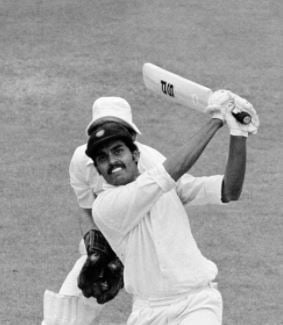
Dilip during his innings of 103 runs against England during the second test at Lords on 7 August 1979
- In 1978-79, he held a partnership of 300 runs with Sunil Gavaskar at Eden Gardens (Kolkata) against the West Indies. Both the batsmen ended their innings with a century. During the late 1970s and 80s, he was among the best batsmen in the country.
- One of his most memorable innings came against the Pakistan team in 1979 at Feroz Shah Kotla (now Arun Jaitley Stadium) in Delhi. The Pakistan team was led by Asif Iqbal. India required 390 runs on the final day of that test match. The team lost the key wickets of Yashpal Sharma, Kapil Dev, and Roger Binny But Dilip remained unbeaten on 146 runs and took the score close to 364 runs. Actually, Dilip was running out of partners so he decided to play defensively and prevent his side from a defeat by losing six wickets.
- In 1981, Dilip got married to his girlfriend Manali in Mumbai. They both met in the Mumbai airport when Manali was traveling with her mother in her 20s. Manali got completely captivated with Dilip there and during an interview, she recalls, [13]DNA India
“In those days I used to wear a rope of tiny wooden and ivory beads wrapped around my throat. Ya! I was totally sold out on everything about him — those beads, his dimples, his shirt, his wrist — everything! It was just him.”
She further adds,
“I’m still crazy about you after all these years. There’s still the same excitement when you come home and the same longing when you’re away.”
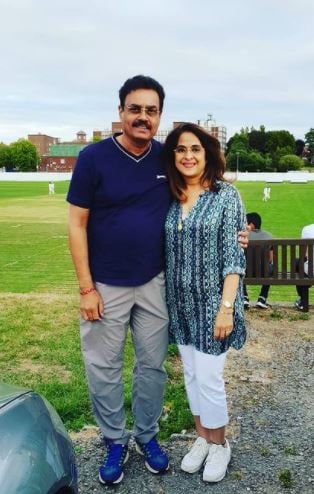
Dilip Vengsarkar with his wife
- His next best inning came against England in 1982, wherein in reply to England’s first-inning score of 433 runs, India was all out on 128 runs. The game was all in England’s hand when in the second inning, Dilip scored 157 runs combined with Kapil Dev’s 89 could manage to decrease the gap in terms of runs but couldn’t prevent his side from a jaw of defeat. England won the match by seven wickets.
- Recalling that inning, he told,
“I was on the way to score a double hundred, more than that. We were shot out early in the first innings (128 all out), so we were trying to save the match. It’s all ifs and buts. It was a slow bouncer from (Bob) Willis, edged it, and was caught at deep fine leg. That was an enjoyable inning. The wicket was good. Sunshine throughout the day, wicket became a beauty. That one delivery I played badly. Call it complacency, overconfidence.”
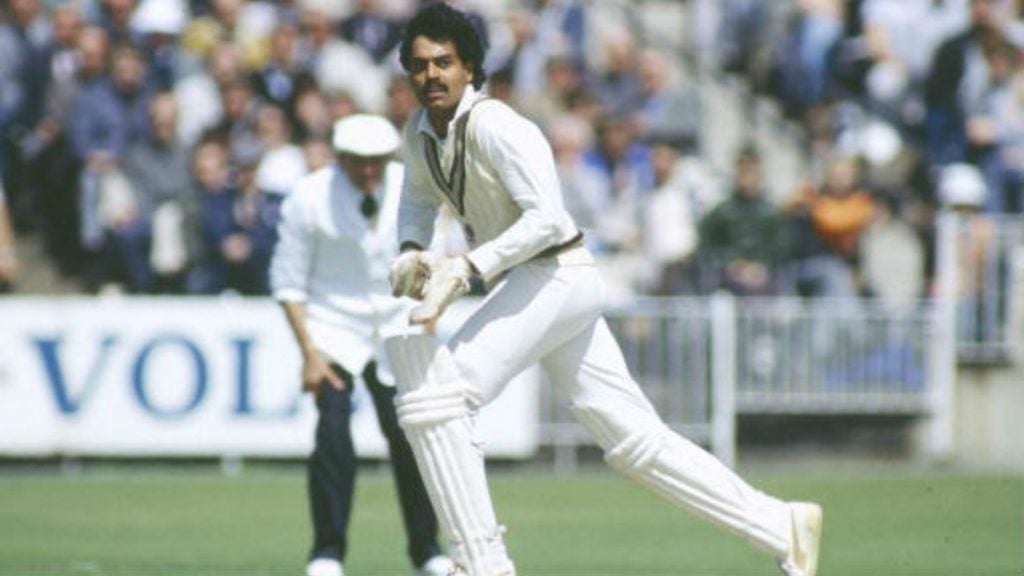
Dilip Vengsarkar during an inning against England at Lords
- He was then included in the Indian squad for the 1983 Cricket World Cup that went on to win the World Cup trophy, thus becoming the first team apart from West Indies to grab that coveted title.
- His best season was in 1985 till 1987 where he scored centuries against some of the top cricket sides in the world comprising of Australia, England, Pakistan, West Indies, and Sri Lanka. Out of these centuries, few have come in consecutive games. He scored eight centuries in 16 test matches during that period.
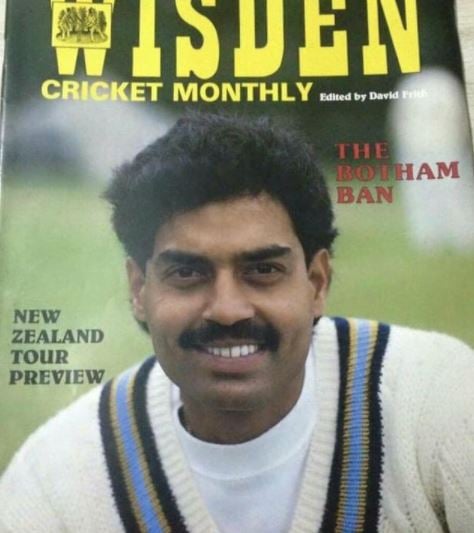
Dilip Vengsarkar in the Sports Magazine cover page
- In 1986, he helped his side to win the first-ever test series against England in their homeland where he was awarded the Man of the Series (now Player of the Series) for scoring three consecutive centuries at Lord’s Cricket Ground (London) and scripting his name in the history books. This was his third tour to England. Remembering that special moment, Dilip recalled, [14]Lords
“I am always surprised whenever I am at Lord’s. The English fans know who’s who. They still believe in autographs and photographs. But they don’t disturb you. They wait for their moment to approach you. When I first toured in 1979, everybody had said that you’ll be written about only if you score runs in England. And Lord’s, well, you read so much about the ground, hear so much about it on the commentary that you want to succeed there. More than two centuries old, and the way they care about their history and tradition is unbelievable. Now, just making that walk to the stadium, walking on the greens there, you get goose pimples. It feels like yesterday, yaar.”
- Before that, when Dilip was batting on 85, India lost nine wickets, and in walks Maninder Singh. The score was 303 runs with nine runs lead.
- A few weeks later, he scored 61 and unbeaten 102 runs. This set the tone for India for their first series test victory for India in England. He finished that tour with 793 runs with an average of 132.16 comprising of four centuries. But after the match, Dilip said centuries and records all just happen. It’s the win for the team that matters. Before that series, he already had a century at Lord but in the practice match against Marylebone Cricket Club (MCC) in the 1979 Cricket World Cup. But a bouncer by Malcolm Marshall kept him out of the remaining matches. He recalls that time,
“I was injured in the middle of the tour, almost two weeks from the final. I was fit for the match but the Indian team was doing really well. And when the team is in good form and performing, the winning combination always stays. Of course, you feel bad missing out on an iconic game.”
- But his success in Lords was not something, he achieved overnight. The lonely walk from the pavilion started from the large doors in the corner of the dressing room, where there were corridors filled with photographs, member rooms, then to the sectioned staircase across the uncarpeted long room down the stone step towards the ground between the spectators. His first-inning here ended with a duck after facing 12 balls. He recalls,
“Rain interruptions, but you soon learn that’s no excuse in England. And at Lord’s, if you score a duck, it’s a long way back. So the second time I went in, I was muttering ‘I don’t want to get a pair at Lord’s. That will be a disaster. I didn’t want that against my name in the record books.”
But in the second inning, he scored 103 runs along with Gundappa Vishwanath who also scored a century (113 runs) and helped his side to draw that test match. Recalling that inning, he said,
“In the later part of my England tours, when I played league cricket (unofficial games played across venues such as West Brom, Sunderland, and Chester-le-Street), I came across many grounds with massive slopes. In England, they don’t level the grounds. Headingley too has a slope, it goes the other way, east-west. You could see Bob Willis running uphill.”
He further adds,
“Players who went in with a positive frame of mind succeeded. At that level, it isn’t like an international bowler will only bring it back in because of the slope. They took it away and you had to adjust. Technically, it is very important in England to stay absolutely side on and play on the off-side. The bowling used to be middle and off to take it away. If you opened up, you’re gone. You’ll square up, you will edge it to slip. Side on, you got a better view of the ball moving away. I loved to drive, but you had to be very careful of the movement.”
- In 1987, he took over the Indian team’s captaincy from Kapil Dev after the campaign in the 1987 Cricket world cup which was the first-ever world cup of 50-overs. Though he withdrew himself from the semi-finals due to a stomach disorder resulting from a seafood allergy.
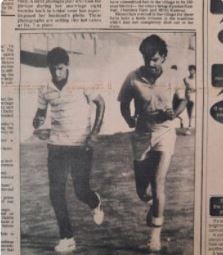
Dilip Vengsarkar with Mohammed Azharuddin after taking over the captaincy of Team India
- In 1987, the England great Ted Dexter along with the statisticians Gordon Vince and Rob Eastaway produced the first ranking system of cricket and Dilip was kept right at the top. [15]Scroll.in
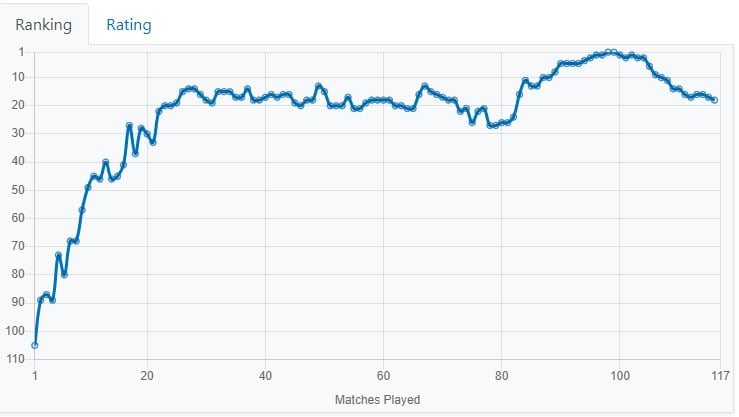
Ranking Graph of Dilip Vengsarkar. Courtesy Reliance ICC rankings
- He had a good start as captain with his two centuries in his debut series but this journey couldn’t go far as he had the disastrous tour of West Indies in 1989. He also had a controversy with the Indian Cricket Board (now BCCI). As a result, he was sacked as the captain of the India National cricket team. He led the Indian team in ten test matches, but in 1989, he lost his place in the side. In the early 1990s, he was bought back into the team but couldn’t perform as per his caliber in the remaining matches of his international career. In 1992, when he retired, he had the most Test runs and centuries after his teammate Sunil Gavaskar.
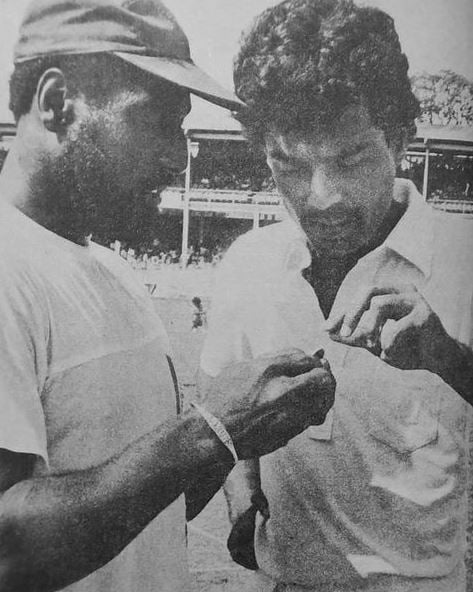
Dilip Vengsarkar with the legendary Vivian Richards before the 1989 test match between India and West Indies 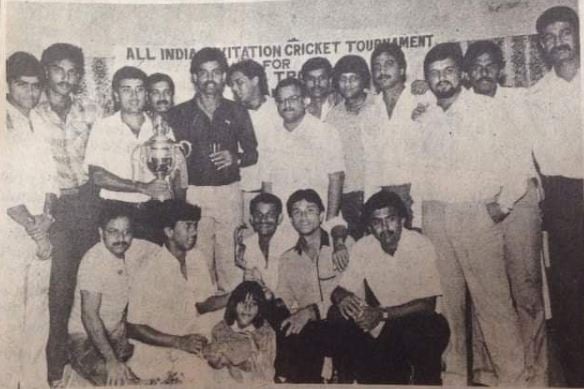
Dilip Vengsarkar with his team in 1989 at the Arlem Trophy
- But in his fourth test at Lords in 1990, when he was 34 years of age, he couldn’t score a century. It was the same match where Graham Gooch; the captain of England scored 456 in both the innings and became the highest individual run-getter in a test match. He only manages to reach 52 runs before he was caught behind by Jack Russell. India needed 472 runs to win on the last day but got all out on 224 runs. Dilip contributed with 35 before he again was caught behind. In an interview, he remembers,
“I remember I was stroking the ball really well. At 52, there was nobody on the leg side, and it was such a faint nick (against offie Eddie Hemmings). In India, you wouldn’t hear such edges and you could just stay. In cold England, you could hear such nicks from the pavilion. It was very obvious. I scored 35 in the second but we lost.”
With that, he also becomes the only non-English player to score three centuries at Lords in tests. He told,
“It’s not like they do it aaram se, in a day or two. Immediately after your innings, your name is there”
- But Lords was not the most successful ground for Dilip. He scored four centuries at the Feroz Shah Kotla Ground (now Arun Jaitley stadium) in New Delhi. Also, England wasn’t his favorite opposition. He scored six hundred against West Indies.
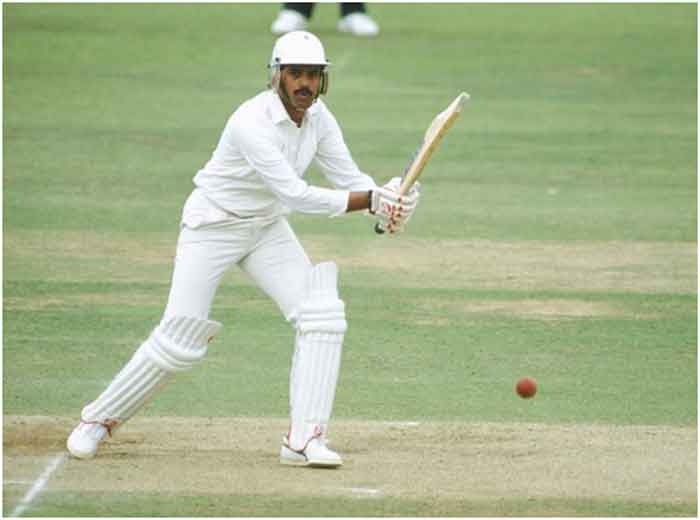
Dilip Vengsarkar batting against West Indies
- In 1991, during a Ranji season, against Haryana led by Kapil Dev, he smashed 139 runs with an injured thigh during his team’s chase of 355 runs. But as two runs were needed, the last batsman in the lineup got run out and his team Bombay lost the finals for the first time in Ranji Trophy.
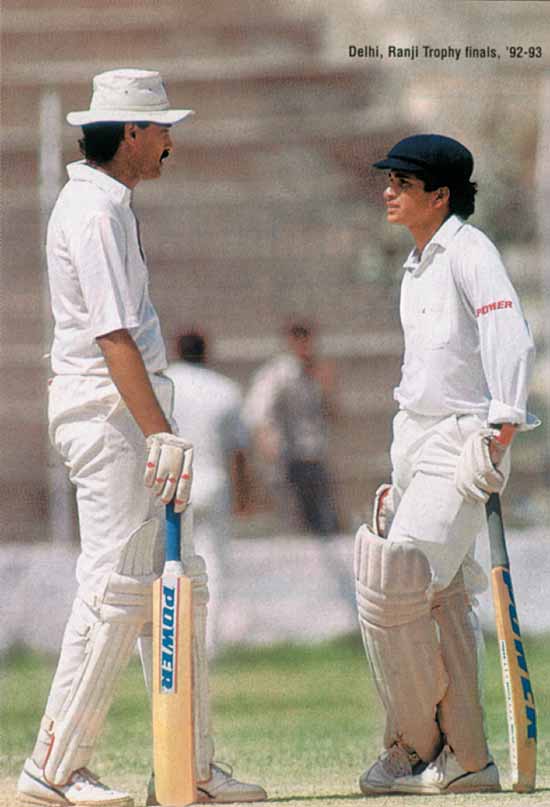
Dilip Vengsarkar batting with Sachin Tendulkar in the finals of the Ranji Trophy 1992
- He used to play spin bowling extremely well in home conditions. This can be estimated from the fact that his highest international score of 166 runs came against Sri Lanka at Barabati Stadium in Cuttack on a wicket that aids spin bowling with the puff of dust coming out from the pitch while he was batting. [16]Indian Express
- During his era, he was one of the most successful batters against the lights of Caribbean fast bowlers slike Malcolm Marshall (1978-92), Andy Roberts (1974-83), and Michael Holding (1975-87).
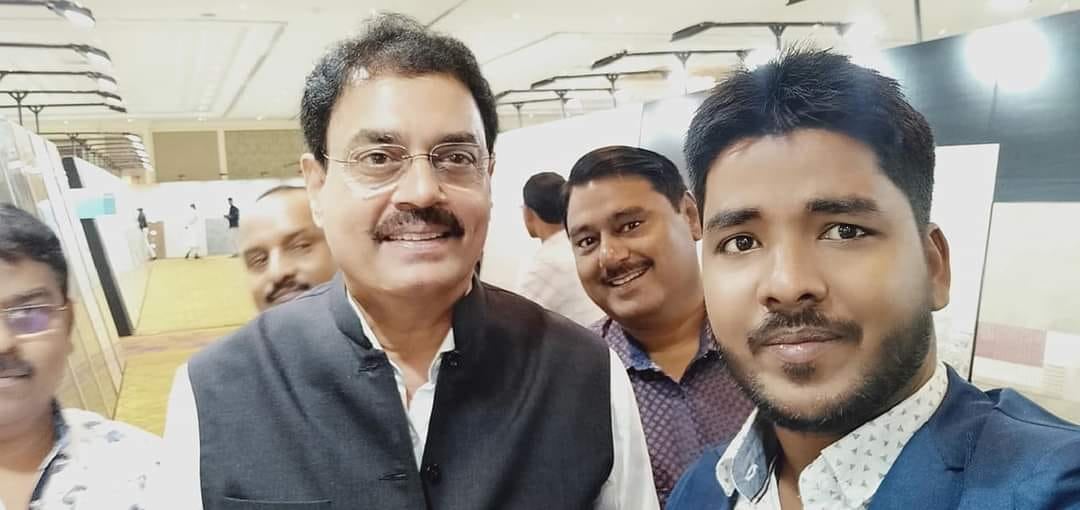
Dilip Vengsarkar with his fans in Thailand
- It is also been said that if David Gower was born in India and Dilip was born in England, they would have been national symbols. Where Gower was known for his artistic batting, Dilip is remembered as the low-key professionalism with an introverted nature that doesn’t match the Indian image of a superstar. But he could be widely accepted in England. Two of the historic matches which he missed were the 1983 World Cup final and the tied test of 1986-87 against Australia at Chepauk, Madras (now M. A. Chidambaram Stadium). [17]Cricketcountry From 1 January 1986 to 31 December 1988, he scored 1800 runs in 20 test matches with an average of 90. In the 1980s, he scored more runs than a legendary Sunil Gavaskar. [18]Scroll.in
- Post-retirement, Dilip started his own cricket academy named Elf-Vengsarkar Academy at the OvalMaidan and at Mahul, Chembur in 1995. He also became the Vice-president for the Mumbai Cricket Association (MCA) in 2003. Actually, he was in the race for becoming the Chairman of the National Selection Committee but was opted out due to his policies against the Zonal representation. He was also made the Chairman of the Talent Resource Development Wing (TRDW) in 2002. The main purpose of this organization is to inherit the new cricket talent in the country. This program is also supported by the former Indian cricketer Brijesh Patel. He was then made Vice President of the Mumbai Cricket Association (MCA) on 17 June 2015. He also served as the vice-chairman of the Dadar Union Cricket Committee (DUCC) for four terms.
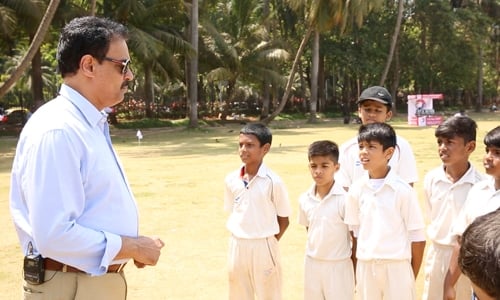
Dilip Vengsarkar in his academy
- In March 2006, he was recommended for the name of the match referee by the BCCI and was omitted out from that list as he was made the Chairman of BCCI’s selectors. During his tenure as Chairman, the Indian Cricket Team did not qualify for the super 8s and got omitted during the league stages in the 2007 ICC Men’s Cricket world cup. But Dilip still remained in this role and played a key part in nurturing young talents in India. With that, he took some bold steps in dropping some senior players. MS Dhoni was made the captain of India when he was the chairman of the Selection Committee. [19]Moneycontrol As a result, in the same year, under the captaincy of MS Dhoni, India won their maiden ICC T2o World Cup on 24 September. Also, under his administration, India recorded his last Test series win in England in 2006 under the captaincy of legendary Rahul Dravid.
- In 2020, he was a mentor and head coach of the Telugu Warrior team in the Celebrity Cricket League Season 5 and took his side to a series win against the two-time champion Chennai Rhinos.
- He runs three cricket academies; one in Pune and two in Mumbai. It’s an academy that provides free coaching to talented young cricketers. He also runs a cricket website which provides a platform for the youngsters to go a long way in this sport.
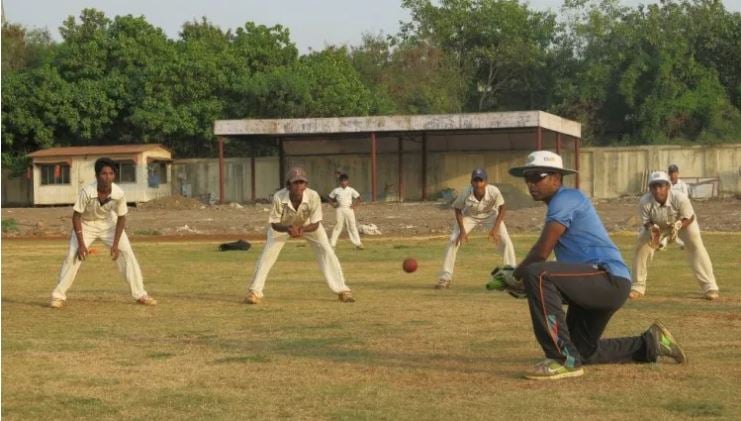
Dilip Vengsarkar’s cricket academy
- On 24 December 2021, a movie named ’83’ was released. This Bollywood movie will embark on the successful journey of the Indian cricket team in the 1983 Cricket World Cup. It is directed by Kabir Khan and Addinath Kothare will portray the role of Dilip Vengsarkar in this movie.
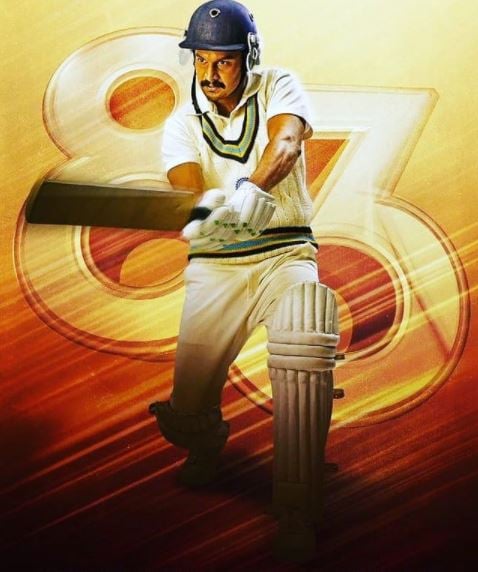
Addinath Kothare as Dilip Vengsarkar in ‘1983’ movie
- During his cricket days, he would get up at 6:00 and then had his breakfast at 7:30. After that, he leave with his team at 8:15 to the ground. After retiring, he would get up at 6:30 and then had a video chat with his grandson Nirvaan for ten minutes. Then he does pranayama for 20 minutes, followed by a 30-min walk along the sea face. Then he switches off his mobile and reads the newspaper. After this, he attends the morning engagements. [20]Moneycontrol
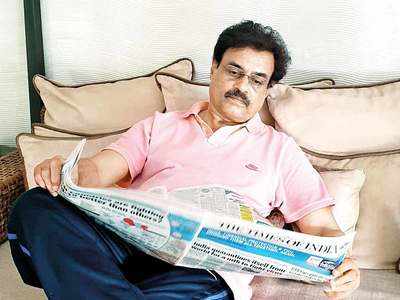
Dilip Vengsarkar reading newspaper
- He rates Vivian Richards as the best-ever batter of his times. He also included greats like Malcolm Marshall, Greg Chappell, Sunil Gavaskar, Imran Khan, Ian Botham, and Kapil Dev in his all-time playing eleven. [21]Countercurrents.org
- Talking about the playing conditions in England, he said, [22]CricketTimes.com
“The thing is that once you get acclimatized, the important factor is that, to counter the extra movement, especially off the wicket, it’s important to stay side-on (batting stance). Don’t go for big drives to start with because the ball moves quite a bit and if you go for a big drive when you see a half volley, you are likely to end up in slips or anywhere. So just push the ball rather than going for the big drives. In England sometimes you get overcast conditions and the ball starts moving, then suddenly you get sunshine and it becomes a good batting wicket. You get different seasons in one day in England. So, you, as a batsman, are never settled. In India, once you are set and score 30 plus runs, you can score a big inning. But that doesn’t happen in England. You are never set as such, you know. The ball moves around quite a bit and you have to be careful”
He further asserted,
“It’s important to have matches. You have practice (net sessions), but the important thing is to have matches and spend time in the middle, not just for the batsmen, but for the fast bowlers and spinners as well. By spending time in the middle, they know what length to hit. That has been a problem for the past 10 years now. Look, when you go to Australia, England, and New Zealand, the conditions are so different. You need practice matches to get acclimated to the conditions.”
- Highlighting his reason for success at Lords, he said,
“Many of us had played in England earlier. So, we knew how to get acclimatized to these conditions quickly. We had a good preparation time before the Tests.”
- Talking about his enriching journey in cricket for 16 years, he said,
“When I look back, it’s been a very happy and fulfilling journey. Playing 116 Tests for India is the biggest satisfaction. Add to it, the 129 ODIs, winning World Cup (1983) and World Championship of Cricket (1985). And to top it all, being an India captain. It was a great journey.”
Ranking Graph of Dilip Vengsarkar. Courtesy Reliance ICC rankings
- He was the chairman of the selection committee for team India when Virat Kohli first got selected in the Indian team. When Kohli was playing for India A against New Zealand where he scored an unbeaten 123 runs, that was the time when Vengsarkar decided to put him in the Indian squad. In an interview with a newspaper, he recalls, [23]Indian Express
“What I appreciated was that even after his hundred, he went on to win the game for his team and he remained not out. That really impressed me and there I thought that here is a boy that we must push into the Indian team because he was mentally mature and of course we picked him and the rest is history.”
- Talking about the 2020 Indian pace attack, Dilip said,
“It would be very high on my list, to be honest. I can’t remember when I saw four fast bowlers bowling for India. We used to play three pace bowlers and a spinner. That used to be the bowling lineup. But we had five bowlers. To play with five bowlers requires a positive attitude from the think tank and confidence in the ability of the bowlers. I think they were brilliant, they bowled extremely well and they always kept the pressure on the England batsmen.”
- Talking about Virat Kohli’s decision to step down from the captaincy after the ICC T20 World Cup 2021, he said,
“I was expecting it. He’s been leading India and has been the No 1 batsman in all formats for almost eight years. He’s been under tremendous pressure to perform because we expect a lot from him every time he goes into bat. The timing of his decision has been perfect. The only thing I hope now is he wins the World Cup and signs off as an India T20 captain on a high. It could be his last hurrah as T20I captain. Besides that, he’s not done exceptionally well in the T20 format as captain. Even in the IPL, he hasn’t led the Royal Challengers Bangalore to a single tournament win. That must’ve played on his mind too.”
He further adds,
“Rohit deserves to be India’s next T20 captain because he’s done exceptionally well whenever he’s been given an opportunity. In 2018, India won the Asia Cup under his captaincy. Besides that, he’s been an exceptional captain for the Mumbai Indians.”
- There is a book dedicated to the journey of Dilip Vengsarkar named “1983 Dilip Vengsarkar 27 years old”.
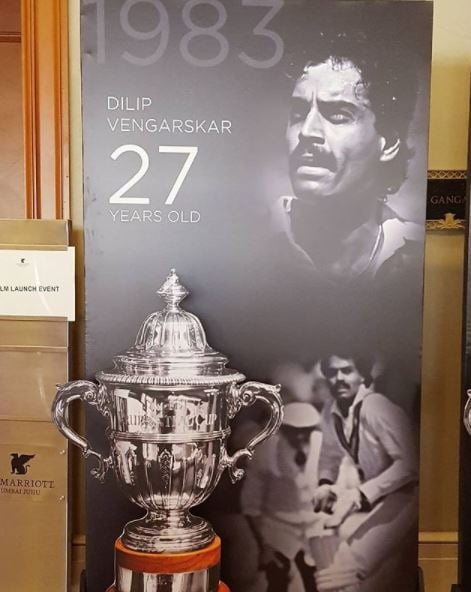
Dilip Vengsarkar book - Out of 185 innings in 116 test matches he played, he managed to score 6868 runs with an average of 42.13 which include 17 hundred and 35 fifties. He also featured in 129 One-dayers and scored 3508 runs with an average of 34.73. Apart from that, he also played 434 first-class and List-A games and scored whopping 22703 runs with an average of 44.08. He has one wicket in his entire cricket career and that was in First-class cricket. He has his best performance against Australia. Like another Asian batter, he has a most successful career in Asian Sub-continents. 1987 was his best season across all formats where he scored 1493 runs. He has played under six captains named in chronological order as Sunil Gavaskar, Bishan Singh Bedi, S. Venkataraghavan, Gundappa Vishwanath, and Mohammad Azharuddin. He had featured in all batting positions in international cricket from first to seven yet his most favorite position is the 4th slot where he scored 4743 runs.
newspaper Recent News
Recent news and updates about Dilip Vengsarkar will appear here.
Similar Celebrities
VIEW ALLFaheem Ashraf (Cricketer)
Cricketer (Bowler/ All Rounder) • Pakistani
Brandon King
Cricketer (Batsman) • Jamaican
Neha Tanwar
Cricketer (Batswoman) • Indian
Bhuvneshwar Kumar
Indian Cricketer (Bowler) • Indian
Padamjeet Sehrawat
Singer, Motivational Speaker, Sports Commentator, Former Cricketer • Indian
Yash Dayal
Cricketer (Bowler) • Indian
Jofra Archer
Cricketer (Allrounder) • British
Swastik Chikara
Cricketer (Opening Batsman) • Indian
Sandeep Lamichhane (Cricketer)
Cricketer (Bowler) • Nepalese
Isabelle Wong
Cricketer (Bowler) • British