Badruddin Faiz Tyabji
Age
88
Nation
Indian
favorite Personal Life
Basic Information
Family & Relationships
Education
Lifestyle
person_book Biography
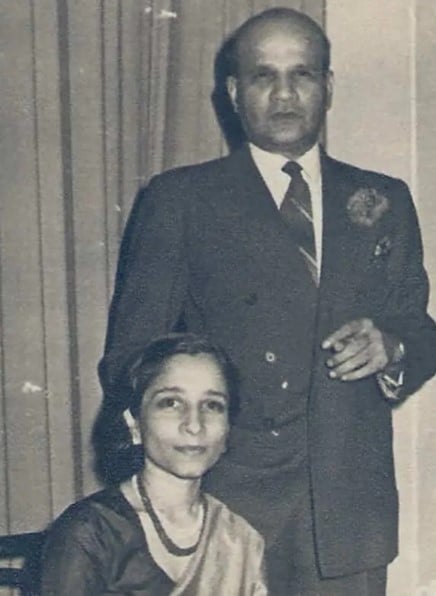
Some Lesser Known Facts About Badruddin Faiz Tyabji
- Badruddin Faiz Tyabji served as the vice-chancellor of Aligarh Muslim University from 1962 to 1965.
- In 1948, as a diplomat, he helped to establish the Embassy of India in Brussels.
- Later, Badruddin Faiz Tyabji served as the Indian ambassador in Jakarta, Tehran, Bonn, and Tokyo.
- Laila Tyabji, daughter of Badr-ud-Din Tyabji, once wrote to a media house that a few months before India’s independence, people realized a national emblem was needed.
- Jawaharlal Nehru asked Badruddin Faiz Tyabji for help, saying, “Badr, you have a good eye for this kind of thing, please do something.”
- Badruddin Faiz Tyabji formed a Flag Committee led by Rajendra Prasad.
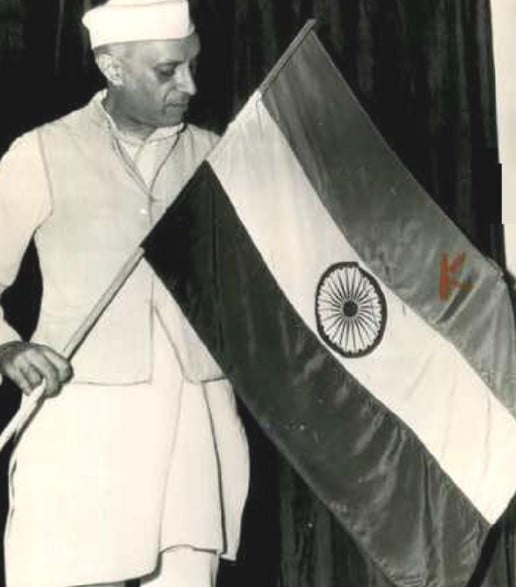
Jawaharlal Nehru posing with the final national flag
- He sent letters to art schools asking them to create designs for the national emblem.
- Mahatma Gandhi originally designed the flag to represent India’s religions, with a Charkha (spinning wheel) in the front.
- In 1929, the flag’s meaning was changed to represent Red colour for the sacrifices of the people, White colour for purity, and Green for hope.
- In 1931, the Congress adopted a new official flag, called the Swaraj flag.
- The flag had three equal horizontal bands, Saffron colour on top, White colour in the middle, and Green colour at the bottom.
- A navy blue Charkha was placed in the centre of the white band.
- This flag became the symbol of the Indian independence movement, and the Indian independence struggle was fought under the Congress flag.
- Some people opposed the idea of a party flag representing the nation.
- After that, Badruddin Faiz Tyabji and his wife were asked to redesign the flag.
- They used the Ashoka Chakra and placed it on the tricolour.
- Once the redesign was complete, it felt natural and fitting.
- Initially, the chakra was painted black by Tyabji’s mother, but Mahatma Gandhi objected.
- The chakra was then changed to navy blue.
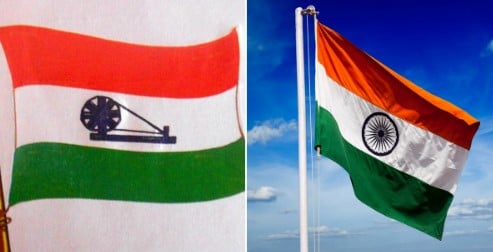
Swarg flag (Left) Indian National flag (Right)
- Historian Trevor Royle mentioned in his book ‘The Last Days of the Raj’ that Tyabji designed the final version of India’s national flag, the tricolour with Ashoka’s Dharmachakra in the centre.
- His wife, Surayya Tyabji, made the first copy of the flag, which was flown on Nehru’s car on the night of India’s independence. Royle wrote,
By one of those contradictions which run through India’s history, the national flag was designed by a Muslim, Badr-ud-Din Tyabji. Originally the tricolour was to have contained the spinning-wheel symbol ( charkha ) used by Gandhi but this was a party symbol, which Tyabji thought might strike the wrong note. After much persuasion Gandhi agreed to the wheel because the Emperor Ashoka was venerated by Hindu and Muslim alike. The flag which flew on Nehru’s car that night had been specially made by Tyabji’s wife.”
- The final form of the Indian national flag was approved, accepted, and adopted during a Constituent Assembly meeting on 22 July 1947.
- It became the official flag of the Dominion of India on 15 August 1947.
- His daughter, Laila Tyabji, is a Padma Shri awardee.
- Apart from being a diplomat, Badruddin Faiz Tyabji was also an author who has published several books including Memoirs of an Egoist, More Memoirs of an Egoist, and The Self in Secularism.
newspaper Recent News
Recent news and updates about Badruddin Faiz Tyabji will appear here.
Similar Celebrities
VIEW ALLNupur Shikhare (Fitness Trainer)
Fitness Trainer • Indian
Gal Gadot
Actor, Model • Israeli
Siddharth Kannan
TV & Radio Host, Voice-Over Artist, Film Critic, Radio Announcer • Indian
Kofi Kingston
Professional Wrestler • American
Gala Montes
Actress, Singer • Mexican
Mishal Raheja (Actor)
Actor, Entrepreneur • Indian
Himanee Bhatia
Actor • Indian
Rani Lakshmibai
Queen • Indian
Shivender Dahiya
Film Producer, Project Director, Actor • Indian
Mahinda Rajapaksa
Politician and Lawyer • • Ceylonese (1945-1948) • Sri Lankan (1948-present)