Chaudhary Charan Singh
Height
5' 7" (170 cm)
Age
84
Nation
Indian
favorite Personal Life
Basic Information
Family & Relationships
Education
Lifestyle
person_book Biography
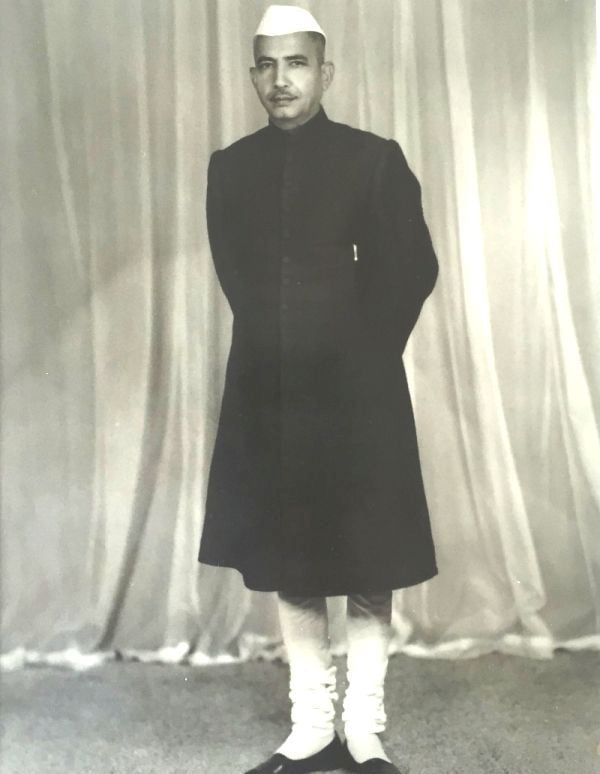
Some Lesser Known Facts About Chaudhary Charan Singh
- He was known as the ‘Champion of India’s Peasants.’
- In 1898, Charan Singh’s parents, Mir Singh and Netra Kaur, got married. His father worked as a tenant, while his mother was a homemaker.
- Mir Singh was a tenant in the village of Noorpur, located in Meerut District. After his landlord re-possessed his land, he relocated to Bhoop Garhi and then to Bhadaula village, both in Meerut district, Uttar Pradesh.
- Charan Singh would walk 3 km every day to attend his primary school in the nearby village of Jani Khurd, Meerut.
- Mir Singh was unable to afford Charan Singh’s higher education with his meagre earning. Therefore, his uncle Lakhpat Singh, who worked in the British Army, took responsibility for his education and Charan went to Meerut to continue his studies.
- Charan Singh opposed discrimination based on caste and creed. In 1921, he was inspired by Mahatma Gandhi’s call for the upliftment of the Harijans and accepted food from a Balmiki sweeper in his hostel. This led to a boycott in his college, but he stood firm. Later, when he was in Ghaziabad, he hired a Harijan to cook his food.
- In 1922, Charan Singh took the entrance test for Roorkee Engineering College and qualified, but he was not able to get admission after he failed the drawing test.
- On 5 December 1925, Charan Singh got married to Gayatri Devi, an Arya Samaji of Garhi-Kundal village in Rohtak district, United Punjab. Gayatri Devi passed Matriculate from Kanya Mahavidyalaya, Jalandhar.
- In 1969, Gayatri Devi was elected a member of the legislative assembly of Uttar Pradesh from the Iglas (Aligarh) constituency and then from the Gokul constituency in 1974. Later, she became a member of the lower house of the parliament from Kairana constituency. [4]Dainik Bhaskar
- Charan Singh was influenced by Dayananda Saraswati and Arya Samaj at the early stage of his life.
- According to Arya Samaj, true religion is truth, knowledge, and moral life. As a result, Charan Singh named his three children Satya, Ved, and Gyan. He rejected the practices of religious rituals and idol worship. [5]India Today
- In 1927, Charan Singh received two job offers from Baraut Jat School and Lakhavti Jat Degree College. However, he refused to accept the position as Principal unless they removed ‘Jat’ from their names. They did not comply, so Singh chose to decline both job offers.
- In 1928, Charan Singh became a practising lawyer in a Ghaziabad Civil Court, which he continued till 1939.
- In 1929, Charan Singh became a formal member of the Indian National Congress and a member of Arya Samaj in the early 1930s.
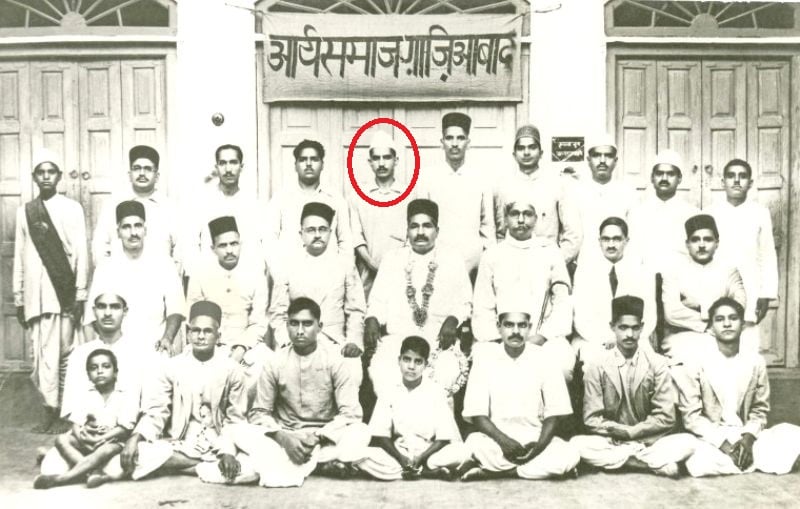
Charan Singh in an event organised by the Arya Samaj in 1930
- Charan Singh actively participated in movements led by Mahatma Gandhi in the late 1920s. In 1928, he joined the protests against the Simon Commission, and in 1932, he organized demonstrations against the Communal Award. He also worked to improve the lives of Harijans by organizing common meals and helping them access village wells, which they were traditionally excluded from by other castes.
- Charan Singh was imprisoned for six months by the British government in April 1930 due to his participation in Gandhi’s Civil Disobedience Movement. He defied the salt law by making salt in Loni, Ghaziabad.
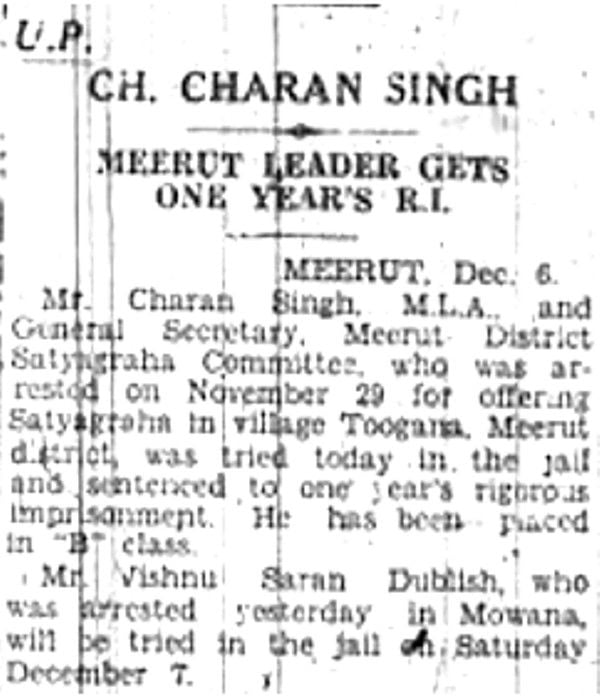
Charan Singh’s arrest news covered by Hindustan Times
- After becoming a member of the legislative assembly in 1937, he managed to pass the United Provinces Agricultural and Workmen Debt Redemption Bill, which freed several farmers from the clutches of the moneylenders.
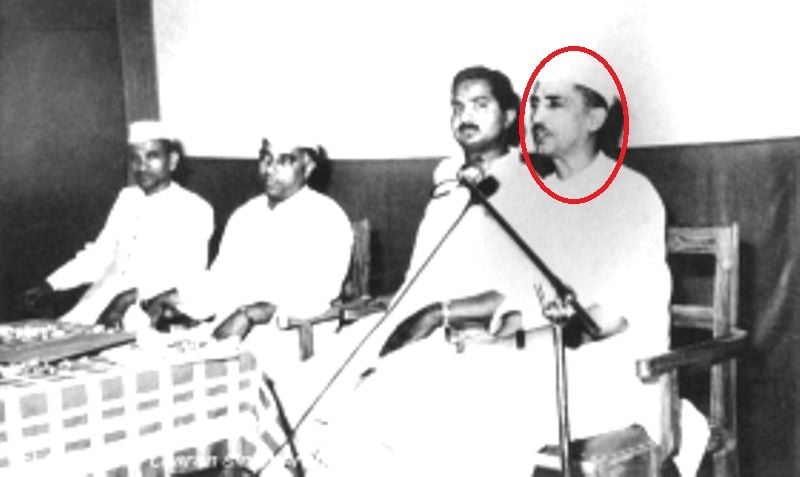
Charan Singh speaking on the United Provinces Agricultural and Workmen Debt Redemption Bill in 1938
- In 1948, Charan Singh was appointed Parliamentary Secretary to Gobind Ballabh Pant, the Premier of the United Provinces (Uttar Pradesh). During his tenure, he drafted the Zamindari Abolition and Land Reforms Bill, which was enacted on 24 January 1951.
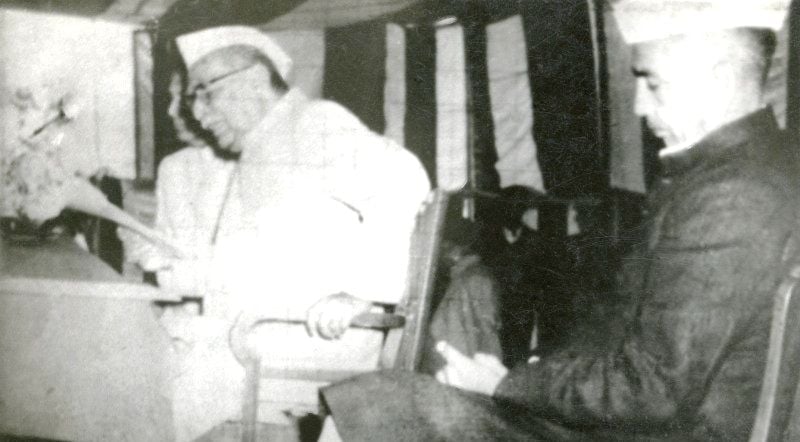
Chaudhary Charan Singh (right) with Gobind Ballabh Pant in 1950
- After the enactment of the Zamindari Abolition and Land Reforms Act, around 27,000 patwaris (front-line land revenue employees) went on strike and resigned in protest. Charan Singh, after issuing two warnings, accepted their resignation and created a new post of ‘Lekhpals’ who were accountable to the elected village bodies.
- In 1967, he became the first non-congress CM of Uttar Pradesh. His party Samyukt Vidhayak Dal made government in coalition with the Bharatiya Jana Sangh and the Socialists.
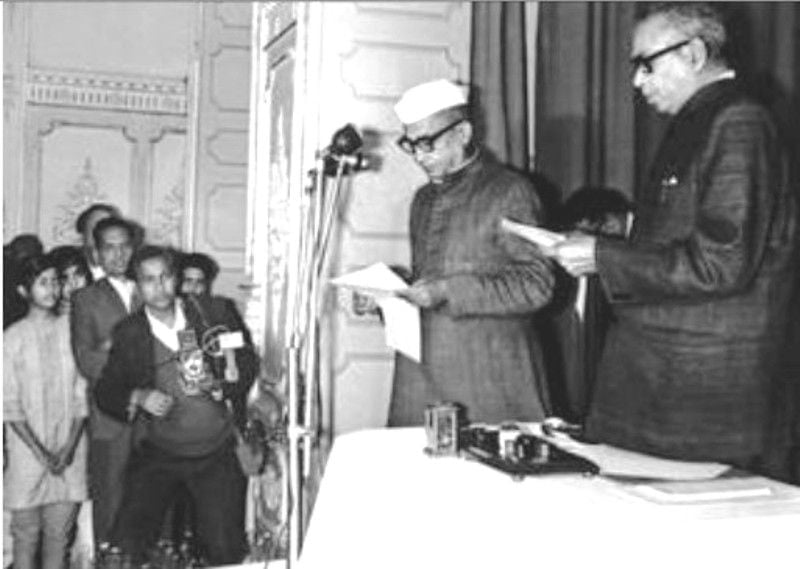
Chaudhary Charan Singh taking oath as Chief Minister of Uttar Pradesh
- Charan Singh took many steps to reduce corruption and casteism in the country. In 1967, Charan Singh’s Cabinet passed the Uttar Pradesh Public Men Enquiries Ordinance, an anti-corruption law. In 1970, he dissolved all 51 District Boards in the state due to corruption charges. In the same year, his Cabinet approved a law to stop funding educational institutes that used caste or community names, leading to their quick removal. [6]Charan Singh Archives
- On 25 June 1975, Charan Singh was jailed for the first time in Independent India as the emergency was proclaimed by then Prime Minister Indira Gandhi. He came out of jail in 1977 and helped in forming the Janata Party to oppose Indira Gandhi by merging Bharatiya Lok Dal and Janata Dal.
- Charan Singh became India’s fifth Prime Minister on 28 July 1979, leading a short-lived coalition government. His government was initially supported by the Indira-led Congress, but they withdrew their support after he refused to drop legal cases against Sanjay Gandhi. His government fell before attending a session of the Parliament, and he served as caretaker Prime Minister until the mid-term election results were announced on 14 January 1980.
- Charan Singh was a vegetarian and abstained from alcohol and smoking. [7]India Today
- Charan Singh’s birthday, 23 December, is celebrated as ‘Kisan Diwas’ in India in his honour. It was started in 2001 by the Atal Bihari Vajpayee government.
- His memorial, ‘Kisan Ghat,’ in Delhi is beside the Raj Ghat, a memorial of Mahatma Gandhi. [8]CNBC TV18
- He authored many books based on agriculture, development, and rural economy including Land Reforms in UP and the Kulaks, Abolition of Zamindari, India’s Poverty and It’s Solution, India’s Economic Policy – The Gandhian Blueprint, and Economic Nightmare of India – Its Cause and Cure.
- On 17 July 2008, Amausi Airport near Lucknow, Uttar Pradesh, was renamed Chaudhary Charan Singh International Airport in his honour.
- Two universities have been named after Charan Singh: Chaudhary Charan Singh University in Meerut (formerly Meerut University) and Chaudhary Charan Singh Haryana Agricultural University in Hisar (formerly Haryana Agricultural University).
- In 2000, the Indian Council of Agriculture Research (ICAR) constituted Chaudhary Charan Singh Award in his name which is given annually for excellence in Journalism in Agricultural Research and Development and carries a cash award of Rs. 1,00,000 and a certificate. [9]ICAR – Chaudhary Charan Singh Award
- On 30 March 2024, President Droupadi Murmu conferred on him the Bharat Ratna award; Jayant Chaudhary accepted the award from President Murmu.
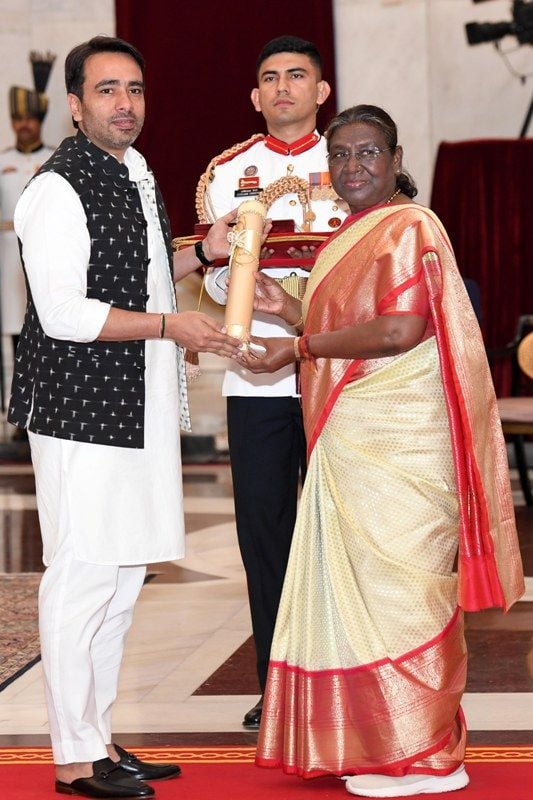
Jayant Chaudhary accepted the Bharat Ratna award conferred on Chaudhary Charan Singh by President Droupadi Murmu on 30 March 2024
newspaper Recent News
Recent news and updates about Chaudhary Charan Singh will appear here.
Similar Celebrities
VIEW ALLSudin Dhavalikar
Politician • Indian
Vijay Darda
Politician, Journalist, Businessman, Author, Philanthropist • Indian
Shahid Khaqan Abbasi
Pakistani Politician • Pakistani
John Key
Politician, Businessman • New Zealander
Ravindra Singh Bhati
Politician • Indian
Kailash Vijayvargiya
Politician • Indian
Sanjay Gaikwad
Politician, Agriculturist • Indian
Andrew Witty
Politician • British
Winnie Mandela (Nelson Mandela’s
Activist, Politician • South African
Durai Murugan
Politician, Lawyer • Indian