August Kekulé
Age
66
Nation
German
favorite Personal Life
Basic Information
Family & Relationships
Education
Lifestyle
person_book Biography
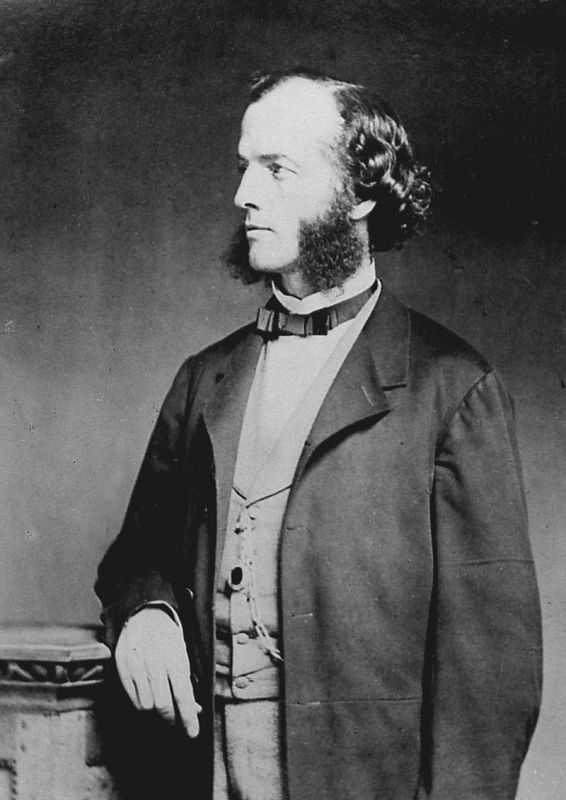
Some Lesser Known Facts About August Kekulé
- August Kekule had excellent drawing skills as a child. He was also great in mathematics.
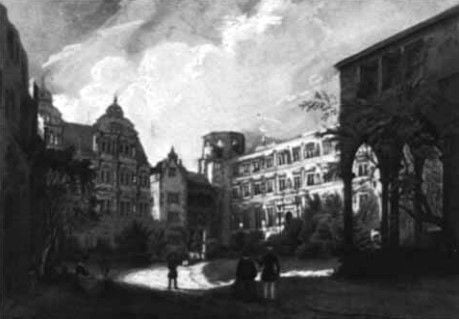
A drawing by August Kekule when he was 18 years old
- He belonged to an upper-middle-class Bohemian noble family, Kekule ze Stradonič Stradonice, now in the Czech Republic.
- August Kekule was influenced by his fellow Justus Liebig’s chemistry lectures, and he decided to study chemistry.
- While pursuing chemistry at the University of Giessen in 1849, he participated in Liebig’s physiological work on plants and animals with an analytical study on gluten and wheat bran.
- After completing his course at Giessen, August Kekule went to Paris and attended lectures by Frémy, Wurtz, Pouillet, and Regnault. He also became a student of Charles Gerhardt in 1851.
- In 1852, he assisted A. von Planta, a former student of Liebig, at Reichenau Castle near Chur.
- He assisted Professor J. Stenhouse at St. Bartholomew’s Hospital, London until 1855. During this time, he met Alexander William Williamson, a former student of Liebig. The studies with Williamson and Kekule’s experiment on a series of sulfur-containing organic acids resulted in the formulation of the theory of valency.
- Kekule once talked about working under prominent chemists of the era such as Charles Gerhardt, Williamson, and Dumas and said,
I became a scholar of Dumas, Gerhardt, and Williamson; I no longer belonged to any one school”
- He worked as a privatdozent at the University of Heidelberg and taught organic chemistry from 1855 to 1858. He also published two fundamental papers on the theory of valency in 1857 and 1858.
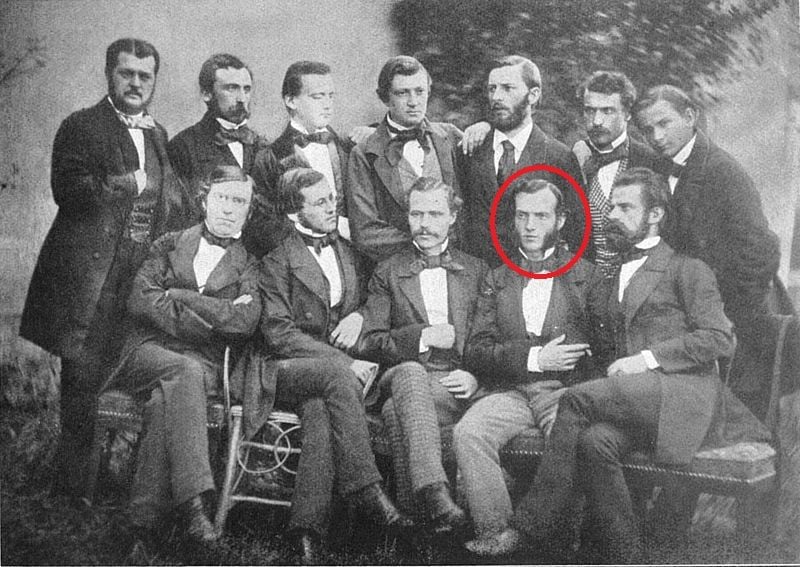
August Kekule in Heidelberg
- He installed a private laboratory on the first two floors at the house of a corn merchant in Heidelberg, where he experimented on the chemical constitution of mercury fulminate.
- Kekule was appointed as professor of chemistry at the University of Ghent, Belgium in 1858.
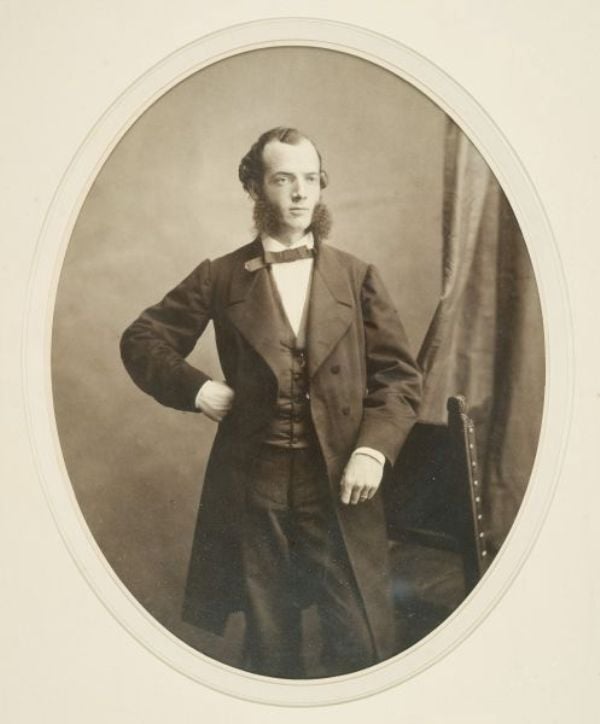
August Kekule as a young professor in Ghent
- He published his first instalment of Lehrbuch der organischen Chemie (“Textbook of Organic Chemistry”) in June 1859.
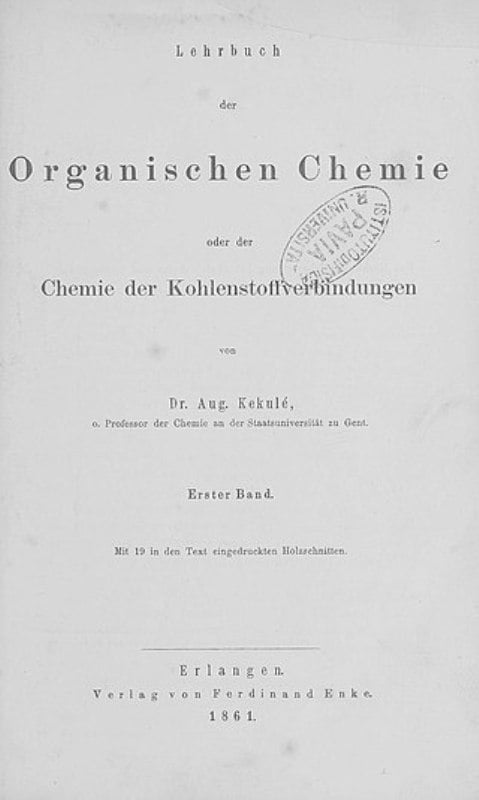
August Kekule’s book, Lehrbuch der Organischen Chemie, 1861
- He organized the first international conference on chemistry, the Karlsruhe Congress, with 140 participants at Karlsruhe from September 3 to 5, 1860.
- At the age of 32, he got married to the youngest daughter, Stephanie Drory (19 at the time of marriage), of his close friend George William Drory on 24 June 1862.
- Stephanie Drory died two days after giving birth to her son Stephan Karl Kekule in May 1863. He was devastated after the death of his wife and could not continue his research for several months until he returned to his work in 1864.
- August Kekule proposed the formula of benzene in 1865. He published a paper in French, stating that the carbons are arranged in a hexagon with alternating single and double bonds.
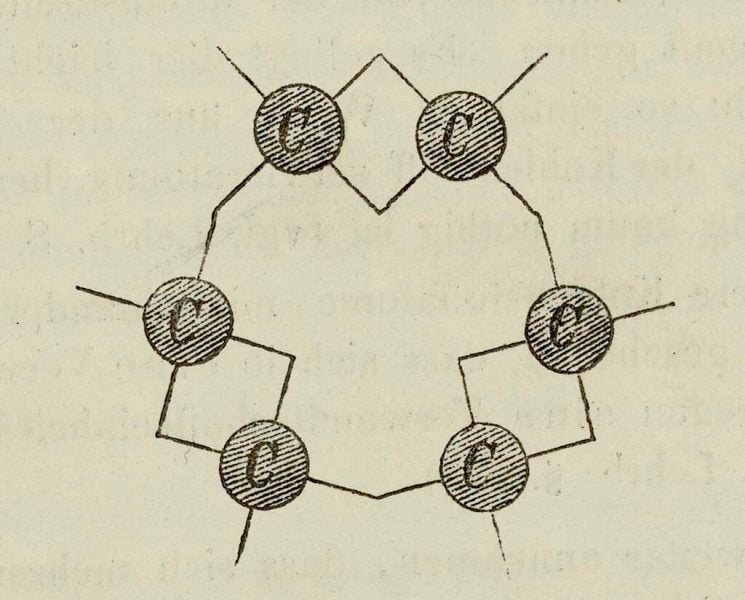
Structure of a benzene ring from August Kekulé’s Chemie Der Benzolderivate Oder Der Aromatischen Substanzen, 1867
- In 1867, he accepted the offer of the chair of chemistry at the University of Bonn, where he worked for the remainder of his career. He was the chancellor of the University of Bonn from 1877 to 1878.
- Kekule refused a call to the University of Munich as J. von Liebig’s successor in 1875.
- He was called for the chair of chemistry at the University of Bonn in 1867, and he accepted the offer.
- The first two Nobel laureates in chemistry, Jacobus H. Van’t Hoff (1901), and Emil Fischer (1902), were both Kekule’s students.
- Kaiser Wilhelm II of Germany ennobled Kekule with the Prussian title of nobility, and after that, he adopted the surname Kekule von Stradonitz.
- The theory of valence and theory of structure resulted from a daydream in which Kekule envisioned dancing atoms and molecules when he was on the last Omnibus through the empty streets in London in 1855.
- Another dream of Kekule led to the Benzene theory when he was in Ghent in 1862. Asleep in front of his fireplace, Kekule saw dancing atoms and snake figures holding their own tail before his eyes, and he spent the rest of the night working on the hypothesis.
- August Kekule recalled his dreams at the Benzene Festival of the German Chemical Society in Berlin in 1890.
- A bronze statue of August Kekule was built and unveiled in front of the Chemical Institute at the University of Bonn in 1903.
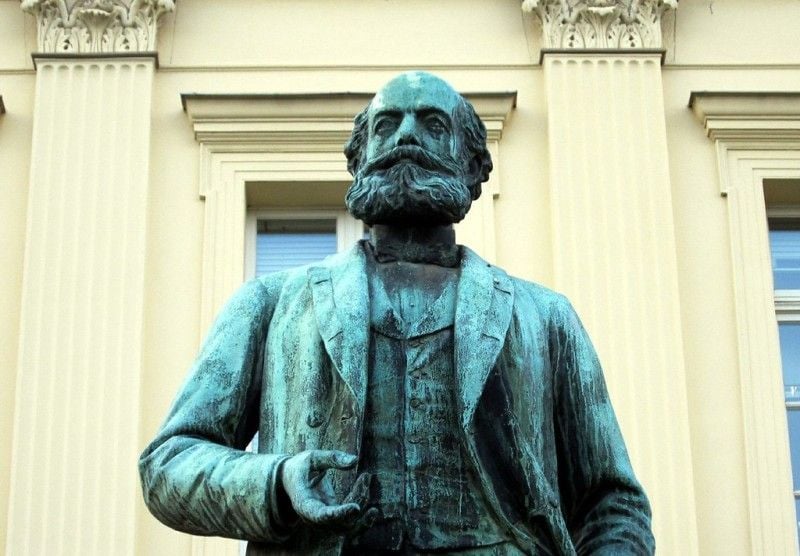
August Kekule statue in front of the old chemical institute at the University of Bonn
- August Kekule introduced practical laboratory exercises at the University of Ghent in 1861. His working place has been reconstructed in the Museum for the History of Sciences.
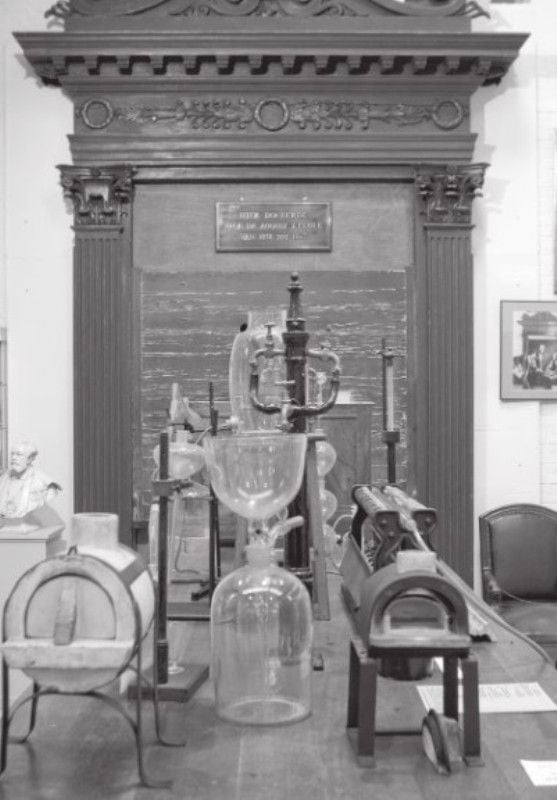
Reconstructed working place of August Kekule in the Museum for the History of Sciences
- There is a memorial plaque in Heidelberg, commemorating August Kekule, where he lived from 1856 to 1858.
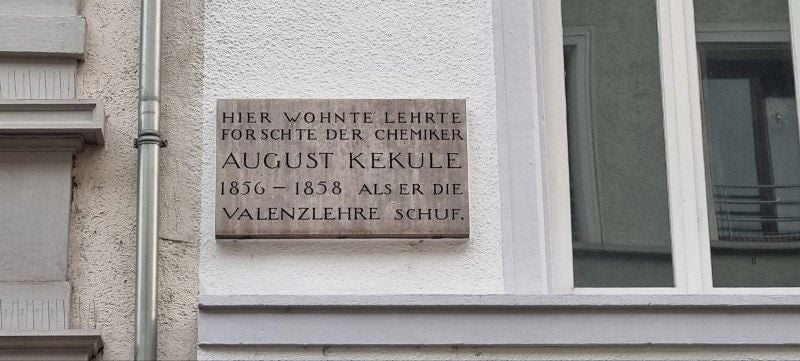
Plaque in Heidelberg commemorating August Kekule who lived there
newspaper Recent News
Recent news and updates about August Kekulé will appear here.
Similar Celebrities
VIEW ALLMaju Varghese
Advocate, Director of the White House Military Office • American The Economic Times
Muhammed Anas Yahiya
Athlete (Sprinter) • Indian
Parvesh Verma
Politician, Businessperson, Agriculturist • Indian
Shyam Dehati
Singer, Lyricist, Music Director, Actor, and Songwriter • Indian
Sukhbir Singh Sandhu
Retired IAS Officer • Indian
Sai Ballal (Actor)
Actor • Indian
Kendra Wilkinson
Television Personality, Real Estate Agent • American
Kalyaan Dhev
Actor • Indian
P. T. Usha
Former Athlete, Nominated Member of Rajya Sabha • Indian
Mrinal Pande
Writer, Journalist • Indian